Vacation comedies are often awash in all the funny, sexy, messy things that people get up to when they’re soaking up booze in the sun, and The Four Seasons puts a spin on this typically youth-focused genre by centering instead on middle-aged characters. Adapted from Alan Alda’s 1981 film of the same name by Tina Fey, Lang Fisher, and Tracey Wigfield, the miniseries goes for wry chuckles more than belly laughs, its relationships defined more by grating annoyances and careful reconciliations than explosive breakups or salacious hook-ups.
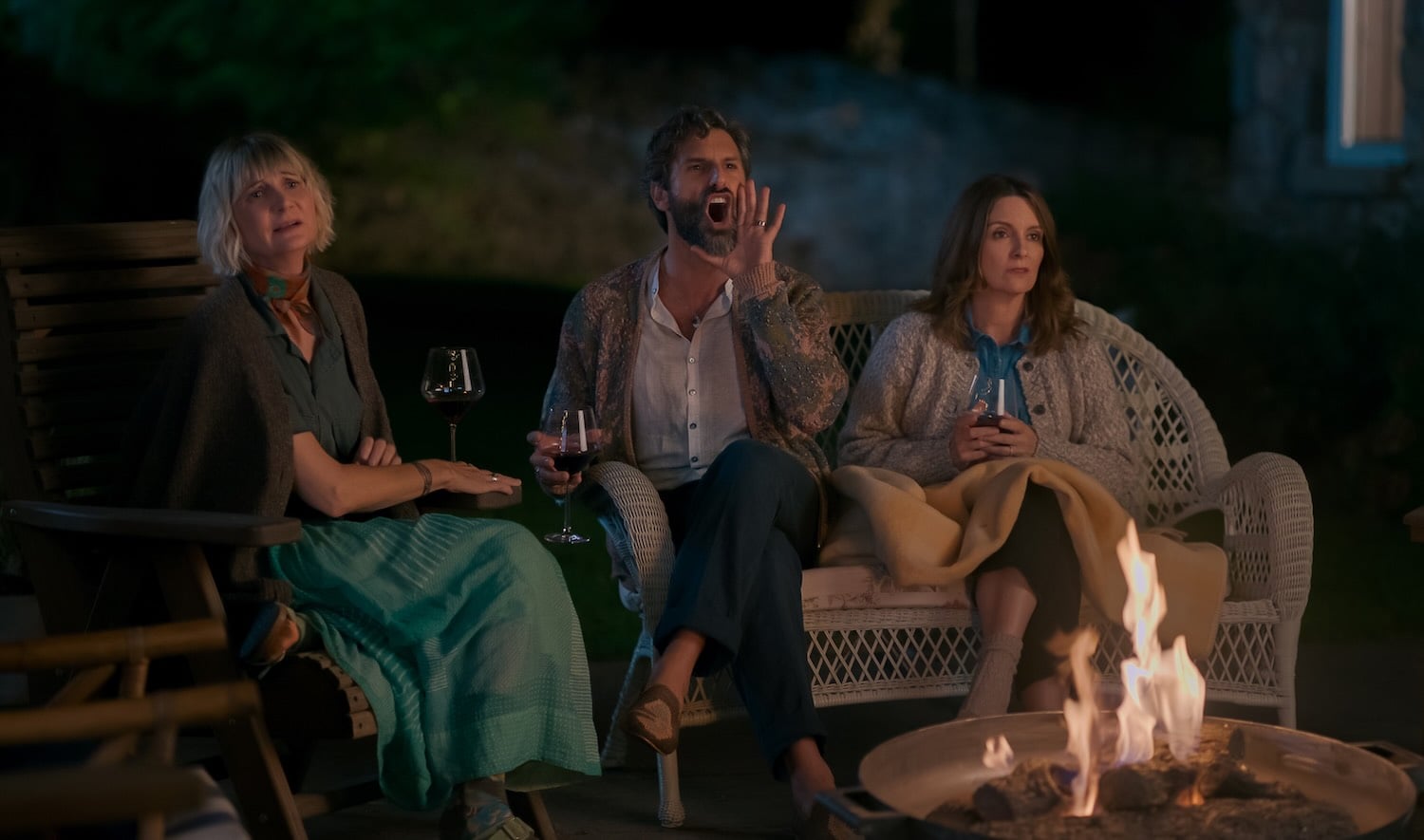
The Four Seasons revolves around a group of old friends who vacation together four times a year. The Netflix series opens with Kate (Fey) and her husband, Jack (Will Forte), as they pick up Danny (Colman Domingo) and his husband, Claude (Marco Calvani), and head off to spend a relaxing weekend at the lakeside home of Nick (Steve Carell) and Anne (Kerri Kenney-Silver). The latter couple are about to celebrate their 25th anniversary and everything seems blissful—until Nick announces that he’s planning on leaving Anne.
Over the course of eight episodes, we follow the gang on a tropical summer getaway, an autumnal return to their old college campus, and a New Year’s Eve celebration at a snow-covered cabin. At each juncture, we get to see how the seismic blow that Nick delivered in the opening episode has shuddered its way through the group, revealing the cracks in each of their relationships and leaving them to wonder whether any of them are really on solid ground.
Each member of the show’s ensemble quickly finds their own comic register to operate in—Forte’s Jack is a total cornball, Fey’s Kate can be devastatingly deadpan, Calvani’s Claude is pure cheerful flamboyance, to name a few—and the size of the show’s friend group is such that the actors get to play off each other in different combinations. Solid punchlines abound, but Domingo steals almost every scene he’s in. Though Danny is blunt, inflexible, and often straight-up rude, he does everything with such unbridled confidence and charisma that he’s impossible to dislike, even when he’s loudly booing his own friends.
While The Four Seasons was created by a trio of comedy specialists, the writing is just as sharp when it isn’t trying to elicit the audience’s laughter. The series is particularly good at drawing out the little things that can steadily gunk up the gears of a relationship, from one half of a couple only making an effort when other people are around, to another couple that’s so dryly practical that the relationship threatens to crumble in on itself.
The four-part structure of Alda’s original screenplay for his film translates nicely to the miniseries format, with each vacation serving as a chapter told over two episodes. The advantage of telling a story about six people who are extremely good at talking about their feelings but not always good at dealing with them is that it’s hard to tell which of The Four Seasons’s conflicts will grow into major story beats and which will be quickly smoothed over.
Intriguingly, the first two episodes seem to be building toward some kind of climactic showdown, only for the series to swerve at the last moment, leaving the fight off screen and jumping straight into its awkward aftermath in the summer episodes. Through it all, The Four Seasons largely coasts on its breezy vibes, but it’s tinged with melancholy about what might happen when the trip is over and the reality of everyday life resumes.
Since 2001, we've brought you uncompromising, candid takes on the world of film, music, television, video games, theater, and more. Independently owned and operated publications like Slant have been hit hard in recent years, but we’re committed to keeping our content free and accessible—meaning no paywalls or fees.
If you like what we do, please consider subscribing to our Patreon or making a donation.