

In its third season, Only Murders in the Building continues to strive to balance the genuine intrigue of a murder mystery with a light satire of true-crime culture and whodunit clichés. The results are consistently amusing but hardly as riveting as other iterations of this subgenre—including Poker Face and the previous two seasons of Only Murders in the Building.
The show’s unlikely trio of amateur sleuths—washed-up TV star Charles Haden Savage (Steve Martin), disgraced Broadway director Oliver Putnam (Martin Short), and rudderless millennial Mabel Mora (Selena Gomez)—had sworn to only investigate murders that take place in their high-end Manhattan apartment complex, but last season’s coda teased a challenge to their agreement: a murder outside the building! The third season picks up in the immediate aftermath of that finale, when megastar actor Ben Gilroy (Paul Rudd) dropped dead in the midst of the premiere of the murder-mystery play Death Rattle in which he starred.
Showrunner Jordan Hoffmann and his writers find a clever way—even if it’s well within the tropes of mystery fiction—of reworking this new murder into the established format of the group’s true-crime podcast. The season’s first episode, “The Show Must…,” resets the scene of the crime while introducing the new cast of suspects—the cast, that is, of Death Rattle. Among them is would-be starlet and influencer Kimber (Ashley Park), who appears to have had beef with both Gilroy and his understudy, Jonathan (Jason Veasey).
The most prominent of these newcomers is Loretta, a long-struggling, long-overlooked actress played, in a bit of coy casting against type, by Meryl Streep. Though she enters the fray in the first episode with a bit of wacky accent work, Streep mostly plays the straight man to Oliver’s flamboyant nonsense. But both the season’s prologue and where we end up at the end of episode eight, “Sitzprobe,” suggests her character will be central to the plot’s conclusion.
Previously, the hallowed but somewhat diminished comedy stars of Martin and Short made for odd bedfellows with a young-millennial icon like Gomez. That is, of course, part of this show’s extratextual triangulation: It seeks to appeal to both still-young adults who loved The Wizards of Waverly Place as well as their parents, who still think of Martin and Short as two of the three amigos. Gomez’s (arguably not fully intentional) expressionlessness clashes with her elders’ (arguably excessive) animation, with Martin’s gangly gesticulations and Short’s facial contortions offering a comic and emotional counterpoint to Gomez’s utter lack of affect.
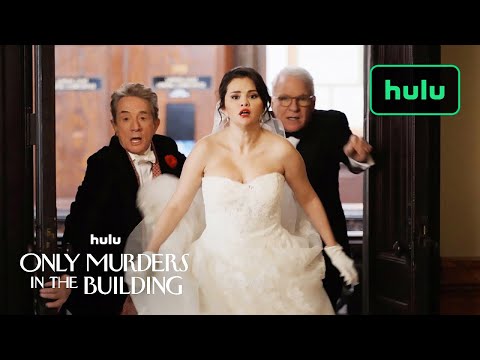
Only Murders in the Building’s third season attempts to tweak this dynamic a bit, and to mixed results. Tensions are roiling within the group as they’re pulled between the re-staging of Oliver and Charles’s play in the wake of Gilroy’s death and the unexpected imperative to produce a third season of their true-crime podcast. For some of the season, Mabel is left to drive much of the primary plot forward on her own. The emphasis on Mabel more or less works whenever she encounters a cartoonish character against whom her odd neutrality can uncomfortably rub against, but in moments when one can’t read Gomez’s stone-faced monotone as bemusement at the eccentricities of narcissistic boomers, it comes off as mere disengagement.
By contrast, Martin and Short muster a comic spryness that belies their age. Given how much more the elder performers here have to convey than their junior compatriot, it’s no surprise that the mystery itself often feels rather stagnant in the eight episodes made available to press. The material that has more directly to do with the pitch and rehearsals for Death Rattle, on the other hand, moves with the rambunctious energy of a couple of wild and crazy guys.
It’s at those rehearsals that we meet newcomers like the play’s producers, Donna (Linda Emond) and Cliff (Wesley Taylor), a mother-son pair whose discomfiting closeness recalls Lucille and Buster from Arrested Development. The hubbub around the play and its revamp is also where we get welcome returning supporting players like Howard (Michael Cyril Cleighton), the main trio’s cooky, prim, cat-obsessed, and utterly incompetent neighbor. The show’s prodding of Manhattan theater culture, however ultimately toothless, remains its most diverting pleasure, as its seasoned performers lob knowing but slight aspersions toward their own milieu.
These episodes of Only Murders in the Building show some of the inevitable wear of a concept that has already gotten more mileage than anticipated. It’s somewhat relatable when residents of the building react with exasperation when they discover their oddball neighbors are digging into yet another killing, as the mystery by itself fails to hold much interest. But Hoffmann, Martin, and company have populated the titular building with such a rich collection of privileged, middle-aged theater kids that their sniping and conspiring produces enough mischievous energy to keep the floodlights burning for one more season.
Since 2001, we've brought you uncompromising, candid takes on the world of film, music, television, video games, theater, and more. Independently owned and operated publications like Slant have been hit hard in recent years, but we’re committed to keeping our content free and accessible—meaning no paywalls or fees.
If you like what we do, please consider subscribing to our Patreon or making a donation.




Can someone explain the inexplicable casting and career of Selena Gomez to me? The sound of her flat, nasal line readings makes it impossible, for me anyway, to watch this show after only one season.
Quite frankly, this wore thin during episode 1 of the first season. Dreadful.