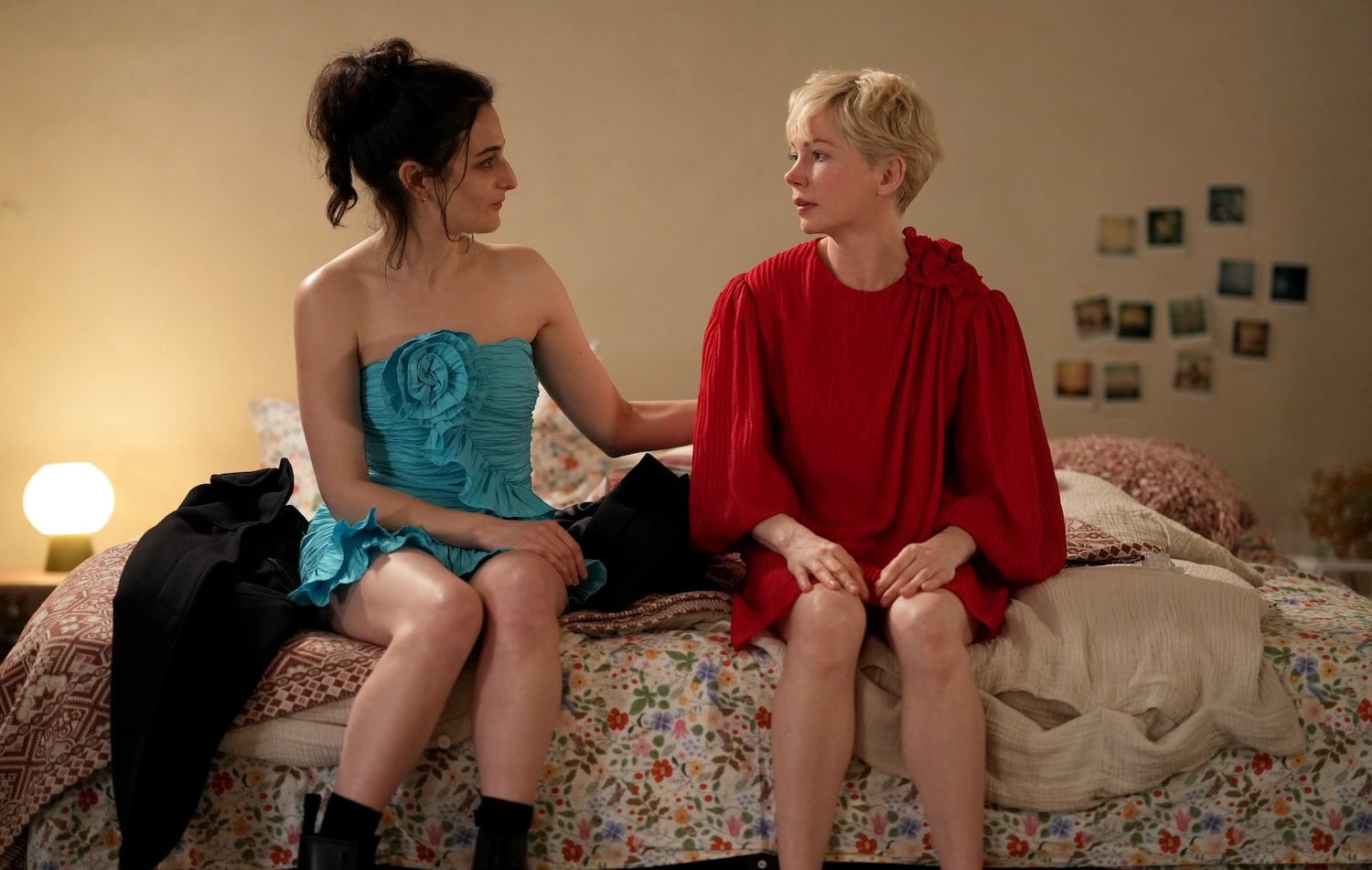
“Just kidding, I’m fine!” Molly (Michelle Williams) says, in a desperate bid to calm her best friend, Nikki (Jenny Slate), down in the first episode of Dying for Sex. She isn’t fine—Nikki is crying because Molly has just revealed that her breast cancer has returned and is now terminal—but she can’t stand to see her friend so upset. It’s such a ridiculous, obvious lie that Nikki finds herself laughing even as she cries, exasperated and devastated and amused all at once. This little moment is a perfect microcosm of the entire series: darkly funny, deeply sweet, and—even when its characters don’t want to be—bracingly honest.
Inspired by the true story of Molly Kochan, originally shared on the podcast of the same name created with her best friend, Dying for Sex wastes no time setting things up. Molly gets her diagnosis within the first five minutes of the first episode and, by the end of it, she’s decided exactly what she wants to do with the time that she has left. After years stuck in a sexless marriage to her husband, Steve (Jay Duplass), she’s determined get properly laid.
A quick line about Molly dissolving her 401k allows Dying for Sex to dismiss any practical concerns about work or money so that she can commit fully to the task at hand. Over the course of eight spritely half-hour episodes, viewers follow her quest to come before she goes—a journey that takes her from kinky dating apps to sapphic sex shows and beyond.
One of the most impressive things about Dying for Sex is the balanced way in which it presents sex as something to both laugh about and take very seriously. The series is filled with gags about butt plugs, dick pics, and pup play, and it embraces the fact that sex is inherently funny. But it also manages to sincerely and affectingly convey the ways in which intimacy, tenderness, and passion can be communicated through sex in its myriad forms.

Dying for Sex takes a similarly two-toned approach to death. Molly and Nikki often deal with her cancer by making fun of it, from throwing a birthday party for Molly’s tumor, to doing whatever they can to mess with her doctor (a delightfully stuffy David Rasche). But the series also pointedly emphasizes the realities of the disease, from the endless waiting rooms and insurance paperwork to the steady supply of new ways that cancer can break a person’s body down before it finally kills them. One scene involving a ventilator is delivered with such visceral force that it’s hard to believe this is the same series that made you laugh just moments ago.
In the show’s early episodes, we often hear Molly’s inner voice as she thinks all of the things she isn’t brave enough to say out loud, whether that’s wanting to fuck someone or wanting someone to fuck off. Williams plays both sides of the character—the ferocious, forthright, horny person that Molly is on the inside and the politely muted version that she shows the world—so authentically that it makes it all the more satisfying to watch her slowly reconcile them.
Williams’s best work here, though, comes when she’s sharing the screen with Slate, who delivers an equally endearing performance as Molly’s scatter-brained bestie. Their bubbly humor leaves the series feeling buoyant even as it deals with increasingly heavy subject matter, and their rapport is so strong that they’re funny together even when Molly has a breathing tube shoved down her throat. Centering their friendship also allows Dying for Sex to show, quite devastatingly, the way that cancer impacts others in a patient’s life, steadily stripping Nikki of her home, her job, and other relationships as she devotes herself completely to Molly’s care.
Dying for Sex’s limited run has its, well, limitations. As it wrestles with questions of life and death, there’s a major facet of Molly’s story involving childhood abuse which the series never quite manages to get its arms around. But its brevity does make it feel all the more tragic that a duo as enchanting as Molly and Nikki get their time together cut so brutally short.
Since 2001, we've brought you uncompromising, candid takes on the world of film, music, television, video games, theater, and more. Independently owned and operated publications like Slant have been hit hard in recent years, but we’re committed to keeping our content free and accessible—meaning no paywalls or fees.
If you like what we do, please consider subscribing to our Patreon or making a donation.