The problem faced by any adaptation of It is the book’s sheer scope. Stephen King’s saga of childhood and the horror that upsets it contains seven main characters, one shape-shifting alien supervillain, and a town with a rich local history—plus parents, teenage bullies, and more kids, all sharply drawn and part of a vibrant thematic tapestry.
The 1990 miniseries, at three hours and change, didn’t have time to approach the sprawling complexity of King’s book. Even Andy Muschietti’s It and It: Chapter Two, two parts of a whole that together run almost five hours, come up short. (Indeed, you’d need at least 10 hours on Netflix to do anything but scratch the book’s surface.) Muschietti’s first It felt like dutiful fan service, hitting the plot points without the time to let them resonate. But with Chapter Two, the director seems to realize he can’t make a film as powerful as the book and opts instead for self-consciously campy, crowd-pleasing fun—fodder for future preteen sleepovers.
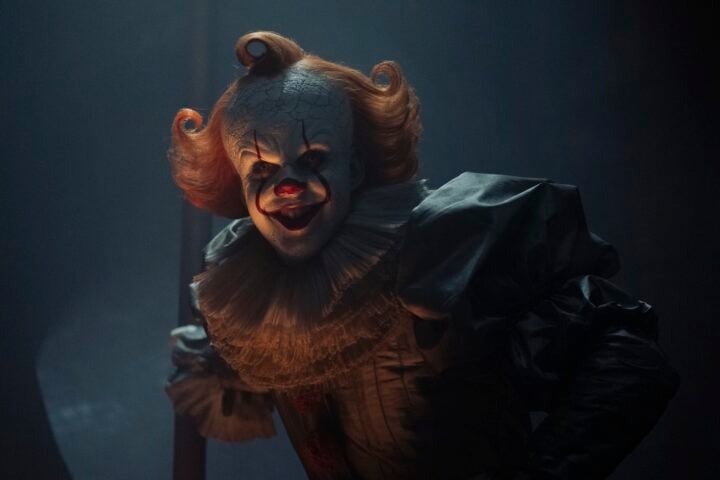
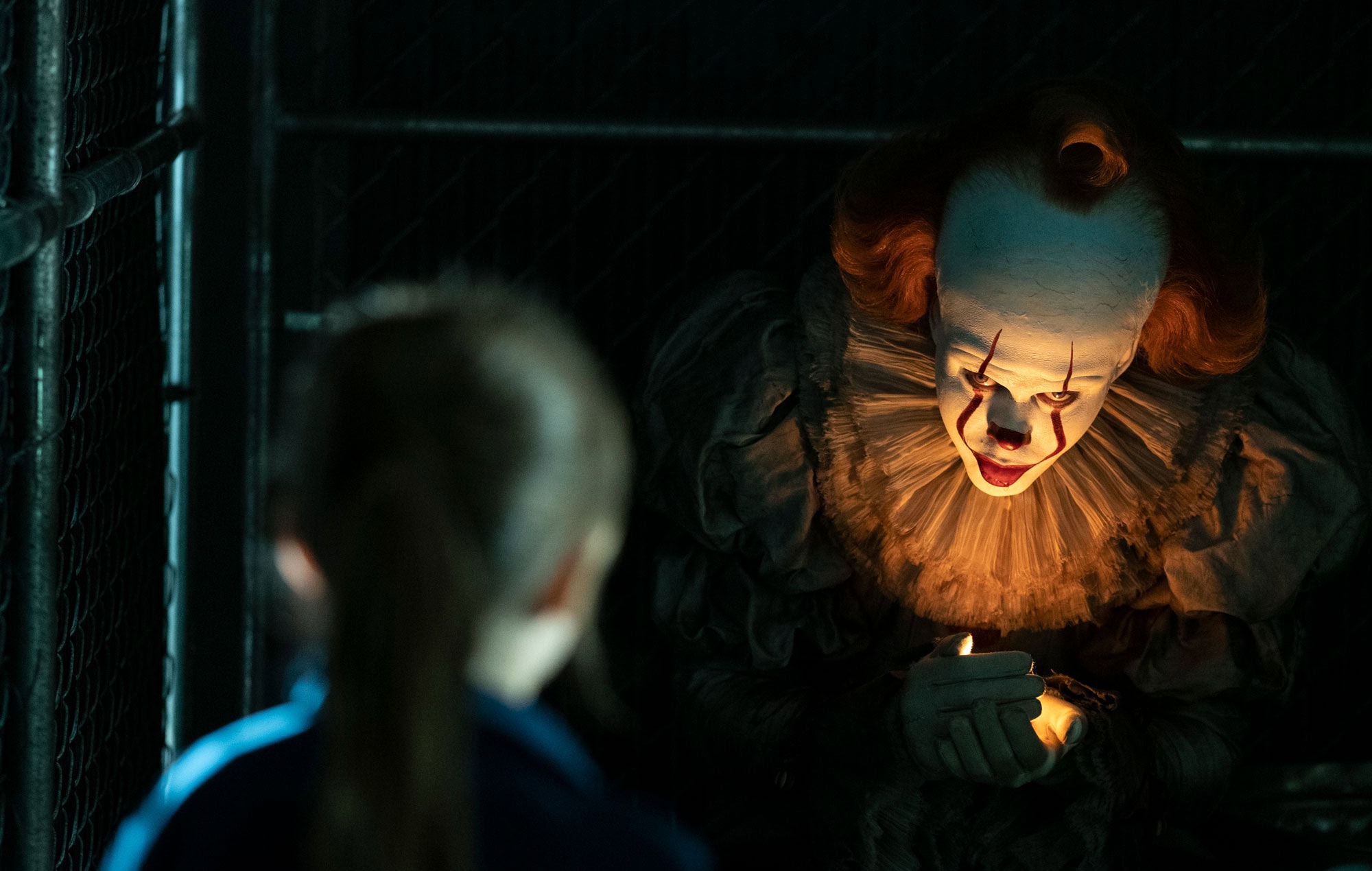
Chapter Two opens 27 years after its predecessor and quickly reassembles the now far-flung members of Losers Club back in Derry, Maine, for a showdown with the malevolent spirit they call It. The film often indulges proudly in VHS-era, over-the-top horror: an escaped mental patient, Henry (Teach Grant), being chauffeured by a rotting corpse, or a climax at a haunted house that’s straight out of the opening credits of Tales from the Crypt. It’s also often funny. Bill Skarsgård plays Pennywise, the evil clown manifestation of It, like Bugs Bunny, all goofy insouciance until he bears his monstrous chompers. When a decomposing demon spews black goo onto the face of one of our heroes, Muschietti slows down the image and cheekily exchanges the moody score for a snippet of the 1981 monster jam “Angel of the Morning.”
Since Gary Dauberman’s screenplay must zip through so many characters, reintroducing their backstories and establishing their adult selves, each Losers Club member is allowed just a single defining trait to grapple with. Bill (James McAvoy) still feels guilty about the long-ago death of his little brother; Beverly (Jessica Chastain) copes with her life’s cycle of abuse; Eddie (James Ransone) is neurotic about his personal safety; Mike (Isaiah Mustafa), as the lone Loser who stayed behind in Derry, bears the burden of being an expert in its history; Ben (Jay Ryan) is still a lonesome fat kid at heart, even though he’s hot now; and Richie (Bill Hader) is a comedian who hides his homosexuality behind an emotionally distancing wit. (Stan, played briefly by Andy Bean, takes his own life rather than return to Derry.) The whole cast is adept, of a higher caliber than you’d get in schlocky multiplex horror a generation ago, but only Hader goes further than his character’s one note; Richie’s deeper emotional state is as rumpled as his hair and costuming, making him seem like a hipster Bill Hicks.
We first see adult Bill Denbrough, the group’s leader, on a film set, where one of his novels is getting the Hollywood treatment. A running joke, first voiced by Peter Bogdanovich in a cameo (as a film director) and then by Stephen King in another (as the proprietor of a secondhand shop), is that Bill writes popular books with terrible endings, a nod to the chief flaw of King’s 1987 magnum opus: its disappointing spider battle, followed by a startling, scandalous scene in the sewers in which each boy in the Losers Club takes a turn having sex with Bev, even those not yet pubescent. The tweaked ending here cuts the orgy and makes the spider battle more exciting by really reveling in the retro Tim Burton vibe that runs throughout the film, from Benjamin Wallfisch’s score—a perfect Danny Elfman pastiche—to a giant Pennywise with arachnoid legs that looks like it could’ve been cut from Beetlejuice.
Muschietti also trades out most of King’s boomer references for ones aimed at Generation X and younger: a Thundercats T-shirt, a Lost Boys poster, a Street Fighter arcade terminal, and so on. It’s an appropriate shift, and not just because younger generations are a more important ticket-buying demographic now for summertime scary movies than sixtysomethings. Those born in the ’70s and later began to reverse the boomers’ urban flight, leaving the suburbs to resettle in the cities, and the film is often affectingly about what happens to small towns when good people leave them—when, instead of staying and fighting, they let bad places get worse.
Chapter Two’s characters initially have amnesia about what happened to them when they were kids. It’s the film’s supernatural spin on going home again, and their memories spring forth as they wander around Derry, the formative setting of their lives. Cutting between past and present, the filmmakers show the wistfulness of such recollections—revealing how much people age, how much closer they’re getting to death. Leaving Derry, the adult Losers Club members found in other towns and cities more of what they tried to run away from—loneliness, abuse, fear. They come home to face Pennywise, the ur-hometown bully, embodying all of Derry’s prejudice, insults, and violence, the source of their insecurities.
By beating him together, the film argues we’re stronger and better when we’re home, building communities that can oppress the oppressors and build up so-called “losers.” Pennywise, who feeds off and encourages the townspeople’s darkest small-mindedness, has always been in Derry (as we learn through some quick exposition packed with mumbo jumbo about Native Americans), and so by wiping him out the Losers erase the town’s spiritual foundation. The characters essentially destroy history, both their own and the town’s, so there’s nowhere else to look or go but forward. As such, they make Derry great—not again, but for the first time.
Since 2001, we've brought you uncompromising, candid takes on the world of film, music, television, video games, theater, and more. Independently owned and operated publications like Slant have been hit hard in recent years, but we’re committed to keeping our content free and accessible—meaning no paywalls or fees.
If you like what we do, please consider subscribing to our Patreon or making a donation.