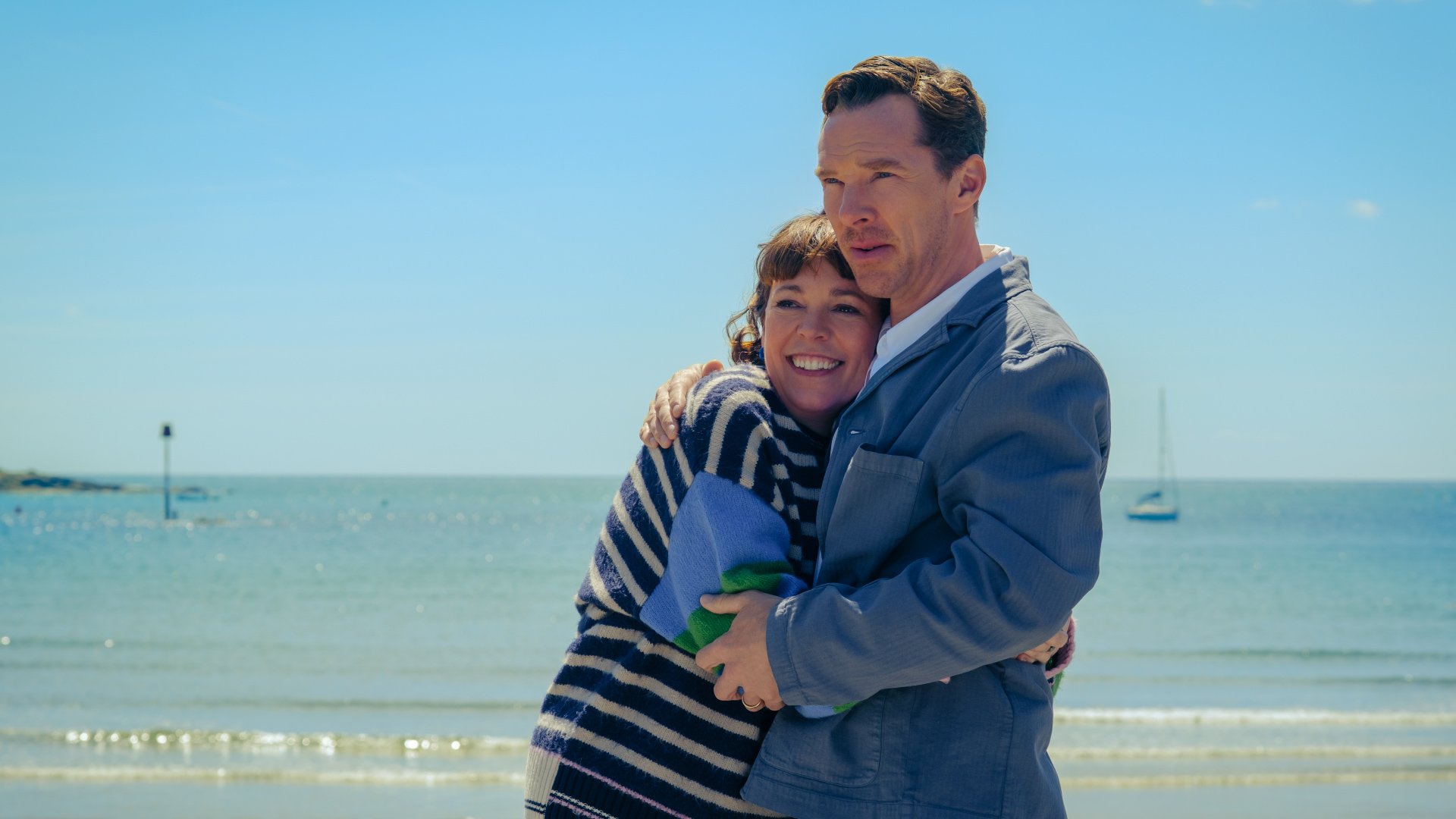
Given how much the dynamics of heterosexual relationships have changed in the 40-plus years since Warren Adler wrote The War of the Roses, there’s perhaps no better time than the present for a new take on the material. At least on paper, Jay Roach’s The Roses, written by Tony McNamara, contains all the right elements for the job.
Barry (Andy Samberg), an aging millennial lawyer, is married to an odd, hilariously horny, self-described empath, Amy (Kate McKinnon). In trying to hit all the benchmarks of a traditional relationship escalator, from the high-paying job to the dinner parties with other successful friends, they realize that the supposed conservative touchstones of a successful marriage are driving them more insane. Barry and Amy are at their best when forging their own path as weirdos whose love takes a very different shape than what their parents had.
As Barry and Amy’s relationship is such fertile ground for black comedy, it’s somewhat unfortunate that they’re not the focus of the film. That would be Theo (Benedict Cumberbatch) and Ivy Rose (Olivia Colman), and despite committed turns from the actors playing them, the depiction of these characters’ relationship is nowhere as brutally scathing as Oliver and Barbara Rose’s relationship in Adler’s book and Danny DeVito’s 1989 film adaptation.
The Roses does flip the dynamic between its main characters a bit, with Ivy becoming a successful restauranteur right around the time that Theo’s career as an architect literally comes crashing down, forcing him to put all of his ambitions down to become a stay-at-home father. He’s aware of his domestication—that is, that the gender power balance between him and Ivy has shifted in her favor—and his resulting resentment, though insufficiently explored, at least feels honest and real. But is that resentment enough to kill for?
The chemistry between Cumberbatch and Colman in the film’s sweetest and innocently funny moments is palpable, with just enough wickedness behind their smiles for us to believe their characters’ sexual aggression—just enough of that weirdness common to friends that makes you see why Theo and Ivy fell for each other. When the relationship goes downhill, that same wickedness translates to the comedy. To the surprise of no one familiar with McNamara’s work, the script gives Cumberbatch and Colman both plenty of deliciously evil barbs to work with.
But The War of the Roses, both the book and the DeVito film, is an infamously brutal comedy of terrors, and The Roses is cuddly by comparison. The dark, bruised heart of the DeVito film is Kathleen Turner’s Barbara Rose despising her husband when she finds out the American dream is a trap that expects her to pantomime good wifery until she drops dead. In that regard, we already have a perfect, modern-day War of the Roses remake: Gone Girl.
The Roses, for its part, sets up a real chance to drill down on the dynamics between a man robbed of traditional manhood and a successful woman who refuses to hold herself back to coddle him. But the script is ultimately too shallow in its insights to justify the baleful third act. To do so, Theo’s masculinity would need to be so much more toxic long before that point, and Ivy so much more aware of how much her girlbossiness is demolishing her emotional connection to her home. Up to then, you don’t get the sense that they’re capable of such extreme physical or emotional damage. The Roses may convince you that these characters’ resentments are real, but it doesn’t make you believe that they’re enough to kill for.
Since 2001, we've brought you uncompromising, candid takes on the world of film, music, television, video games, theater, and more. Independently owned and operated publications like Slant have been hit hard in recent years, but we’re committed to keeping our content free and accessible—meaning no paywalls or fees.
If you like what we do, please consider subscribing to our Patreon or making a donation.