A moody cool defines Jim Jarmusch’s Father Mother Sister Brother, a triptych of tales in the mode of 1991’s Night on Earth and 2004’s Coffee and Cigarettes, though marked by a much more wizened (and wise) melancholy. After the fuck-the-world irascibility of Jarmusch’s 2019 zombie comedy The Dead Don’t Die, this feels like a comparative balm.
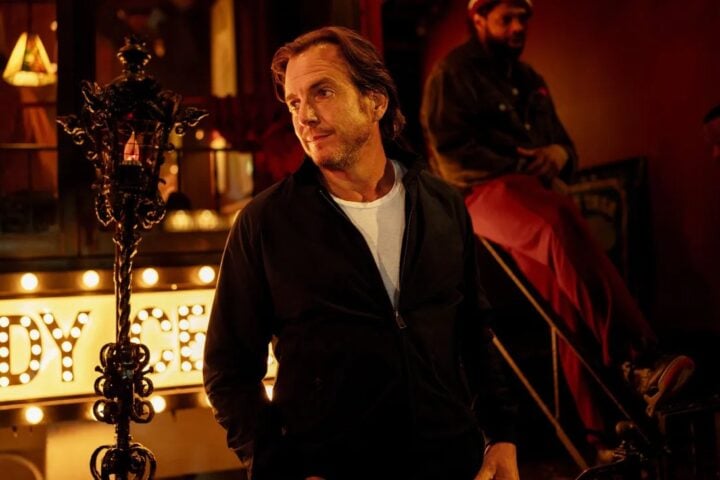
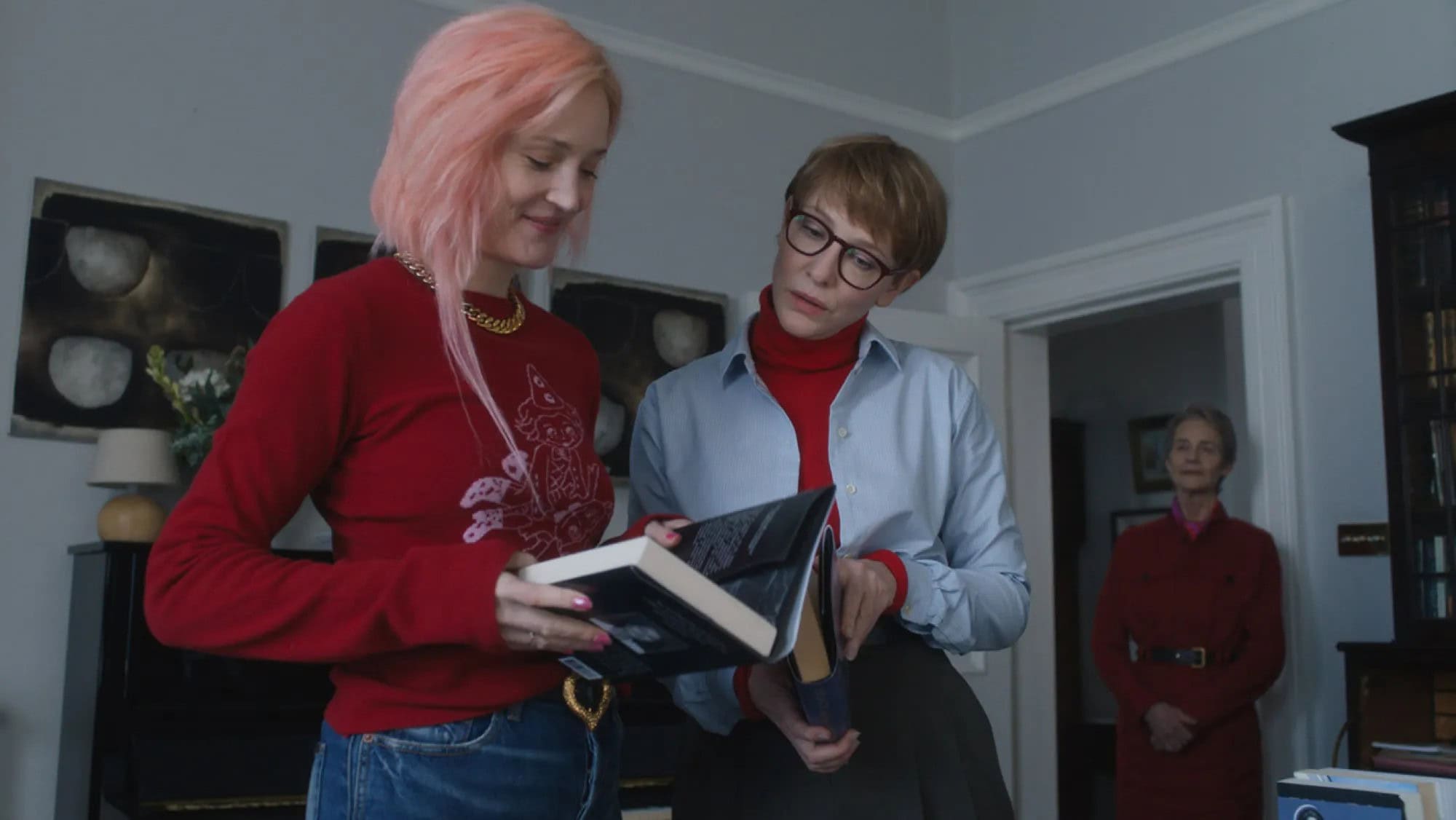
In “Father,” Jeff (Adam Driver) and Emily (Mayim Biyalik) journey to the remote New Jersey home of their estranged dad (Tom Waits). In the second segment, “Mother,” Timothea (Cate Blanchett) and Lilith (Vicky Krieps) head to afternoon tea with their Irish author mom (Charlotte Rampling). In the final section, “Sister Brother,” Skye (Indya Moore) and Billy (Luka Sabbat), the two grown children of a recently deceased couple who we glimpse in photos, visit the Paris apartment they were raised in to close out their father and mother’s affairs.
Each of the segments opens similarly, with the two siblings in a car driving to their parents’ respective homes; in “Mother,” though, Timothea and Lilith are in separate vehicles, the former dealing with engine breakdown, the latter riding with her girlfriend, Jeanette (Sarah Greene), who she passes off as her Uber driver. Most of these introductory scenes are shot with glaringly obvious rear projection. The aesthetic falseness makes the conversations between characters feel like they’re occurring in a self-delusional bubble, which is apt considering that one of the film’s overarching themes is the ultimate unknowability of the people who birthed you.
Those familiar with Jarmusch’s work know what to expect: leisurely rhythms, repeated visual motifs (overhead shots of clinking coffee mugs, most of all), and a hipster connoisseurship that’s as likely to repel as it is to intrigue. More closed-circuit conversations unfold once the kids get to their respective destinations. No one ever wants to say what they’re thinking, and Jarmusch approaches all the halting small talk and willful evasions in varied tones.

The shaggily comic first segment is centered around the befuddled interactions between the father and his offspring, building to an O. Henry-like twist that reframes everything we’ve seen prior. The second keeps us at a distance from the polar-opposite sisters and their icy matriarch, the trio’s very precisely picked wardrobes and obviously studied behavior helping to render them as mysterious at the end as they are at the beginning. And the third is extremely warm and wistful with a lingering hint of bittersweetness, since the unspoken notion—of both the vignette and the film at large—is that we often feel more fondly for our blood relatives after they’re gone.
More than any other Jarmusch film, Father Mother Sister Brother is haunted by mortality and the inevitable passage of time. There’s a cinephilic bent to these philosophical ideas, particularly notable in Rampling’s dual role (a younger picture of her is on the mantle of Waits’s character in “Father,” though she’s very evidently not the same person in “Mother”), not to mention a sublime cameo toward the end by Françoise Lebrun (co-star of Jean Eustache’s influential The Mother and The Whore) as Skye and Billy’s former landlady. Even more cheeky is the running gag of several characters eagerly displaying and waxing philosophic over their Rolex watches—product placement achieving an impudent level of temporal poetry.
Then there are the skateboarders that appear briefly in each segment, their diaphanous presence remarked upon by the characters as evidence of some obscure goings-on in the world at large. Of all the recurrences in Father Mother Sister Brother, this one feels especially key to unpacking the intentions of its creator. Watching a Jarmusch film can be like gazing upon a madman’s conspiracy board, which to those not on board with all the laconic lyricism can be exasperating. But get on the wavelength and it’s as if you’ve gained entry into a secret society—one that sees through the despairing illusions of existence to the blissfully beating heart beneath.
Since 2001, we've brought you uncompromising, candid takes on the world of film, music, television, video games, theater, and more. Independently owned and operated publications like Slant have been hit hard in recent years, but we’re committed to keeping our content free and accessible—meaning no paywalls or fees.
If you like what we do, please consider subscribing to our Patreon or making a donation.