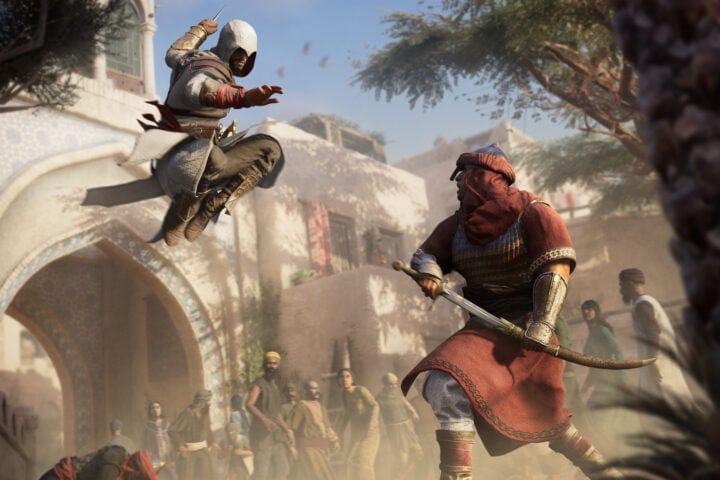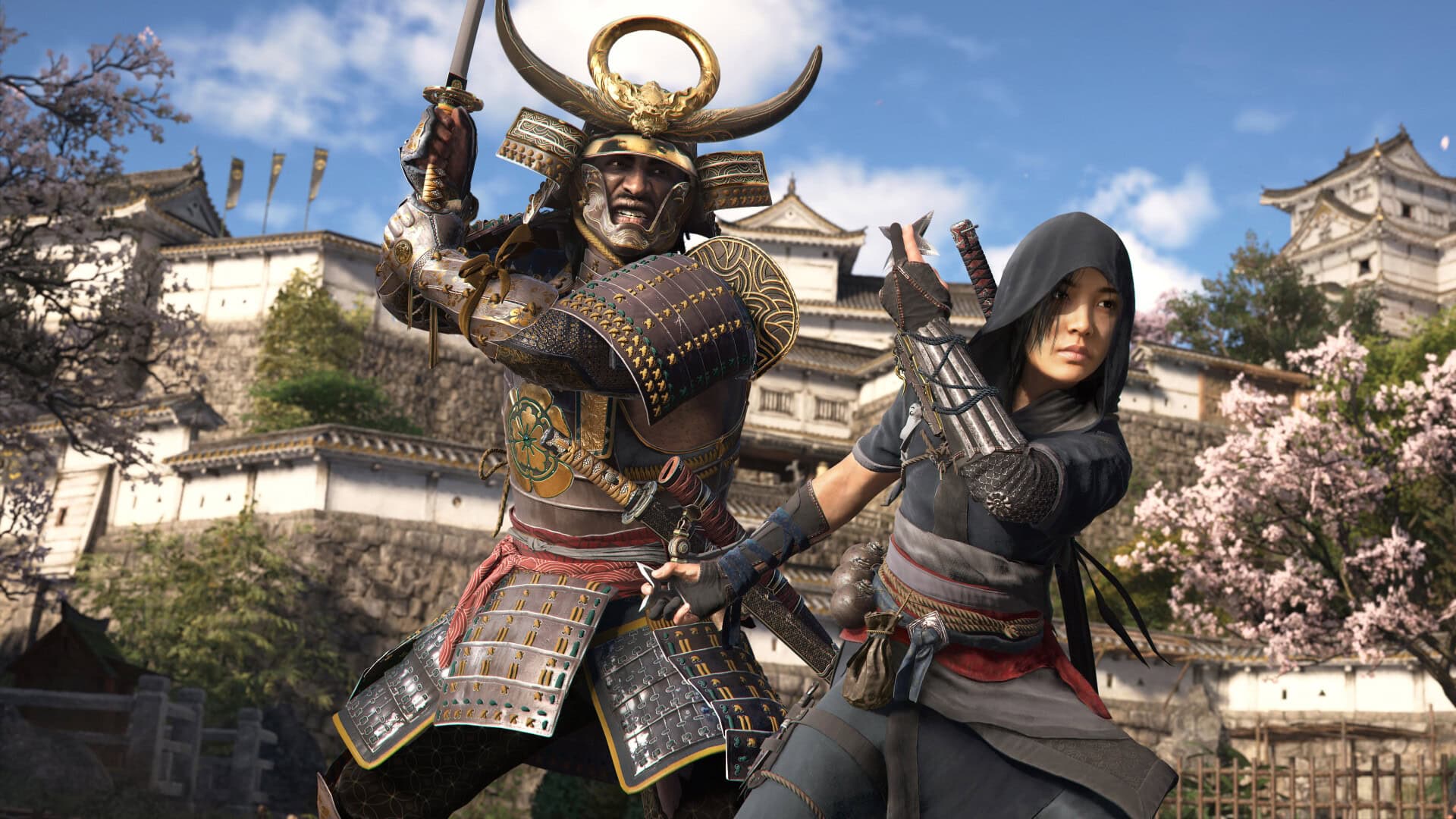
Ubisoft’s Assassin’s Creed Shadows is a thrilling epic set in Japan in the 1580s, during the Sengoku period, and it has two playable protagonists—Yasuke, a Black samurai, and Naoe, a female shinobi—and well over a hundred assassinations to complete. It’s a very busy game, so much so that the present-day plot about exploring genetic history via the Animus essentially serves as a brief bookend, but with the exception of a few minor side quests involving praying at similarly designed shrines, very little of it feels like work.
Shadows is a near-perfect blend of focused missions and leisurely exploration across a massive open world, but you may wonder if it even needs dual protagonists. After all, Naoe, who inherits the assassin’s blade from her secretive parents, is a classic Assassin’s Creed hero, complete with X-Ray eagle vision that lets her mark enemies through walls, tools for distracting or disabling, and a grappling hook that makes scaling large temples a snap.
Yasuke, by contrast, is a tank of a warrior who’s bad at sneaking around, though this matters for naught during his character missions, which make the most of his block-pushing strength, rifle marksmanship, or skills at horse archery and dueling. And while you can freely swap to Yasuke for most missions, his fast-paced violence is a poor substitute for Naoe’s classic stealth maneuvers. After all, when it comes to assassinating feudal lords or reaching high-up vantage points, Naoe is faster and more efficient, whereas Yasuke is a bull in a China shop.
Regardless of which player you choose to spend the majority of your time with, though, you’ll find that the flow of Shadows is impeccable. There are 12 main targets, the masked members of the villainous Shinbakufu, and you’ll gather rumors about them as the game progresses. Those rumors serve as localized quest chains that provide a somewhat guided tour through one of the game’s nine regions, including the mountainous Yamato region, where you’ll investigate a monk’s attempts to broker peace. The game teaches you to take in the scenery, not just as a means for reaching your target without being seen, but as a way of learning about Japan itself, such as collecting the customary attire and gifts needed to partake in a tea ceremony.
At some point during or after each main assassination, you’ll also learn about and add other organizations to your list of targets. The assignment to kill the flashy, law-breaking kabukimono takes you through provincial Settsu, and the task to investigate the mysterious Twisted Tree reveals a Kyoto-wide conspiracy. Players are urged to pay attention to the evidence they collect and the gossip on the road, as some targets are worth sparing, and others may attack when you least expect, all of which helps to ensure that the game is never put on autopilot.
Shadows also accomplishes this by forcing you to constantly adapt. The changes in season showcase the beauty of Japan’s countryside, forests, and mountains, as well as make it easier (or harder) for you to sneak about. Because enemies level up alongside you, they present a constant challenge by pushing you to try out newly acquired equipment and abilities. Some gear encourages further experimentation, boosting stats when battling without Legendary items or with only one weapon or without any tools. While the AI enemies are on the foolish side, Shadows offers a decent amount of depth in combat, and the flexibility of the gear at your disposal will ensure that the assassinations never grow dull across the campaign.
Whether Yasuke’s assassinations are your cup of tea or not (there’s a reason the game calls them “brutal”), it’s nice to see how this game breathes new life into a familiar formula. It also does a fine job iterating on what’s come before in earlier Assassin’s Creed titles: Its optional tomb-raiding segments offer clever little labyrinthine puzzles, the parkour Paths make good use of the grappling hook, and nonviolent activities (like sneaking up on wildlife to paint it) make the world feel even more lived-in. And while everything you learn about real-life figures like Hattori Hanzô or locales like the hillside fortified Azuchi Castle might make it clear that you wouldn’t want to live in this unforgiving era, it’s a great place to have a 60-hour power fantasy.
This game was reviewed with a code provided by Ubisoft.
Since 2001, we've brought you uncompromising, candid takes on the world of film, music, television, video games, theater, and more. Independently owned and operated publications like Slant have been hit hard in recent years, but we’re committed to keeping our content free and accessible—meaning no paywalls or fees.
If you like what we do, please consider subscribing to our Patreon or making a donation.