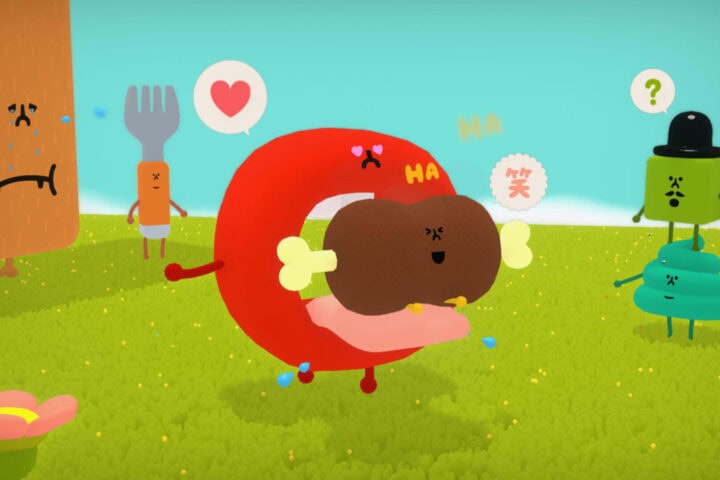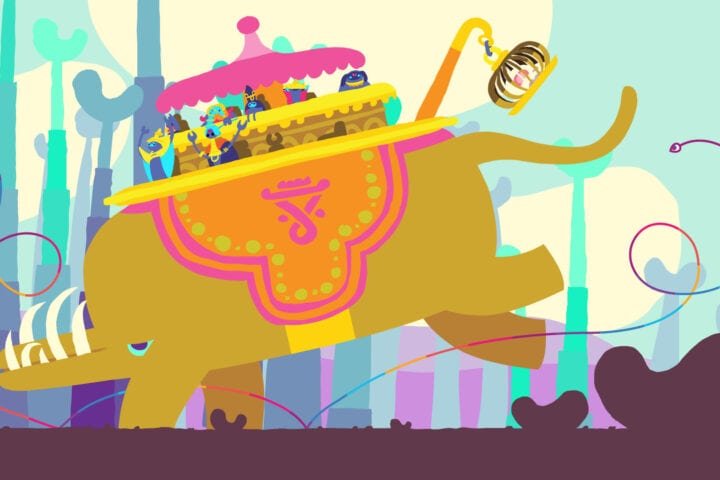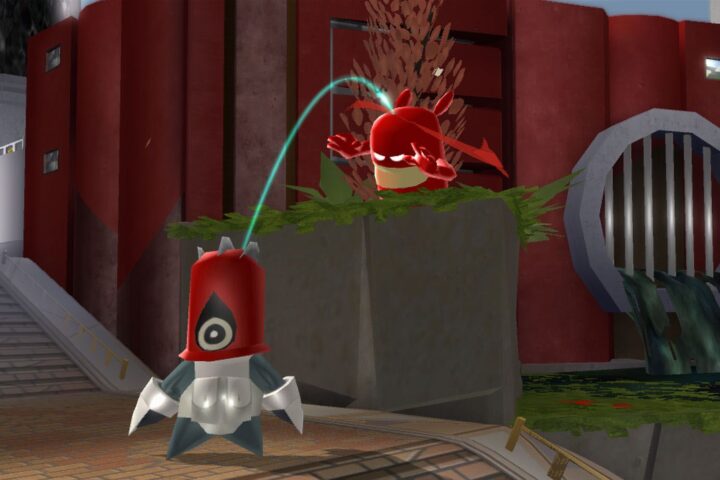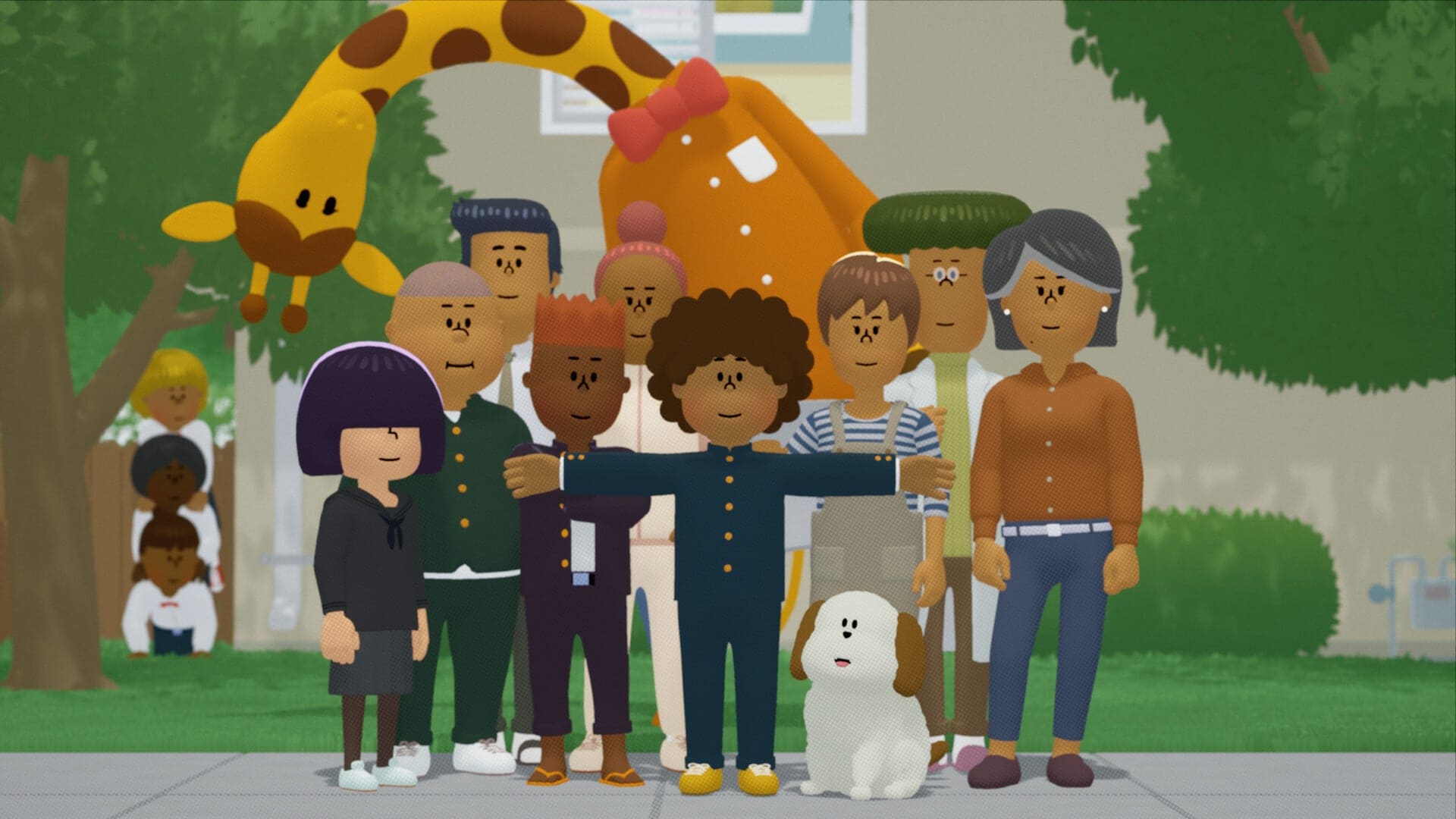
The latest from Katamari creator Takahashi Keita might sound conventional, given his typically kaleidoscopic standards. Where Wattam followed a green block man called the Mayor with a mustache on his face and a bomb under his hat, To a T centers on a human teenager with no political convictions. The character, whose default name is Teen, lives in their small town with their single mom and dog, whose default name is Dog. Narrative-advancing “episodes” are situated around the freely roamable town like missions in an open-world game.
Of course, even Takahashi at his most grounded is still pretty weird. Teen has lived their entire life in a T-pose, arms perpetually outstretched (birth, one assumes, was a challenge). As the catchy theme song describes at the start of each episode, Teen struggles with the simpler things in life: Brushing teeth, eating cereal, and getting dressed are all a challenge when you can’t bend your arms. Luckily, Teen’s dog is of invaluable service, able to grab clothes off hangers, squeeze toothpaste out of the tube, and pull down Teen’s pants in the bathroom when nature calls.
Rendered in the bright colors that are Takahashi’s signature, To a T abounds in surprising details, and it’s as committed to absurdity as it is to earnestly exploring Teen’s daily life. It’s a disability metaphor realized through an assortment of goofy minigames and quick-time events, where you use the analog stick to operate jumbo-length objects like a toothbrush and a spoon.
It’s a one-joke premise, perhaps, but the joke keeps paying off in more esoteric ways as the game goes on. How might Teen get around town when their condition prevents them from using a bike? With a unicycle, of course. Even the pause screen is funny, with birds that represent various menu options all flying in to perch on Teen’s outstretched arms.
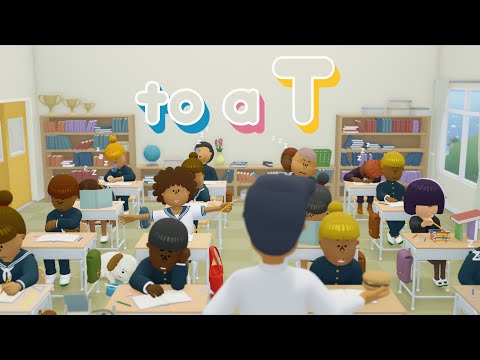
Teen’s arms take up additional space while moving through the game world, capable of knocking objects off shelves or swatting other kids in a crowded school hallway. The right analog stick lets you rotate Teen’s upper body, ostensibly to avoid these pitfalls but also to spin fast enough to fly upward, helicoptering through the air and across rooftops.
But there’s a missed opportunity here to express Teen’s struggles through mechanics, because To a T never asks for any real finesse from the player. You’re largely stuck bumping into students no matter what, and turning sideways to slide through a door simply requires you to turn the analog stick in any direction rather than precisely maneuver Teen into position.
The game’s only real source of friction is its fixed camera, which settles into a sidelong view that obscures Teen’s path forward. And while it certainly succeeds at making you reliant on Dog to find the way forward, it doesn’t directly represent any of Teen’s real problems. In the end, their struggles involve mobility rather than knowing and seeing where to go.
But at the same time, there’s something freeing about how Teen’s difficulties aren’t the exact center of the story and game mechanics. The wider world is just as big and weird as Teen’s T-posing. This is, after all, a game where a giraffe who seems to simultaneously run multiple food stands across town sings the episodes’ gentle ending theme about the joy of cooking.
A more conventional game might have foregrounded Teen’s ability to fly, bending the story into a superhero origin story as an excuse to display their newfound powers. But To a T remains a life sim, lavishing idiosyncratic detail on its ground-level view of the world. Flight is just one stop along a broader, sillier journey that depicts Teen’s growing comfort in their own skin.
This game was reviewed with a code provided by popagenda.
Since 2001, we've brought you uncompromising, candid takes on the world of film, music, television, video games, theater, and more. Independently owned and operated publications like Slant have been hit hard in recent years, but we’re committed to keeping our content free and accessible—meaning no paywalls or fees.
If you like what we do, please consider subscribing to our Patreon or making a donation.