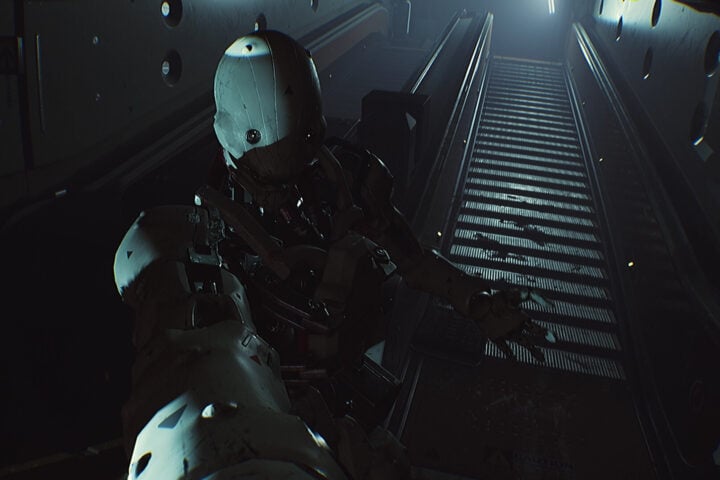
Much of the charm of many immersive sims comes from the fact that, despite the genre’s tendency toward self-serious trappings, these games have the capacity to generate surprisingly funny moments as players outwit their totally outmatched (and often not-too-bright) CPU opponents. So it’s both refreshing and appropriate that Skin Deep, from developer Blendo Games, brands itself an out-and-out comedy game.
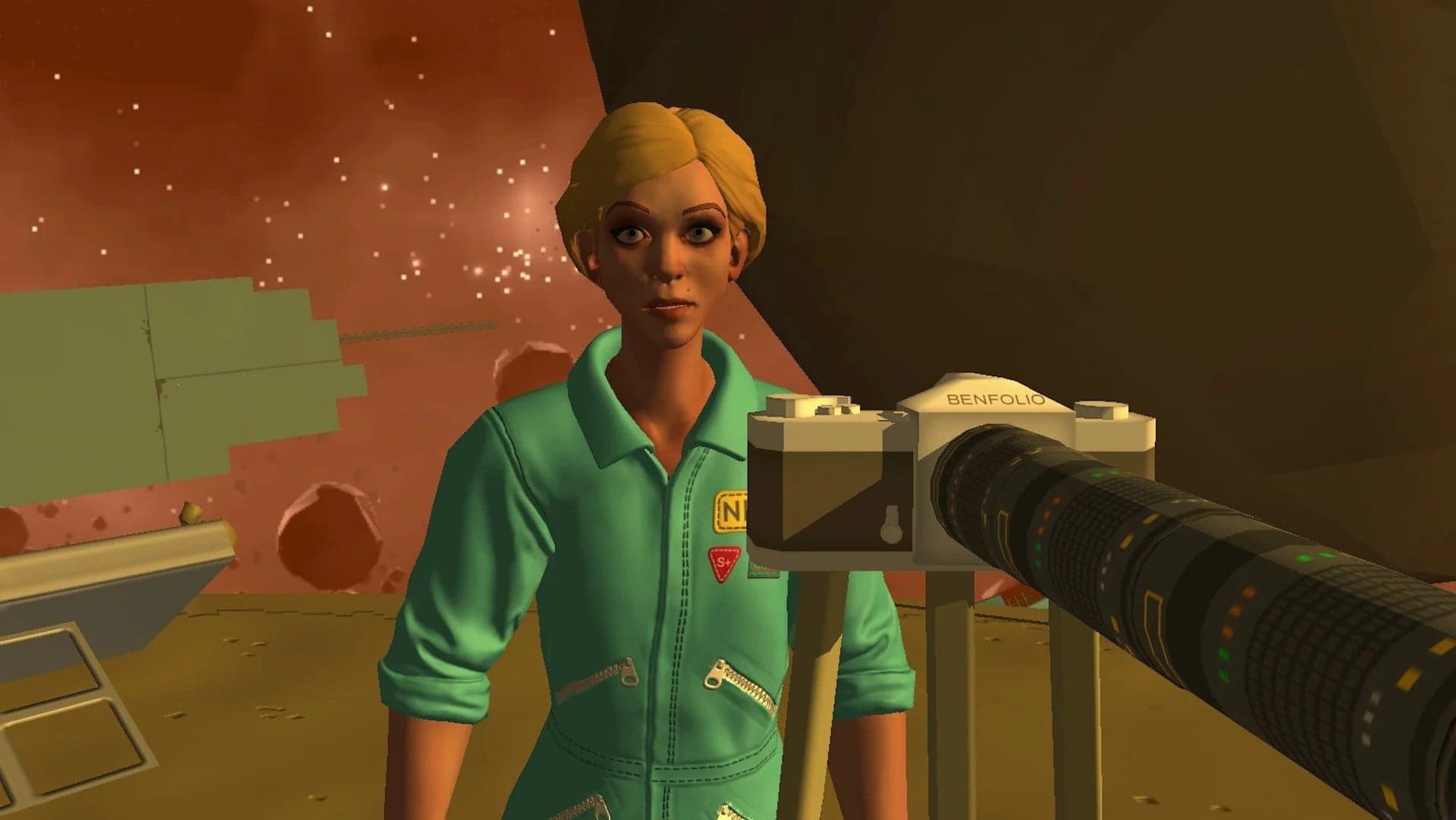
In Skin Deep, you play as Nina Pasadena, an employee of MIAO Corp whose job is to rescue the adorable cat crews of spaceships that have been commandeered by pirates. In order to accomplish this goal, your deep freeze insurance commando will need to employ tactics that often eschew traditional weaponry in favor of tactics that are downright slapstick.
In many situations, this means tossing banana peels and sneeze-inducing black pepper in the direction of pirate foes in an effort to (literally) get the jump on them, then clumsily riding them around and smashing them into hazards like you’re in some sort of messed-up, bloody, low-poly rodeo. Then, because the pirates are equipped with pieces of equipment called Skull Savers that allow them to revive after a short delay, you’ll need to pop off their heads and hold on to them in your limited inventory until you find some way to dispose of them in the vacuum of space.
The big-picture challenge of each mission mainly comes from picking apart the puzzle that each self-contained ship poses. You’ll need to flip switches on fuse boxes associated with important parts of the ship’s functionality, most of which are locked via password. These can activate vent systems, trash chutes, windows, or airlocks. Many times this involves traversing the outside of the ship in zero-G. Luckily, you alone can survive this air-free environment because, according to the game’s more than a little dubious-sounding explanation, MIAO Corp agents are all conveniently equipped with a third lung. Since doors are often locked, ships can take quite a bit of picking at, with some diligent reading of clue-containing notes very much a necessity.
Skin Deep’s world is silly, but it’s also impressively congruent. Hand sanitizer dispensers can be used to produce a cloud of flammable fumes, which can in turn be ignited by a lighter, the sparking of a smashed walkie talkie, or any number of other fire-starting objects you might find. Vents are narrow, restricting your ability to turn around, and they’re dusty, so spending too much time in them will cause you to sneeze and give away your position. Climbing in trash chutes makes you smelly, which can arouse suspicion until you’re able to wash up in a sink.

Alas, Skin Deep wants for more variety across its stages. Sure, each ship has a theme of some sort—there’s a drive-through, a radio station, and a library, for example—but in reality these all play very similarly aside from some minor added mechanics that often don’t even prove all that useful. Basically, the tasks you need to complete in each mission are the same: Find the fuse box passwords, turn on as much of the ship’s functionality as you need, stun some pirates, dispose of their heads, free some cats, overcome one last wave of enemies, and leave.
This loop can definitely be fun, but it isn’t airtight, and some parts (especially that final wave of combat) can grow stale in their sameness after the first half-dozen or so missions. Granted, there’s room for creativity here, and certainly the right players will continue to discover less intuitive and more entertaining methods of taking down pirates, but it would be nice if Skin Deep’s level design was able to push you more forcefully into interesting and unusual playstyles.
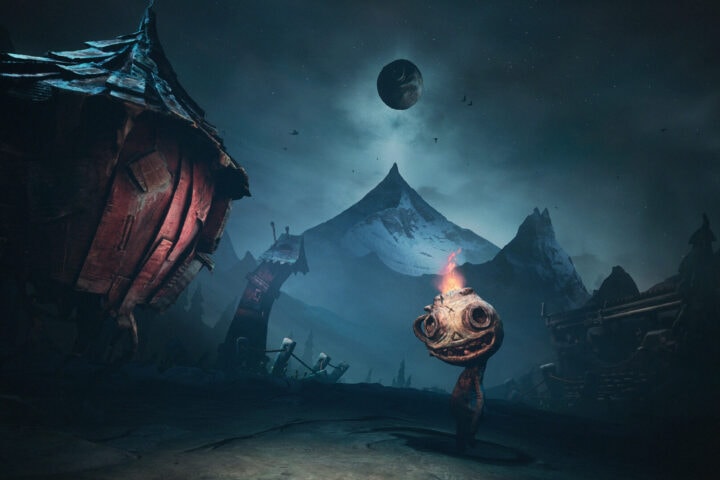
It would also help if the ships had a bit more personality, maybe something in line with the brief story sequences that occasionally see you exploring different types of environments. The home of Nina Pasadena’s old partner-in-crime Little Lion, for one, is brimful of charm despite the fact that you don’t really engage with it in any way other than to simply walk through it.
In the end, Skin Deep’s simulation is strong by the standards of immersive sims, but it’s also a bit too much of a blank slate—more a sandbox full of toys for players to mess around with than something with more direction, and thus staying power. It can be as funny as any game in the genre, but as far as how much you’ll want to keep playing after the same jokes grow old, that may depend on how much effort you want to put into concocting new ones yourself.
This game was reviewed with a code provided by popagenda.
Since 2001, we've brought you uncompromising, candid takes on the world of film, music, television, video games, theater, and more. Independently owned and operated publications like Slant have been hit hard in recent years, but we’re committed to keeping our content free and accessible—meaning no paywalls or fees.
If you like what we do, please consider subscribing to our Patreon or making a donation.