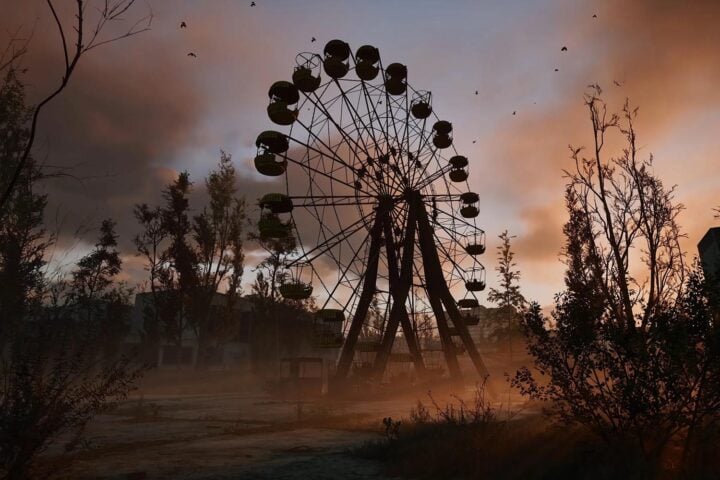
On October 10, 1957, at the two-pile Windscale site in northwest England, a graphite-moderated atomic reactor caught fire, leading to the worst nuclear accident in the history of the U.K. Burning for three days and releasing radioactive fallout that spread across Europe, this disaster serves as the instigating event of Atomfall, a first-person action roleplaying game that is to the Windscale fire what S.T.A.L.K.E.R. is to the Chernobyl disaster.
In the alternate history envisioned by the game, the Lake District in Cumbria is quarantined off from the rest of the U.K. to prevent the spread of radioactive fallout, and five years later an amnesiac survivor of the event wakes up in a bunker in the quarantine zone. Wandering out into the district, they encounter enemies of various types and must fight for survival—and Cornish pasties—while unraveling the fate of the poor souls who endured the disaster.
Atomfall invites the player to explore and discover what’s going on at their own speed, and on their own terms. The gorgeous, visually impressive Lake District setting is split into distinct zones, each with their own landmarks and points of interest. Exploration is rewarded with tools, first-aid items, and crafting materials, as well as the discovery of side stories that can evolve into longer quests alongside the ongoing investigation into what the bloody hell happened here.
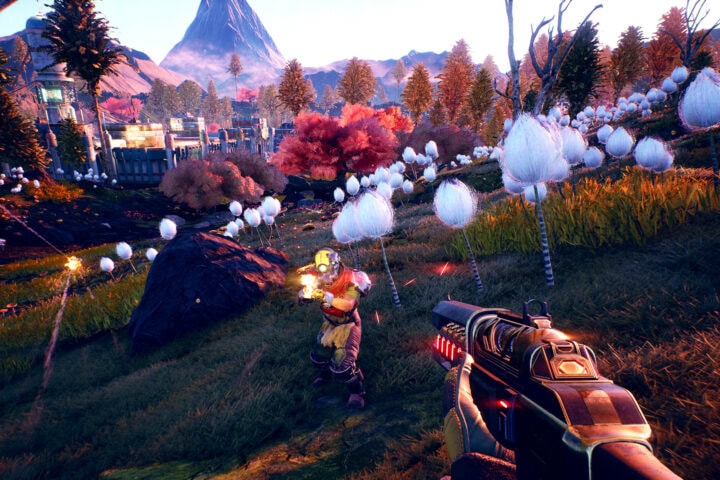
Combat in Atomfall is fast and dangerous, with resources initially scarce and minor wounds requiring quick attention, which means that it’s in your best interest to avoid most skirmishes. And understanding when it’s best to not engage an enemy is a fundamental part of the game, and one that makes Atomfall’s world feel so alive and meaningful, especially when compared to that of Fallout and its perpetually antagonistic and respawning raiders and monsters.
Lake District’s citizens are memorable oddballs, many of whom run the gamut of British archetypes, and it’s a testament to the scope of the game’s design that you may not encounter all of them in a single playthrough. Some serve as merchants, offering goods that will be valuable for survival. Different items have different values depending on the character. An ex-army sergeant encountered early on isn’t interested in pastries or ammo but loves a pint and thus will hastily exchange important items for any alcohol you may have on hand. As such, the most important currency in the game becomes your own sense of foresight: knowing what resource to acquire because, down the road, it will let you progress that much further in the game.
Despite subverting the conventions of games of its like by not, say, subjecting you to hand-holding tutorialization and making you a slave to filling out checklists of tasks, Atomfall still helpfully includes features like a diary that automatically tracks the different discoveries and clues encountered on the adventure. And while the game’s default difficulty presents an intense and satisfying challenge, this setting can be changed at any time.
Atomfall isn’t without its flaws. For one, it lacks the satirical bite and commentary of the Fallout games. There are also multiple endings that vary wildly depending on the paths you choose and characters you ally with, but the conclusions are sudden, brief, and unsatisfying, without much thematic resonance or even answers to the questions posed by the narrative.
Considering how well thought-out most everything else is in Atomfall, as evidenced by its refined mechanics and the strength of the writing, as well as its delicious pop-cultural references (from Fawlty Towers to Doctor Who), that lack of follow-through is a bummer. Despite this, Atomfall is still a journey worth taking and returning to, as using the knowledge gained across the first playthrough will allow you to truly take advantage of the game’s mechanics and savor the resonant little stories that play out within its end-of-the-world patch of England.
This game was reviewed with a code provided by Hanson Consulting Group.
Since 2001, we've brought you uncompromising, candid takes on the world of film, music, television, video games, theater, and more. Independently owned and operated publications like Slant have been hit hard in recent years, but we’re committed to keeping our content free and accessible—meaning no paywalls or fees.
If you like what we do, please consider subscribing to our Patreon or making a donation.