
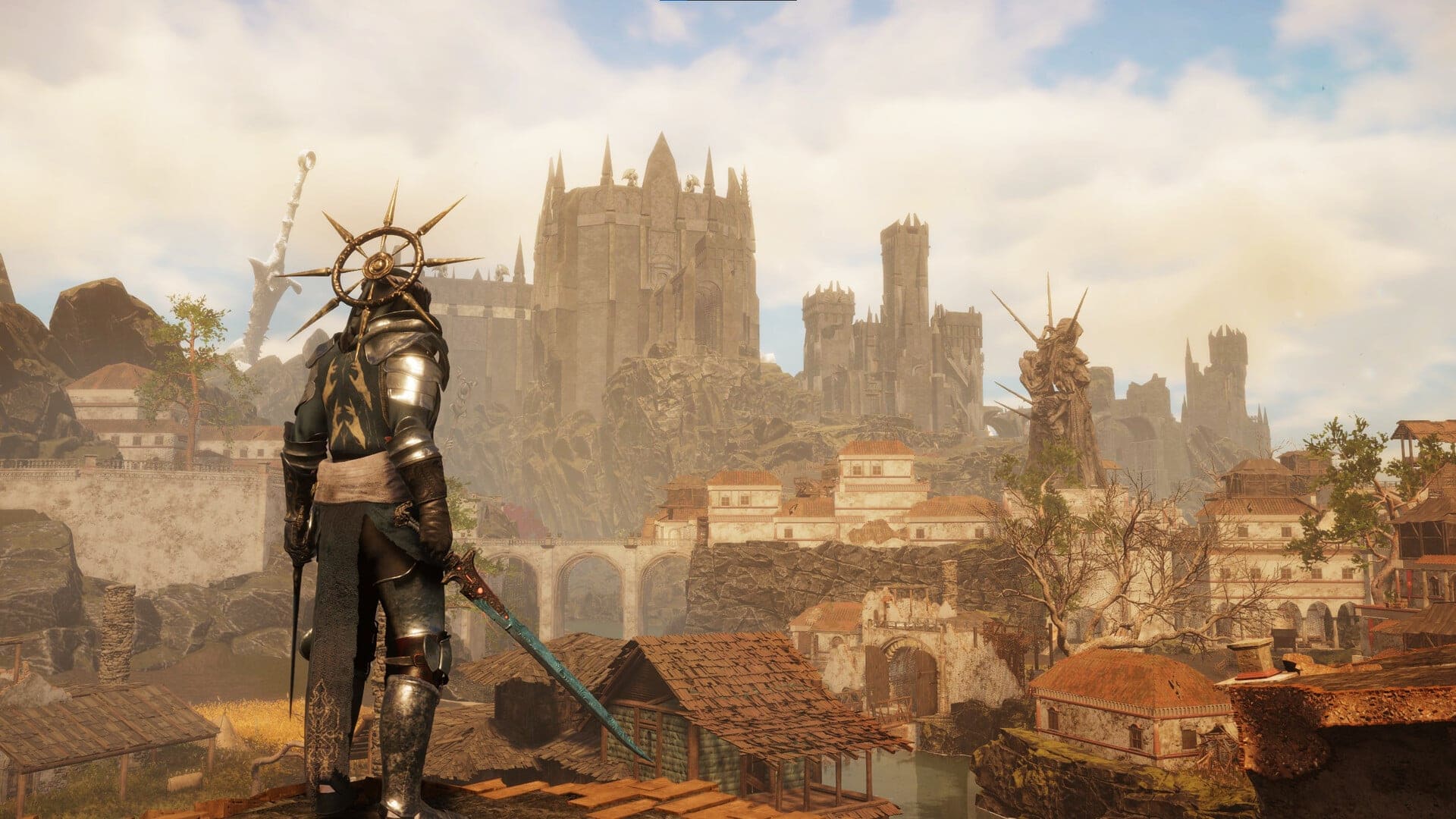
What has the village of Cuanacht done to deserve this? Not only are its residents tormented by an outbreak of an ancient plague, but they also dread the accelerating encroachment of the Wyrdness, a mystical fog that warps life and land. Most ominous, however, are the countless tree stumps that pockmark the town’s fields, remnants of voracious logging by a military detachment from Kamelot, the kingdom’s capital.
As you lend Cuanacht your sword arm in the second act of Tainted Grail: The Fall of Avalon, each mess of roots and trunks in your way stands as a tribute to Kamelot’s domineering, extractive rule. The occupying army, which has ostensibly come to solve the commonfolk’s troubles, proves a more dehumanizing force than any disease or supernatural phenomenon.
The Fall of Avalon pulses with a pointedly political spirit. Six hundred years after King Arthur conquered the island of Avalon, your journey through his crumbling settler empire confronts you with its founding myths, original sins, and destructive legacy. Few interactions with the open world’s communities and environments lack a polemical bent; even typically rote mechanics, like foraging for resources, are imbued with historical weight. When you visit a camp of the Dál Riata, a group beyond Kamelot’s grasp, you might look down at the ground and find burdock roots—the picking of which the game treats, in this place, as an act of theft.
Based on the board game of the same name by Polish publisher Awaken Realms, within which developer Questline operates, The Fall of Avalon contrasts the grim gravity of Avalon’s conflicts—between Kamelot and its citizens, between humanity and otherworldly entities, between you and the piece of King Arthur’s soul that’s lodged in your psyche—with a charmingly eccentric, droll sensibility. And through it all, the makers of the game keep Kamelot exceedingly wyrd.
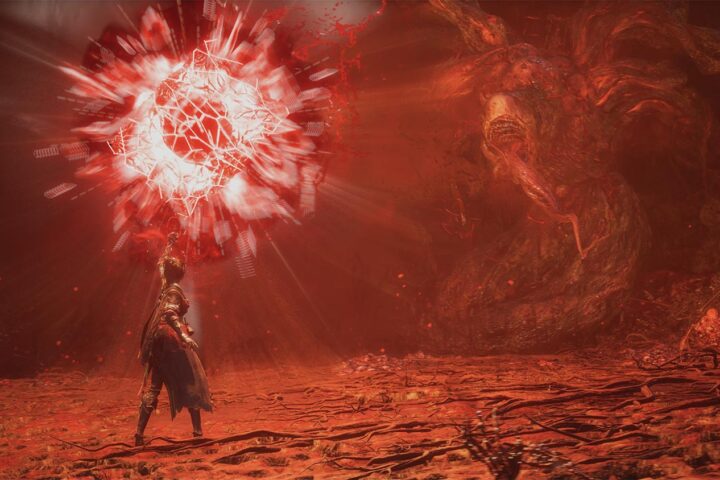
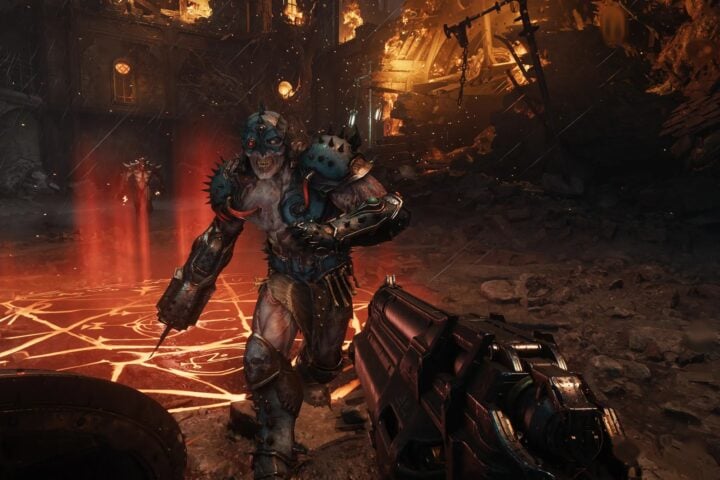
Against the backdrop of a sparse but transportive score, you slay grotesqueries and traverse trippy landscapes twisted by the Wyrdness, sprinting from struggling farms to haunted temples to abyssal planes. The empire’s inhabitants, meanwhile, are compellingly odd and opinionated; you learn their hopes for Avalon’s future over the course of multi-act quest chains that evoke the simple pleasure, a la Dark Souls, of unexpectedly seeing familiar (and bizarre) faces on the road.

Avalon doles out ample lizard-brain thrills as well, namely in the winding trails of its geography and the atmospheric, if sometimes labyrinthine, dungeons nestled off beaten paths. Whether engaging in spontaneous spelunking or undertaking bounty hunts, the enterprising adventurer suffers no shortage of rewards in Avalon. You’ll be swimming in weapons and armor within a few hours, the mind racing to plan builds around the qualities of particularly enticing artifacts.
You deploy your dangerous playthings in relatively fluid and tense first-person combat (the third-person perspective on offer feels a touch janky). But while one-on-one duels and small-group skirmishes demand a satisfying degree of tactical execution, The Fall of Avalon often dials up its difficulty by throwing entire hordes at you at once, trading strategic exchanges for what feel like chaotic rolls of the dice to see who hits and crits first.
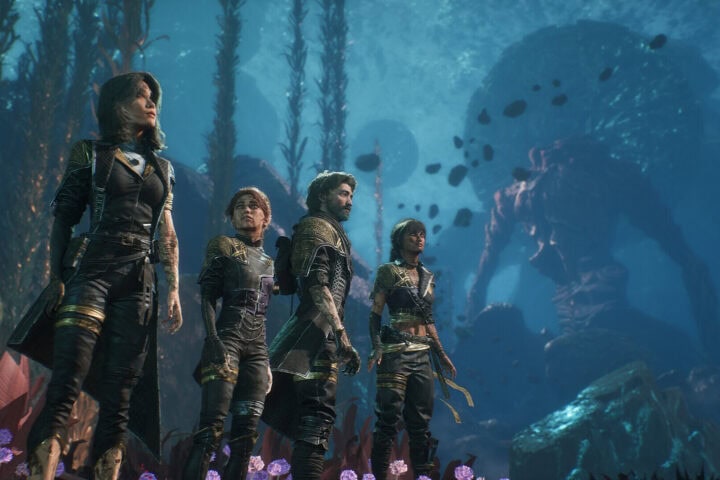
It’s also a shame that, as the game proceeds, its thoughtfully constructed world shows cracks. For one, it features almost no women characters in central roles; though side quests explore a considerable range of perspectives, the main narrative is advanced largely with cutscenes populated by similarly deep-voiced men. And after you begin aligning with certain factions, it becomes clear that Avalon’s denizens don’t meaningfully respond to the choices you make. In this, the game concedes its subtle world-building—the tree stumps surrounding Cuanacht, the burdock roots of the Dál Riata—to the hegemonic structure of the open-world RPG.
Alas, it’s worth noting that the Wyrdness seems to have seeped into my PS5 during my review. While occasional harmless bugs only add to the sensation of this Arthurian fever dream—like the perpetually glitched guards who shadowbox their way across the courtyard of a keep—I experienced more than a few crashes and frequent stuttering. A day-one patch appears to have resolved the former issue, but the game continues to slow down disruptively when it auto-saves.
Despite these technical hiccups and the sense of artificiality that creeps into the open world on a macro scale, The Fall of Avalon’s intimate moments remain resonant—and, at their most evocative, enthralling. Whenever a quest or a piece of dialogue failed to reflect my previous decisions, and whenever Arthur’s kingdom suddenly collapsed with an error message on my console, I was gladly ready to surrender again to the wanderlust that Avalon inspires—eager for the game, like the Once and Future King himself, to rise anew.
This game was reviewed with code provided by Awaken Realms.
Since 2001, we've brought you uncompromising, candid takes on the world of film, music, television, video games, theater, and more. Independently owned and operated publications like Slant have been hit hard in recent years, but we’re committed to keeping our content free and accessible—meaning no paywalls or fees.
If you like what we do, please consider subscribing to our Patreon or making a donation.

” It’s also a shame that, as the game proceeds, its thoughtfully constructed world shows cracks. For one, it features almost no women characters in central roles; though side quests explore a considerable range of perspectives, the main narrative is advanced largely with cutscenes populated by similarly deep-voiced men. ”
Oh god, grow up.