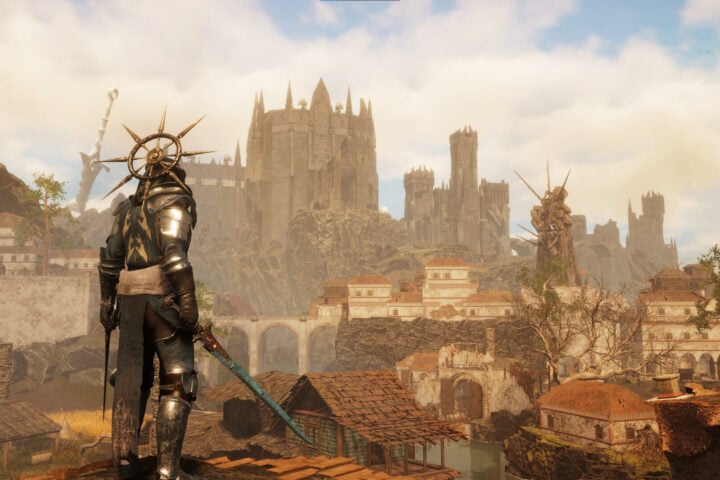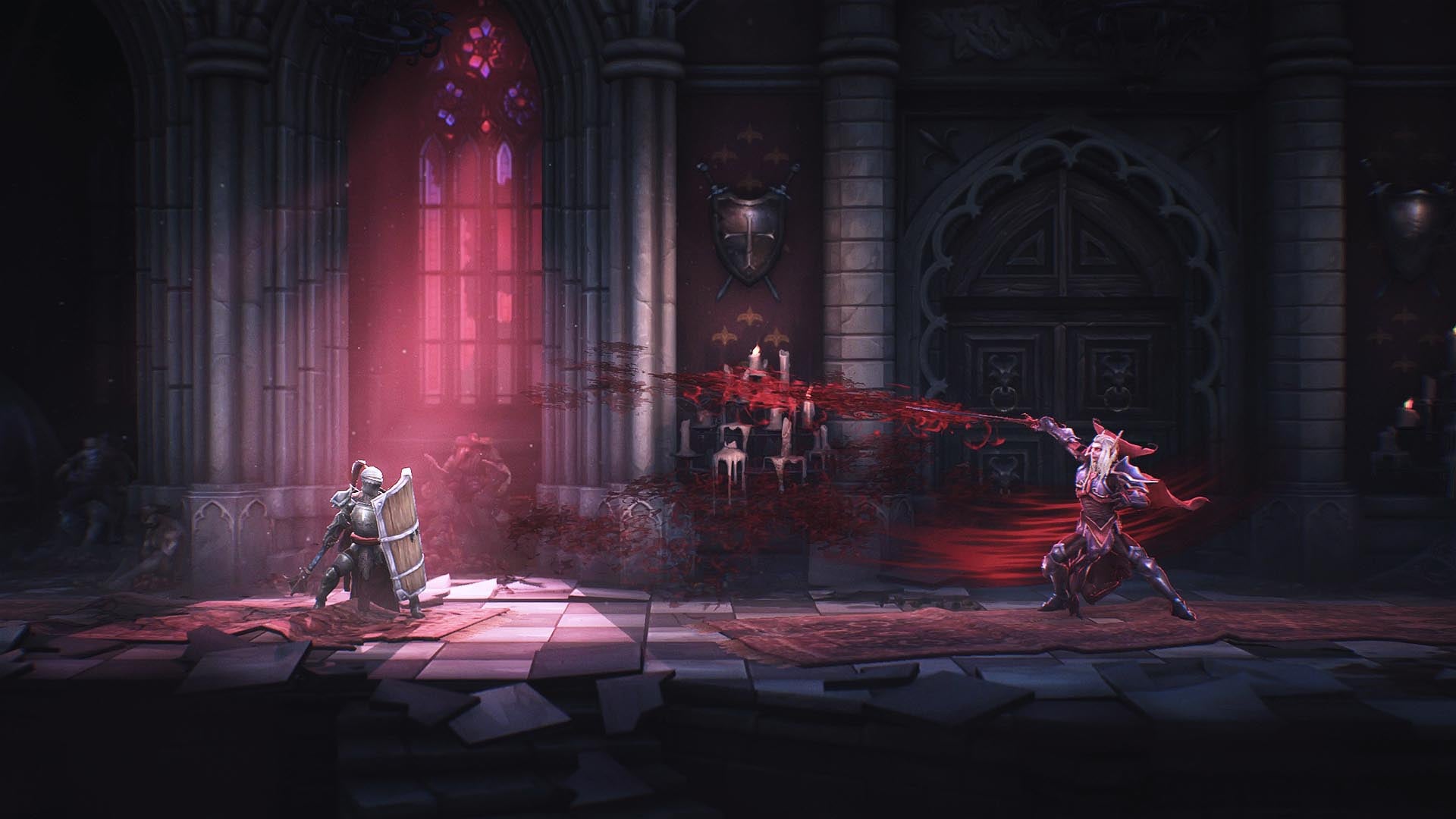
The town of Wickham, one of your first destinations in Mandragora: Whispers of the Witch Tree, is split in two by a foreboding gate. Prior to the events of this side-scrolling RPG, Wickham’s nobles built the barrier to distance themselves from the local peasantry. But when you, a heretic-crushing inquisitor serving the so-called King Priest, reach the settlement, you find a community reeling from multiple cataclysms. The rich, in their isolation, have been butchered by monsters, while the poor hole up on the other side of the partition, living under constant attack by bandits and in unceasing fear of the creatures inching toward their homes.
Mandragora, from the Budapest-based Primal Game Studio, is a grisly feat of world-building. There’s a remarkable sense that the ruined realm of Faelduum, the game’s setting, existed long before your arrival. It feels bracingly alive—molded by the ancient past, wounded and reshaped by recent tragedy, and damned by a cosmic doom set in motion an eternity ago.
These historical forces rear their heads in your interactions with idiosyncratic survivors, in every twist of the bleakly gorgeous landscapes you scour. As a result, what begins as a quest to hunt down a witch comes to resemble a burning tapestry: You’re a thread weaving in and out of people’s plights, conflicts, and hopes, rushing into the inferno and sifting through the ashes.
You establish your role in Faelduum almost immediately, by selecting one of six starting classes, each of which is described with a blurb that contextualizes its function in the forces of the King Priest. As you explore interconnecting locales and delve into ominous dungeons, you collect gear, whose effects on your character are fairly simplistic, and new powers, which are tied to specific classes. In time, you gain the ability to train in additional specializations, unlocking considerable potential for player expression. (There are winsome shades of Grim Dawn in both the art design of the skills and the encouragement of thoughtful build-crafting.)

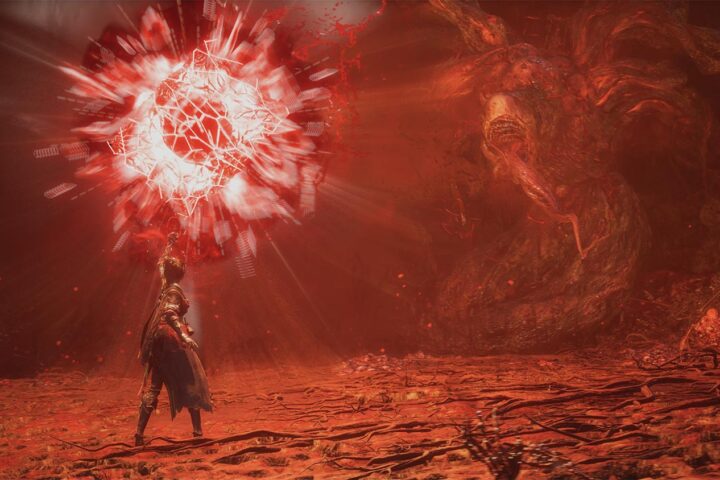
Mandragora’s marketing refers to the game as a Soulslike, and the shoe fits, for better or worse. The need to manage your stamina meter and your distance from foes makes combat an engaging, relatively methodical affair. Bosses pose a threat, but their difficulty largely feels cozy. They’re puzzles to solve rather than walls to bash your head against (and if desired, you can tweak the challenge level with a handful of settings and sliders). Perhaps most importantly, a rightful respect is paid to fashion and your inquisitor’s flexible styling.
But Mandragora also suffers from frustrations that mar some of Miyazaki Hidetaka’s works, including imprecise controls and iffy readability outside of battle—namely, when traipsing along rickety platforms—as well as the presence of instantly deadly environmental hazards (a lesson not learned from the Game Kitchen’s Blasphemous, another stellar Metroidvania with Miyazaki in its heart). And in a departure from the Dark Souls canon and its capacious bestiaries, Mandragora’s enemies, minibosses, and attack patterns grow a touch too familiar as they increasingly repeat themselves, albeit with admirable cosmetic reinvention.
But such quibbles are negligible, given the deftly oppressive atmosphere that Mandragora conjures throughout its campaign. The voice actors, particularly those who play the artisans you welcome to the stretch of woods that acts as your uncommonly comforting hub, imbue their performances with understated weariness, giving shape to Faelduum’s harsh conditions and dire outlook. When characters speak, their portraits occupy a great deal of the screen, forcing you to look closely at their faces, into their eyes, to sit with their barely shielded distress. Your attempts to help the common folk, meanwhile, are as likely to end in disaster as they are in peace, a reflection of the uncompromising devastations of war.
Most evocative are the stunning vistas that serve as the backdrop of your journey. Wind shakes the trees of haunted forests; rows of houses stand humbly in warm, fuzzy light; a swollen sun plunges into the distant horizon. These deeply textured images seem to extend endlessly beyond the frame, suggesting the vastness of the land they depict—and in doing so hint at not just the untold horrors that Faelduum has witnessed but its infinite capacity for further calamity. Enter the inquisitor, a speck on this plane, sent by their lord to repeat the sins of the past.
This game was reviewed with code provided by UberStrategist.
Since 2001, we've brought you uncompromising, candid takes on the world of film, music, television, video games, theater, and more. Independently owned and operated publications like Slant have been hit hard in recent years, but we’re committed to keeping our content free and accessible—meaning no paywalls or fees.
If you like what we do, please consider subscribing to our Patreon or making a donation.