
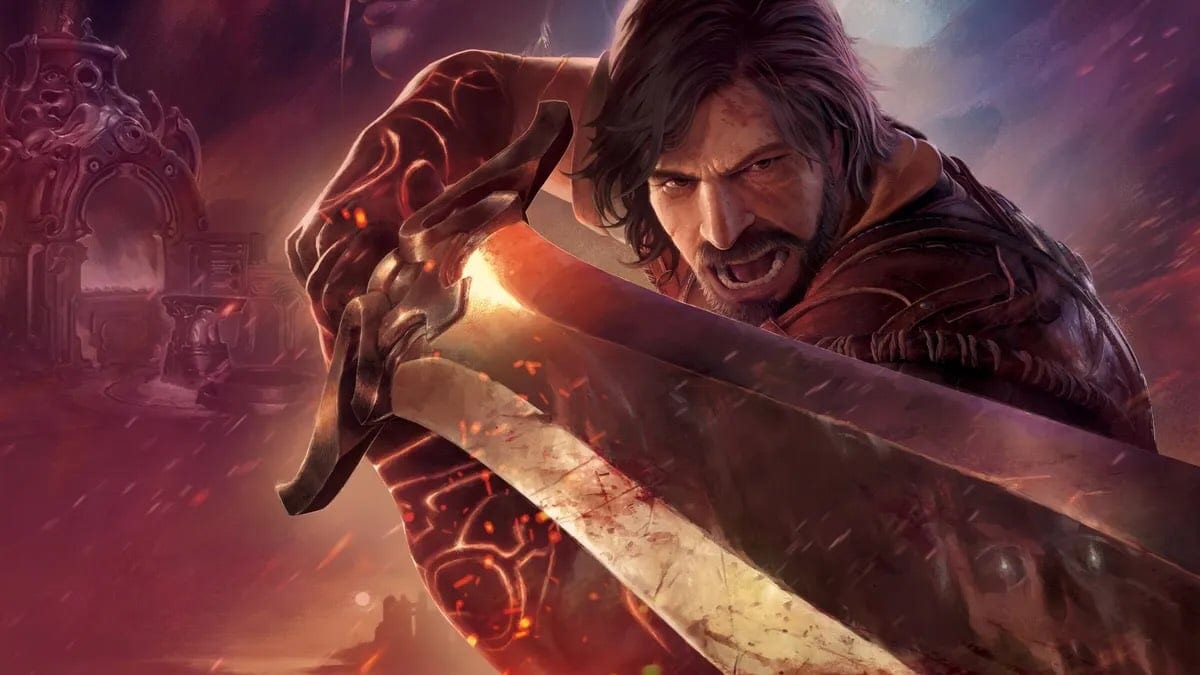
As brilliant as FromSoftware’s Souls games are, they always seem to come with their annoyances. Blades of Fire, Spanish developer MercurySteam’s attempt at evolving FromSoftware’s established formula, asks a question absolutely nobody needed an answer to: What if all those annoyances were fused into one singular experience?
In the game, a warrior named Aran De Lira gains possession of a magical forging hammer, and his entire quest to kill his kingdom’s queen is powered by the new and better weaponry that he must constantly forge to take on the enemies that stand between him and his goal. That’s as bog-standard a plot as they come, but to the game’s credit, the forging is aces. Every enemy encounter and item collected gives Aran new blueprints or a way to tweak weapons, and the minigame in which he must hammer a slab of red-hot steel into shape is strangely engrossing. MercurySteam found a way to make crafting meaningful and powerful again.
Alas, you don’t get to admire your handiwork much. Blades of Fire may be a hard pass for many just based on the fact that weapon degradation isn’t just a mechanic of this game, but the core mechanic driving every single facet of it. Even in the bad old days when Souls games had weapon degradation, you weren’t in constant danger of losing a powerful weapon just because you turned the wrong corner and fell off a ledge. That, though, is a persistent worry here.
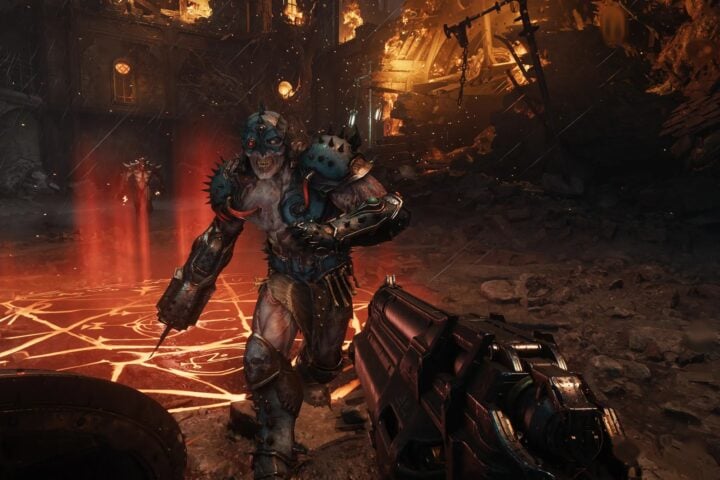
In Blades of Fire, death means that your currently equipped weapon drops on the spot, and while it can be picked up, you still have to fight your way back to that spot, and depending on your resources, you may not have enough to create the weapon the enemies in your way are weakest to. The game’s combat system is intricate, requiring the player to figure out which weapon in which stance will work against which body part of which enemy, but it absolutely doesn’t mesh well with how numerous, fast, and prone to cheap hits your enemies are.
Death and weapon use have such steep consequences in the game. Dying isn’t just a matter of dusting yourself off, accepting the loss of currency, and ramming your head against a challenging wall ad nauseam, but reckoning with being worse off after every single encounter.

Blades of Fire is full of gran creative ideas cancelled out by bewildering design. The game’s commitment to letting the player’s curiosity guide exploration is stymied by the haphazard nature of its level design. The rather forgiving stamina regeneration system and combat balancing often doesn’t make a difference when you’re being barraged by a half dozen enemies at once, and unlike most games of its ilk, you won’t enjoy much invincibility in between hits.
Also unlike many of its genre contemporaries, Blades of Fire comes with an easy mode, a perhaps controversial option that still does nothing to mitigate the consequences of taking even a single risk throughout the campaign. Even the act of navigating the world is let down by an obtuse map, where the option to see the next logical step in your journey is begrudgingly hidden in the game’s options menu, and must be re-enabled after reaching the next story beat.
At every step, your weapons require consistent attention. Swords and spears and hammers wear down, causing certain moves to stop having any effect or the weapon to break entirely. Blades must be sharpened, specific stances must be chosen, and you must choose which enemy body part to take aim at. Blades of Fire continually throws enough problems at you that the amount of forethought you must put into every swing of a weapon becomes inconvenient. Care for said weaponry feels like a waste of time when losing a weapon is so easy and frequent.
There’s a stretch early in the game where you must escort a skeletal child through a fortress swarming with enemies, where death means not just losing a weapon, but also finding out which room on which floor the child is being held. And while that room changes each time, the child’s cries are a constant. That stretch not only represents the worst of a Souls game—of death causing a loss of vital resources, with poor navigation leading you back to them—but it recalls the nadir of Yoshi’s Island: having to perform a complex task while a child shrieks constantly.
Simply put, this game seems almost perversely hell-bent on gating you off from any kind of enjoyment. Ultimately, there’s too much work involved for not nearly enough reward from the world or the narrative, despite the occasional interesting twist and turn. Players are expected to care for every single weapon that Aran crafts in the course of his journey, which is a Herculean task given just how little care Blades of Fire gives to its players in return.
Since 2001, we've brought you uncompromising, candid takes on the world of film, music, television, video games, theater, and more. Independently owned and operated publications like Slant have been hit hard in recent years, but we’re committed to keeping our content free and accessible—meaning no paywalls or fees.
If you like what we do, please consider subscribing to our Patreon or making a donation.

“I played this game and was bad at it. Which frustrated me, Humph! I’m mad!!”
That’s how this review reads, from the mouth of a pouty child. I played through the demo and disagree with just about every negative comment in your review.