 David Lynch’s art pivots on an urge to both objectify and empathize with women, which nests in a love for America that’s itself complicated by an awareness of the country’s foundation of patriarchal rot. Lynch was drawn to archetypes, of the pure blond damsel in distress and the brunette who can teach a young man the politics of sex. And he was drawn to the iconography of coffee, diners, neon signs, hunting, trees, and small-town banter—as well to murder-mystery conventions and the cultural aftereffects of starlets who’ve been eaten alive by the Hollywood machine.
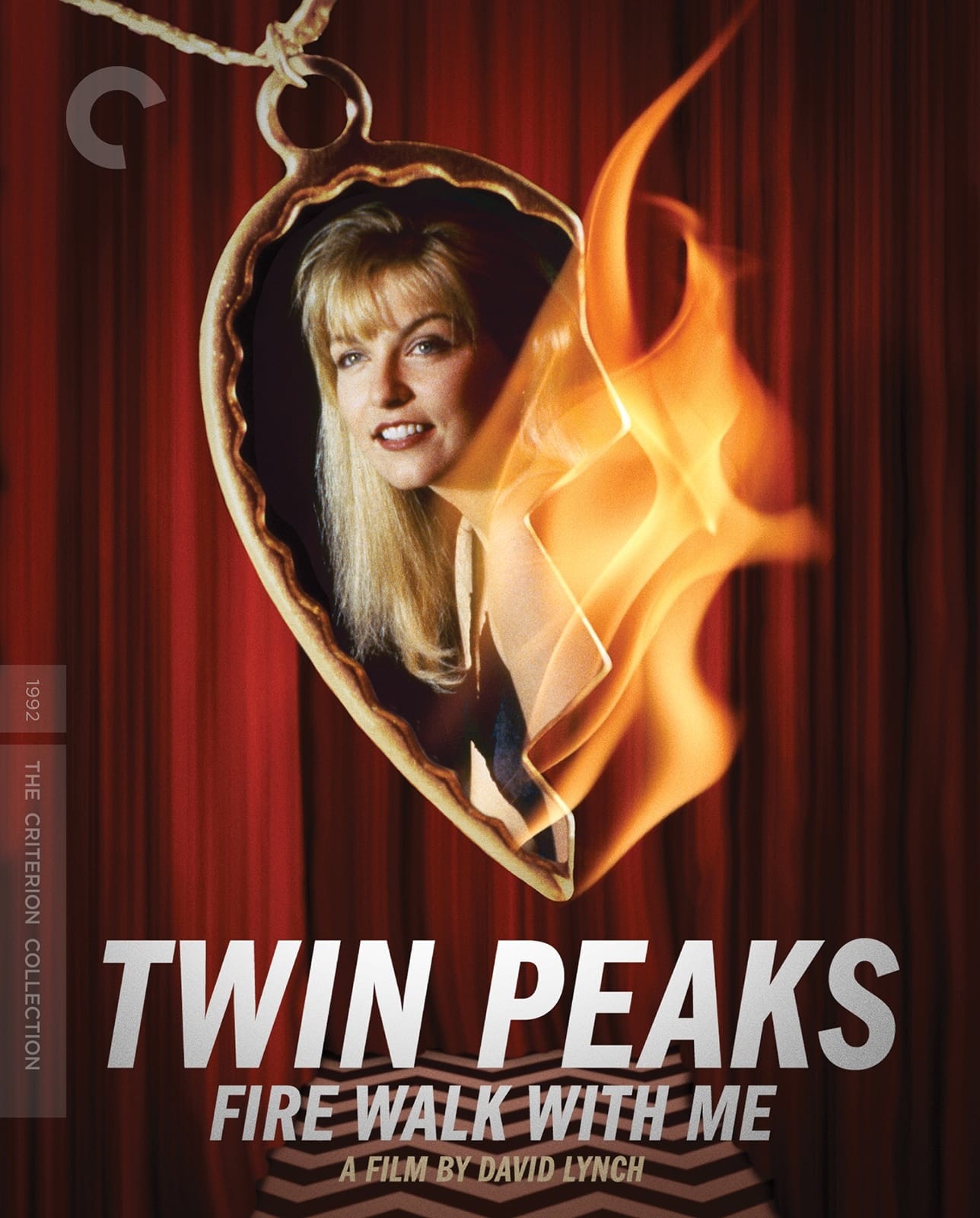
Laura Palmer (Sheryl Lee) haunts the Twin Peaks series as an embodiment of the price that women pay for male fantasy. She’s enmeshed with seemingly every man in the town of Twin Peaks, but none of them know or want her. They yearn for the all-American homecoming queen and the sex kitten we know from too much media. They lust after the uncomplicated and smiling girl that the iconic framed picture of Laura, ready for the dance, promises. The men of this fictional Washington town want a girl who looks soft, affirming their superficial and sentimental ideas of courtly love, and who fucks like a porn star. In the original two-season run of Twin Peaks, we never learned who Laura was, as she was a MacGuffin, a device for offering a tour of societal neuroses.
In Twin Peaks: Fire Walk with Me, Lynch reveals Laura to us, following her over the last week of her life. And her story is uglier than one might’ve presumed of someone who once occupied a show as a slain lamb. Like every other female protagonist in a Lynch film, Laura’s torn between honoring the rules of a male-driven society and satisfying an unknown element of herself. Laura sometimes enjoys her role as a sex goddess, reveling in the agency such a status accords, but this assignation is shown by Lynch to be a trap as well as an instrument of survival that was forced on her at a young age. Every man wants something from Laura, draining her of her essence. Life as Laura Palmer is exhausting, as even a tedious sap like James (James Marshall) seeks to possess her and define her by his own notions of how a woman should be.
Lynch undermines pleasing American iconography with perverse narrative detours or elaborate tableaux of pain; the filmmaker reveals the bugs living underneath, say, the greenest of lawns. And this is why audiences resent him, and why films such as Fire Walk with Me take time to earn their reputation. Like Twin Peaks: The Return, the film often elides the coffee, donuts, and talk of cherry pie that are fondly associated with the original series. Special Agent Dale Cooper (Kyle MacLachlan), an unusually sympathetic Lynch male who’s also eaten up with ideas of female status, is largely absent from Fire Walk with Me, and his few scenes show him to be an impotent hero who has visions of Laura’s demise that are too muddy to prevent her death.
At one point in the film, Dale has a vision of being visible from a security camera while simultaneously watching himself from a control room—a split that echoes the two Dales of Twin Peaks and anticipates the many Dales of The Return, while also forming the sort of temporal loop that governs Lynch’s work. Dale’s lost, unable to revolutionize a patriarchy that he, via the F.B.I., actually affirms. He’s bound to wind up like Special Agent Phillip Jeffries (David Bowie), who’s also split into multiple versions of himself and swallowed up by the social evil that’s symbolized by an electrically charged alternate dimension.
Dale’s premonitions compose one of Fire Walk with Me’s many temporal loops. But the film’s primary loop involves Laura’s destiny to be murdered by her father, Leland (Ray Wise), who’s controlled by Bob (Frank Silva), an interdimensional entity. Leland rapes and kills his daughter, succumbing to the sickness that drives men to destroy women while rationalizing themselves as the victims. Laura seals her doom when she awakens and sees her rapist not as Bob, but as Leland, setting in motion events that will recur throughout the Twin Peaks universe.
The film’s set pieces—like the dinner scene in which Leland’s possession of Laura is equated to his revulsion with her fingernails—anticipate a fissure in a reality/fantasy continuum. Laura is in danger of waking up from her drug- and sex-addled stupor of denial, and so she must die to restore order to Twin Peaks and male America at large. One of Fire Walk with Me’s final images involves old men feasting on Laura’s misery, which is symbolized by an insane and absurdist Lynchian flourish: creamed corn, a staple of Americana.
Like Twin Peaks and The Return, Fire Walk with Me isn’t as uncomplicatedly feminist as it may sound. Lynch is disgusted by Laura’s sexualizing, though he sexualizes her. In Lynch’s cinema, one impulse doesn’t simply render the other hypocritical. Laura’s body is often lingered on in stages of undress. These images are erotic, but they’re also intentionally framed in a manner that emphasizes their own leering sense of contrivance. When Laura is about to have sex with James at their high school, ludicrously clad in only a bath towel, the camera pans to highlight her breasts. The camera’s movement is a violation that undercuts the spell of the naïvely purplish dialogue, as if Lynch is saying, “You can’t catch this on television.”
Yet Lynch also truly sees Laura in her profound loneliness and helplessness, capturing her face in rapturous close-ups that home in on her fragility. In a staggering performance, Lee plays Laura’s entrapment with an operatic and heartbreaking kind of wide-eyed musicality.
Laura’s descent into hell is foreshadowed by many harbingers of doom, especially Fire Walk with Me’s Pink Room sequence, a riotous explosion of lurid color, accompanied by music that suggests a sexually frenzied funeral dirge. Angelo Badalamenti’s sonorous horns accompany images that are dotted with youthful female nudity that’s uncomfortably and poignantly sleazy. At this point, we couldn’t be farther away from the romanticism of Twin Peaks at its sweetest. When Laura sits at a booth topless, entertaining piggish men, even the horniest audiences should feel her exploitation and vulnerability. When Ronette Pulaski (Phoebe Augustine) sees Laura, the horns of the soundtrack underline the inevitability of tragedy. Anyone who’s seen Twin Peaks knows that Ronette is one of the last people to see Laura alive.
Laura’s death is framed as a brutal act of release as Leland pummels her, sending her to the Black Lodge as a resigned prisoner who will observe Twin Peak’s continuing evil from a theoretically safe distance. An angel by her side, Laura may finally know peace. Though even this qualified settlement, representative of a life a woman might be able to carve out for herself in a male universe, is disrupted by a man 25 years later. And Laura senses this intervention.
In Twin Peaks, Laura told Dale in the Black Lodge that they weren’t done. In The Return, Dale can’t accept his limitations, as he has his own version of Laura, the eternally rescuable victim, to guard. His actions may or may not lead to the obliteration of Twin Peaks, which may or may not be a happy ending—a casting out of the myth that America uses to paper over its legacy of atrocity. Fire Walk with Me is also an act of exorcism, as Lynch turns a MacGuffin into a human casualty, plumbing the recesses of his id and art to create one of his greatest films.
Image/Sound
The colors that he so often favored—rose red, blue-velvet blue, auburn, and deep black—look unbelievably lush across the 4K digital restoration. Image texture is extravagantly detailed, from the ridiculous woodwork of a redneck sheriff’s office to the sensual and heartbreaking skin tones of Laura Palmer and Ronette Pulaski. And Laura’s eyes have never been so vivid, so pristine and bottomless. Two soundtracks have been included, and the 7.1 DTS-HD Master Audio surround is a knockout that suggests an immersive concerto in hell, particularly in the Pink Room sequence, which resounds with intricate horns, distortions, and other bass-rich nuances.
Extras
All of the extras here, right down to excerpts from Chris Rodley’s interview book Lynch on Lynch, appeared on Criterion’s previous release of Twin Peaks: Fire Walk with Me. “The Missing Pieces” amounts to more than simply 90 minutes of extended and deleted scenes, as Lynch supervised the editing of this supplement himself, sculpting it into a modal sketchbook that’s pure Lynch straight from the tap. There’s quite a bit more footage of the original Twin Peaks cast, further underlining the town’s willed obliviousness to Laura’s misery. There’s also an unmooring scene with Phillip Jeffries that should’ve found its way into the film’s final cut, and more about the demonic caste system of the Black Lodge, including references to a convenience-store hideout that would eventually be used for Twin Peaks: The Return.
A 2014 interview between Lynch and actors Ray Wise, Grace Zabriskie, and Sheryl Lee is of interest primarily for the charisma of the participants, though revealing information emerges. Zabriskie says that other directors frequently ask her about her collaborations with Lynch, and she tells them that Lynch is open to the variables of collaboration, enjoying and using what he sees each day on the set, rather than imposing a pre-calculated vision.
This account is complemented by the interview with Angelo Badalamenti, who discusses how Lynch directs his composing. Lynch is open to various ideas, trusting his instincts to guide him toward the heart of any given film, and many of Fire Walk with Me’s most memorable musical riffs were fashioned nearly on a whim. The interview with Lee isn’t as detailed, partially because she’s understandably uncomfortable discussing the film’s most intense and intimate scenes, but she offers a moving glimpse of the challenges of keeping oneself emotionally open as an actor. Lee remembers being in a store after the filming of Twin Peaks had wrapped and feeling as if she could have her own thoughts again, rather than those of the doomed Laura.
Overall
Think of this release as a final gift from David Lynch, as it comes with his seal of approval.
Since 2001, we've brought you uncompromising, candid takes on the world of film, music, television, video games, theater, and more. Independently owned and operated publications like Slant have been hit hard in recent years, but we’re committed to keeping our content free and accessible—meaning no paywalls or fees.
If you like what we do, please consider subscribing to our Patreon or making a donation.