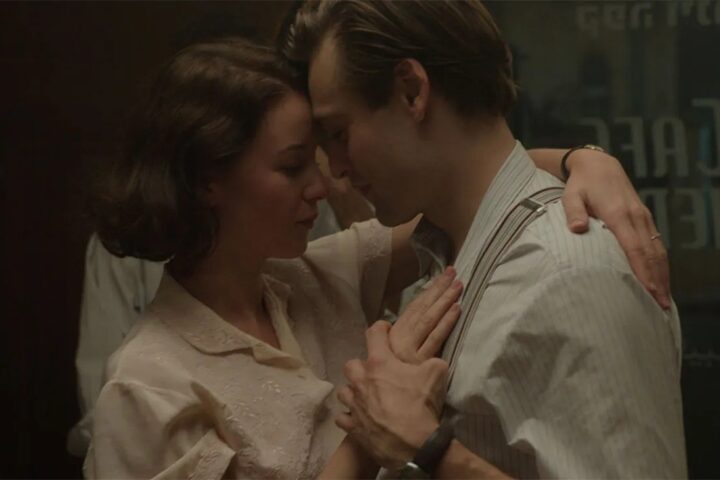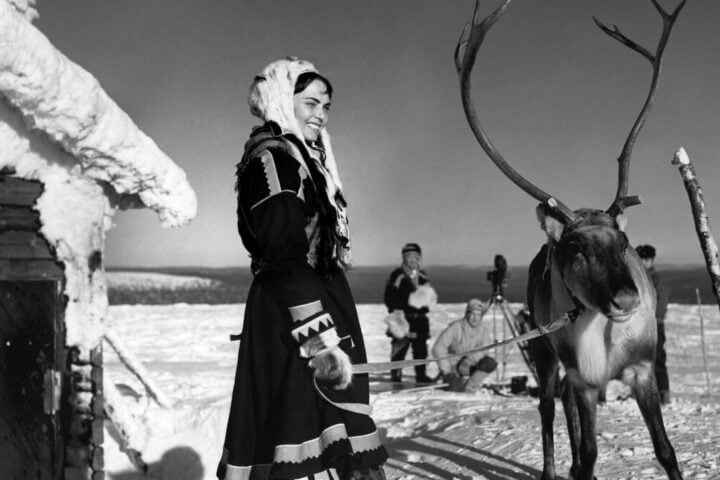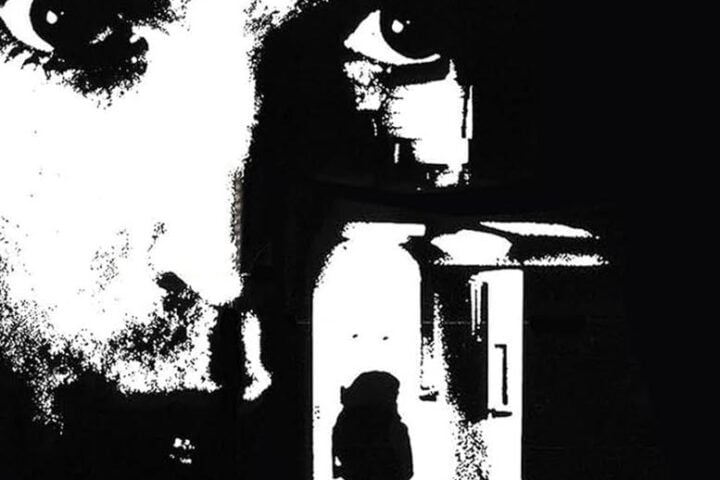
Following up on its 2022 collection House of Psychotic Women, Severin Films has released a second compendium of films centered around angst-ridden women going about their often-unhinged business. This time out we get a female serial killer who finds true love amid the carnage, a twin who plots her sister’s poisoning, and two very desperate housewives (one involved in a verité-style trawl through the seamy underbelly of late-1950s L.A., the other caught up in a Spanish-language Hitchcockian thriller). The box set comes with a plethora of informative interviews, authoritative commentary tracks, and thematically relevant short films. What’s more, each title has been given an impressively detailed 2K or 4K restoration.
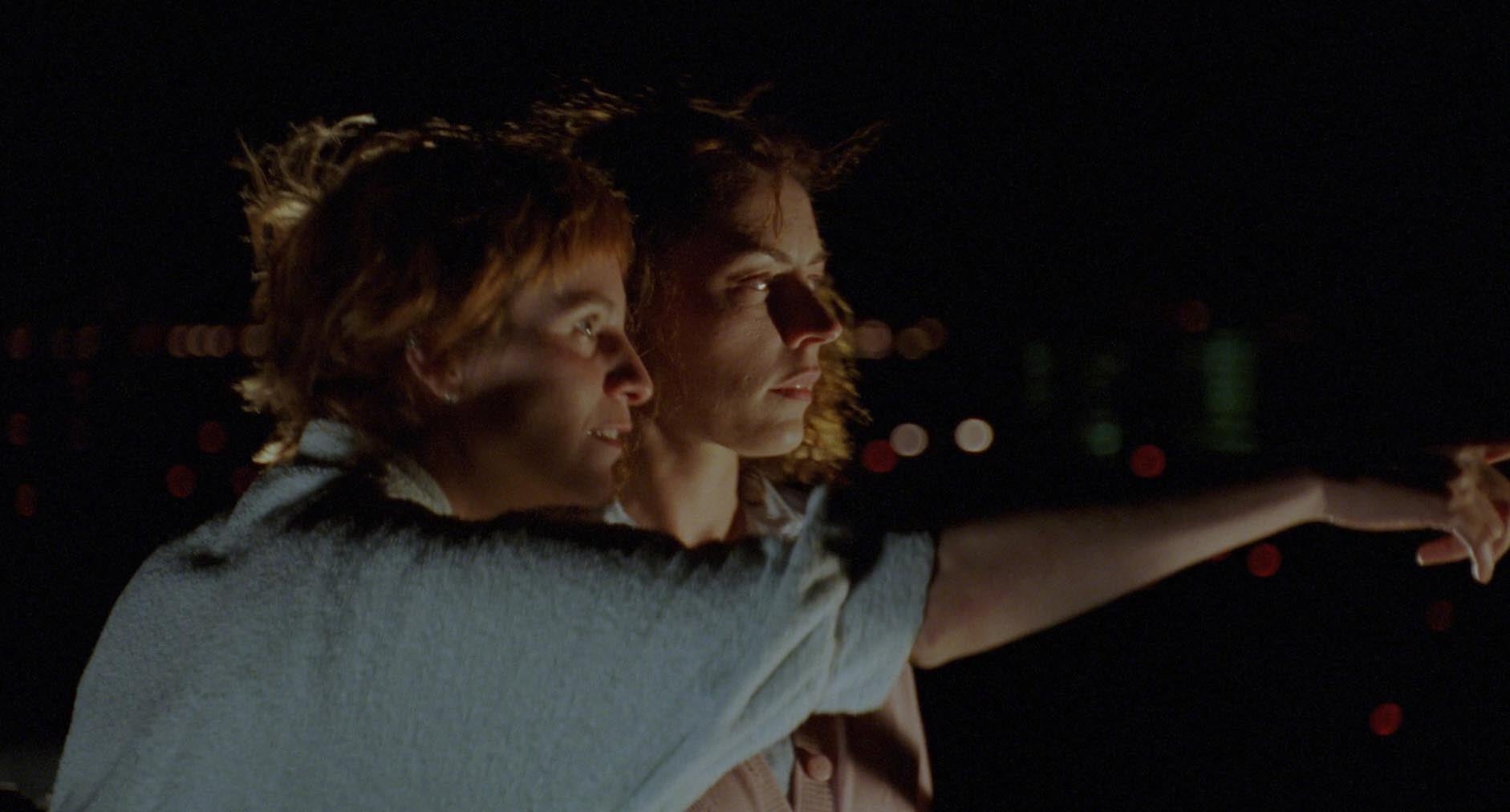
Brutal and uncompromising, 1994’s Butterfly Kiss, directed by Michael Winterbottom and written by Frank Cottrell Boyce, is an unconventional road movie that follows Eunice (Amanda Plummer) on her blood-spattered quest across Northern England to locate a woman named Judith. Unlike most road movies, a lot of Butterfly Kiss takes place in desolate roadside margins and nondescript petrol stations like the one where Eunice encounters a cashier named Miriam (Saskia Reeves), who quickly falls prey to her rather spiky charms. Their amour fou—or is it a folie a deux?—results in a murder spree that won’t end until one of them is dead.
Eunice’s obsession with locating Judith is mirrored by her fascination with the account of the seduction and subsequent beheading of Assyrian general Holofernes by the Jewish widow Judith in the Old Testament’s Book of Judith. Such a heady blend of sex and violence is clearly what fuels Eunice, but the film gives it a fascinating spin due to its religious component. A figure poised between saint and punk rocker, Eunice mortifies her flesh with a series of chains tightly wrapped around her torso, and pierced nipples also linked by chain. What’s more, she says she kills because God doesn’t stop her. God’s silence opens Eunice up to an existential freedom of action, which she happens to expend in violent acts toward men.
There’s an emotional rawness and unpredictability to the character that Plummer cannily registers through sudden shifts of expression and speech habits. Reeves is equally impressive in a much more passive role, yet Miriam is far from a victim here, left to tell the tale directly into the camera eye of a police interrogation video. Winterbottom shows an uncanny knack for capturing the anonymous no-places along England’s motorways, from dingy diners to gimcrack amusement parks. The drab expanses of the landscape are matched by the sheer immensity of the ocean in the film’s final scene, which equates purification with ritual sacrifice.
Directed and co-written by Juraj Herz, 1972’s Morgiana loosely adapts a 1929 novel from Russian writer Alexander Grin. This dark fairy tale concerns sisters Viktoria and Klára (both played by actress Iva Janžurová)—one dark, the other fair—who are driven apart by Viktoria’s jealousy when Klára inherits the majority of their deceased father’s property. At the most basic level, Herz and co-writer Vladimír Bor made some significant alterations to the source material. In the book, the sisters are named Jessie and Morgiana, and there’s no dispute over an inheritance. For the adaptation, the name Morgiana is given to Viktoria’s cherished cat, who plays a sizeable role in the film’s storyline, and even gets her own slinky low-angle POV shots.
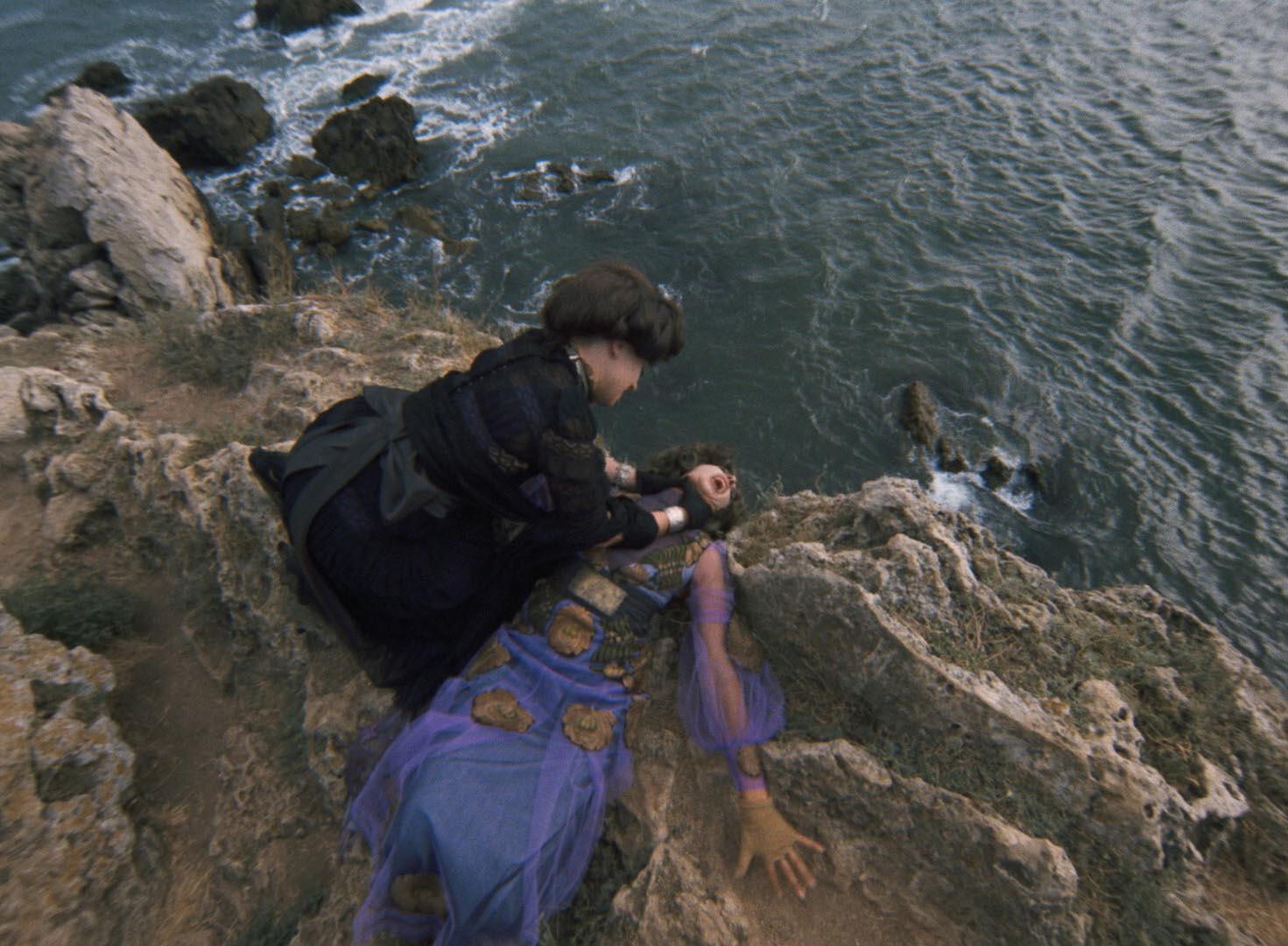
Throughout Morgiana, Herz makes generous use of fisheye lenses, giving almost every scene an off-kilter, disorienting quality, made even more so for the shots where Klára is experiencing the effects of a drug Viktoria slips her, which resemble a 3D image seen without the red/green glasses. The Art Nouveau set and costume designs are a riot of colors and textures, especially in the memorable scene where Viktoria tosses clothes out of a trunk, the gossamer layers of fabric falling to the ground like so much particolored snow. Herz also makes the most out of some dazzling locations in Bulgaria, including a lovely seaside chateau and the memorable Pobiti Kamani geologic formations that set the scene for a particularly scenic murder attempt.
A key visual motif in Morgiana consists in the replication of images. As though the sisterly double act weren’t enough, Klára occasionally hallucinates her own mirror image, who’s dressed entirely in red—the color of warning, passion, and blood. The clash of their personalities recalls the disturbing psychodrama of David Cronenberg’s Dead Ringers, though here the sisters’ identities remain fixed and not susceptible to exchange.
Herz even doubles down on the doubling. An early shot of a candle suspended between two mirrors reproduces itself into a dizzying infinity, a harbinger of the abiding mood of disorientation and dislocation. An early glimpse of Klára shows her seated before a tripartite vanity mirror that fractures her image into thirds, while a later shot reveals her in the lefthand frame when her red-clad double suddenly enters the righthand frame. The empty middle facet suggests a void somewhere in Klára’s palpably fragile sense of self.
It’s safe to say that Edgar Allan Poe serves as the film’s tutelary deity. The centrality of the feline Morgiana to the narrative, including her ironic contribution to the film’s tragic denouement, calls to mind his story “The Black Cat.” The notion of doubles and doppelgangers taps into a rich literary tradition of the “gothic uncanny” that’s perhaps best exemplified by his story “William Wilson.” Scenes of Marek and his inveterate gambling is reminiscent of Louis Malle’s adaptation of that story for the Poe-inspired omnibus film Spirits of the Dead.
From 1959, The Savage Eye is an experimental docudrama jointly credited to Ben Maddow, Sidney Meyers, and Joseph Strick, who respectively wrote, edited, and directed the film. The free associatively episodic story follows housewife Judith MacGuire (Barbara Baxley), who arrives in L.A. to spend the yearlong waiting period to obtain a divorce from her unfaithful husband. Like Medium Cool, directed by Haskell Wexler, one of several DPs on The Savage Eye, the narrative places fictional characters in the context of real events, though the earlier film lacks anything as inherently dramatic as the 1968 Democratic National Convention. And instead of naturalistic dialogue, we get a beatnik-inflected colloquy in voiceover between Judith and the Poet (Gary Merrill) that dissects Judith’s response to her new lifestyle.
The Savage Eye is a New Yorker’s vision of the City of Angels, unflattering and unforgiving. The savage camera eye gleefully picks out the flotsam and jetsam of L.A.’s seamier districts, the boozers and bruisers, the down-and-out and the ne’er-do-well. The film’s grungy aesthetic is perhaps best summarized by the shot of a vagrant picking his booze-swollen nose and then running his hand through his already crusty hair. For the work of several old-school leftists, The Savage Eye is uncommonly suspicious of the common man.
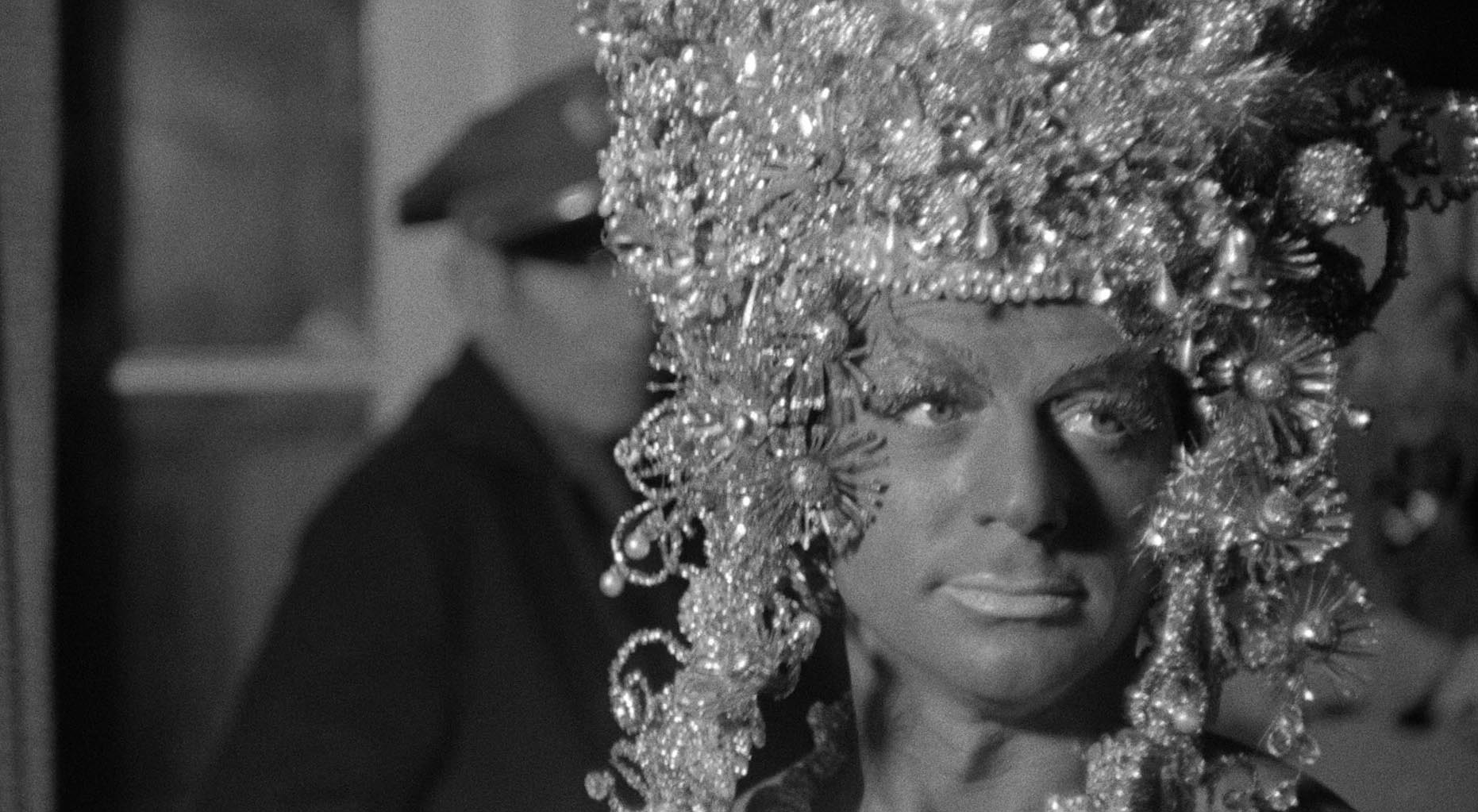
The film skewers the hoi polloi, their pastimes, and attempts at transcendence, so we get some prime verité footage of a roller derby and a boxing match, the lens zeroing in on the leering, cheering faces as they howl for blood. A vast gambling hall teeming with losers resembles the one in Robert Altman’s more empathetic California Split. The Near ‘N Far burlesque revue allows the filmmakers to both wallow in and rebuke some bump-and-grind titillation that frequently faced the censor’s scissors when the film was first released. A faith healing session furthers the glib notion that this sort of religion is all show-biz bunkum, an Elmer Gantry-like power-glide into delusions of integrity, both of body and soul. A late-film detour into a drag ball is surprising not only given the content, but also because it’s allowed to come across as truly celebratory, not merely holding up various “specimens” for ridicule.
The portions of The Savage Eye that deal with Judith’s near-death experience and subsequent transformation are more upbeat and less convincing, because they’re couched in a bebop prosody that reads more like the time Jethro wanted to be a beatnik on The Beverly Hillbillies than anything actually produced by a poet like Corso, Rexroth, or Ginsberg. All of which isn’t to say that The Savage Eye isn’t a fascinating time capsule that depicts aspects of American culture that were very rarely touched upon under the strictures of the Production Code. It also cannily predicts trends in the burgeoning American independent cinema, new Queer cinema, and even the Mondo films that followed in the wake of Jacopetti and Prosperi’s Mondo Cane in 1962.
Eloy de la Iglesia’s The Glass Ceiling, from 1971, takes place in a sprawling house split into apartments. The building’s owner, Ricardo (Dean Selmier), is an eccentric artist who seems to surround himself with beautiful women. The top floor belongs to Julia (Patty Shepard), while the second is occupied by bored housewife Marta (Carmen Sevilla), whose husband, Carlos (Fernando Cebrián), is often away on business. The ground floor serves as Ricardo’s studio.
The film, co-written by de la Iglesia and Antonio Fos, emphasizes the physical proximity between these characters from the onset, with a number of shots given over to panning slowly across the building’s courtyard and exteriors. This sets up an archetypical triangulation of desire between the characters whose ramifications play out over the course of The Glass Ceiling.
As if all of the sexual undercurrents weren’t complicated enough, enter a young milkmaid called Rosa (Emma Cohen) who shamelessly throws herself at Ricardo, offering to pose naked for a sculpture. After a slow-burn intro, the plot is kicked into gear when Marta hatches the idea that Julia did away with her invalid husband, slowly disposing of the incriminating remains by feeding them to Ricardo’s handily available pigs. The film’s obvious debt to Hitchcock’s Rear Window is given a twist by Marta’s evidence being entirely audial.
Not content to let The Glass Ceiling’s themes percolate under the surface, the writers give Ricardo a nice little speech that references Godard’s line about film being the truth 24 times a second, then posits that media exists as a “safety valve for the voyeur instinct.” The speech, which isn’t quite as pithy as Thelma Ritter’s line “We’ve become a race of Peeping Toms” from Rear Window, also tacitly answers to the film’s stylistic quirks: Every so often, when one of the women is doing anything remotely provocative, the frame freezes for a second and a shutter’s click is heard. There really isn’t any secret about who the shutterbug is, but The Glass Ceiling seems to withhold the identity for a sort of twist after the twist ending.
The film’s finale contains a revelation that brings to mind the crisscross motif in Strangers on a Train. But the ending’s most intriguing aspect is that it leaves the heroine’s fate more or less open-ended. You can infer several different possibilities from the final seconds. And while that’s certainly not a move that Hitchcock would have made, it does situate The Glass Ceiling among a subset of thrillers that perversely leave viewers indefinitely suspending their disbelief. So, while the film isn’t as overtly political as, say, de la Iglesia’s No One Heard the Scream, which also stars Carmen Sevilla, it remains a stylish and sexy exemplar of the Euro-thriller.
House of Psychotic Women: Rarities Collection Volume 2 is now available from Severin Films.
Since 2001, we've brought you uncompromising, candid takes on the world of film, music, television, video games, theater, and more. Independently owned and operated publications like Slant have been hit hard in recent years, but we’re committed to keeping our content free and accessible—meaning no paywalls or fees.
If you like what we do, please consider subscribing to our Patreon or making a donation.