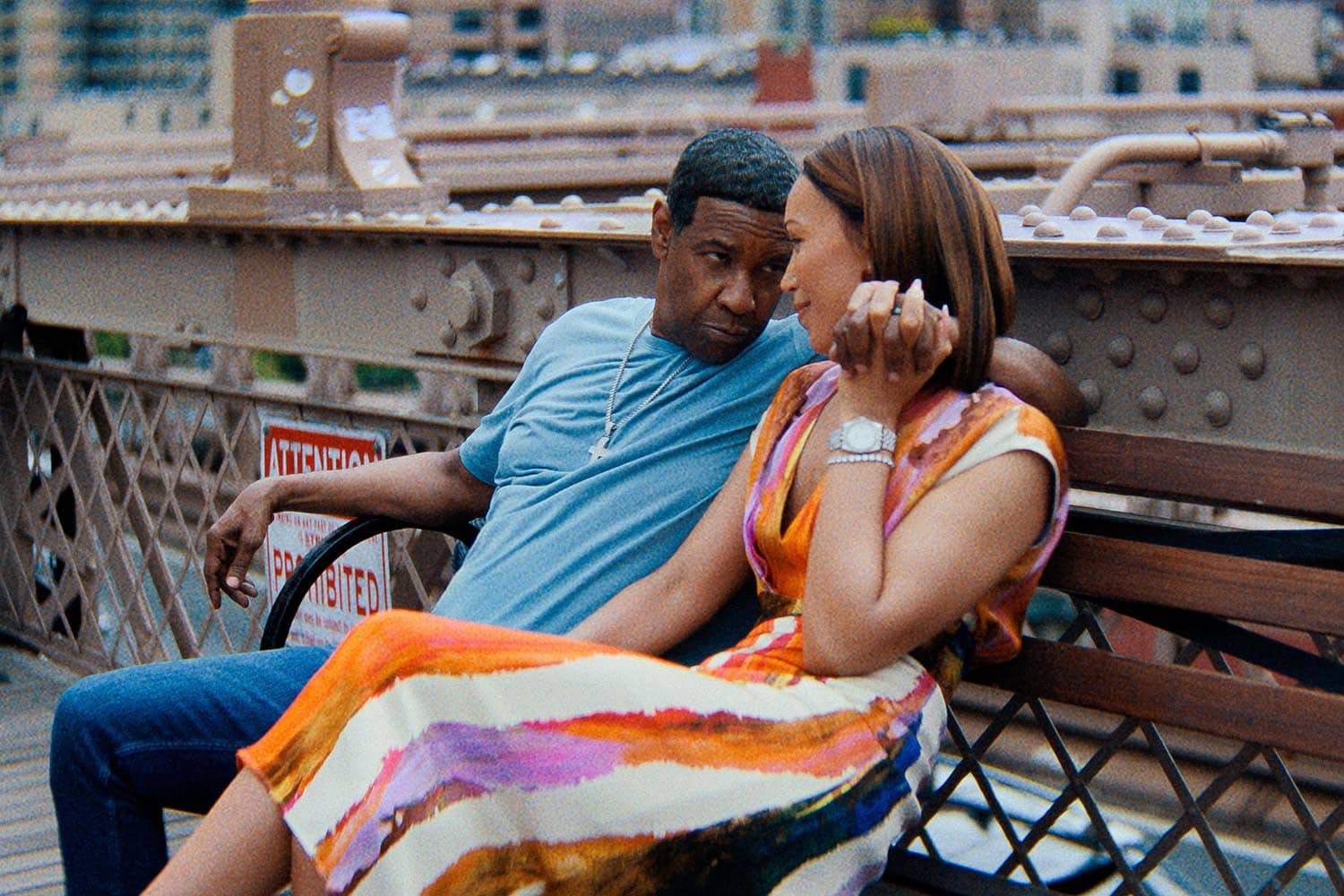
It’s been almost two decades since Spike Lee and Denzel Washington last joined forces with Inside Man, an instant classic of the heist genre. Their fifth and latest outing, Highest 2 Lowest, finds them paying tribute to another director-actor pairing—that of Kurosawa Akira and Mifune Toshiro, whose work together in the 1950s and ’60s has inspired several remakes and homages over the years, from A Fistful of Dollars to Star Wars.
Highest 2 Lowest draws from Kurosawa’s High and Low (titled Heaven and Hell in the original Japanese), itself an adaptation of a pulp novel by Ed McBain published a few years earlier. Working from a script by Alan Fox, Lee does for Kurosawa’s masterpiece what Kurosawa had done for several plays by William Shakespeare, translating the essentials of plot and character to a new time period and cultural context. Anyone familiar with the original—a moral tale disguised as a policier—will be able to trace the contours of the story in its new incarnation, but there’s pleasure in seeing how the details have been updated to present-day New York.
Mifune’s shoe factory boss Gondo from High and Low becomes David King (Washington), a founder of record label Stackin’ Hits, renowned for mentoring young Black musicians and having “the best ears in the business.” Instead of a sleek modernist home on a hill overlooking Yokohama, King lives with his wife, Pam (Ilfenesh Hadera), and their son, Trey (Aubrey Joseph), on the Brooklyn waterfront, in a swanky penthouse adorned with Jean-Michel Basquiat and Frederick J. Brown paintings and boasting a clear view of Manhattan’s Freedom Tower.
The film’s opening skyline montage—a Spike Lee staple that never gets old—finally swoops in on King’s balcony, where we find the music mogul in the midst of a risky power play. Having leveraged his entire net worth, he’s poised to repurchase a controlling stake in Stackin’ Heads, veto its sale to a conglomerate, and ensure that the label stays true to its original mission.
King’s confidant and chauffeur, Paul (Jeffrey Wright), is like a family member, with his son, Kyle (Elijah Wright), and Trey spending their summer together in a pre-college basketball program. But their difference in economic status, though unspoken, is reflected in how the men are treated by others, with Paul’s needs and interests always secondary to those of his employer.

Indeed, the central complication of the kidnapping plot that ensues hinges on the difference in social class between Washington’s music mogul and Wright’s chauffeur. When King gets a call informing him that Trey has been abducted, he springs into action, contacting the police and preparing to pay the ransom, which will ruin him financially. But then, when it turns out that the kidnapper took Paul’s son by mistake, King wavers, caught in a grotesque ethical dilemma that pits his property and livelihood against the life of a young boy.
There’s a touch of dark humor to King’s callous insensitivity to the pleading of those around him and his willingness, at first, to stand behind such a blatantly monstrous decision. This allows Washington to flex his muscles familiarly, serving as the immovable object at the center of the drama. Meanwhile, a distraught Paul does what he can to make his friend see reason.
Largely confined to the penthouse and shot in long takes that enable the actors to interact in real time, the film’s first half is talky and densely plotted—never less than engaging, but clearly doing some heavy narrative lifting. Still, the filmmakers find room for a sly commentary on art and commerce in the age of social media virality, with King’s ultimate decision to pay the ransom informed, in part, by an anticipation of an internet backlash if he refuses.
Naturally, as Kurosawa set the money handoff aboard a speeding train, Lee seizes the opportunity to stage Highest 2 Lowest’s thrilling mid-film set piece in a Bronx-bound subway car packed with cheering Yankee fans. Composer Howard Drossin, whose syrupy strains underscore much of the first half of the film, provides a lush orchestration of a Scottish jazz tune by Fergus McCreadie, using the powerful melody to drive the action while editors Barry Alexander Brown and Allyson C. Johnson cross-cut between King’s communications with the kidnapper and the Puerto Rican Day parade that’s in full swing on the streets.
Directing this controlled chaos with a sure hand, Lee lands one of the most virtuosic sequences of his career, guiding Highest 2 Lowest into its more expansive second half. The more the film diverges from Kurosawa’s, the more confident and distinguished it becomes. Lee makes the material his own not only with mere cultural signifiers—many of which reflect his personal obsessions—but by filmmaking bravado, marshaling everything from James Brown needle drops to a change-up in film stocks to enliven any given moment in the suspenseful final stretch.
Since 2001, we've brought you uncompromising, candid takes on the world of film, music, television, video games, theater, and more. Independently owned and operated publications like Slant have been hit hard in recent years, but we’re committed to keeping our content free and accessible—meaning no paywalls or fees.
If you like what we do, please consider subscribing to our Patreon or making a donation.