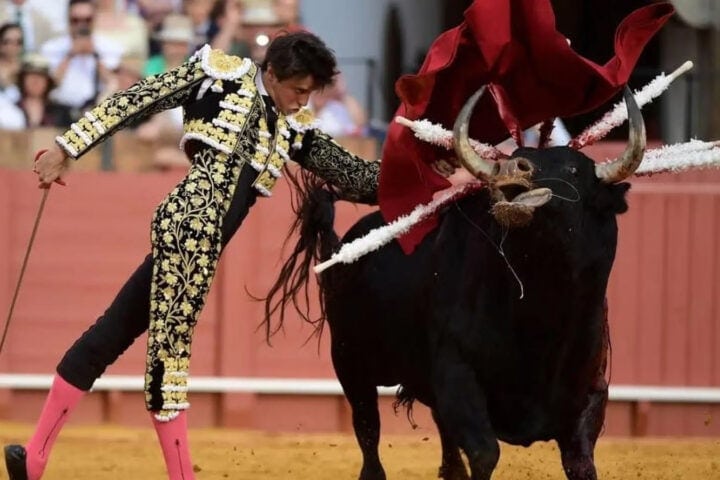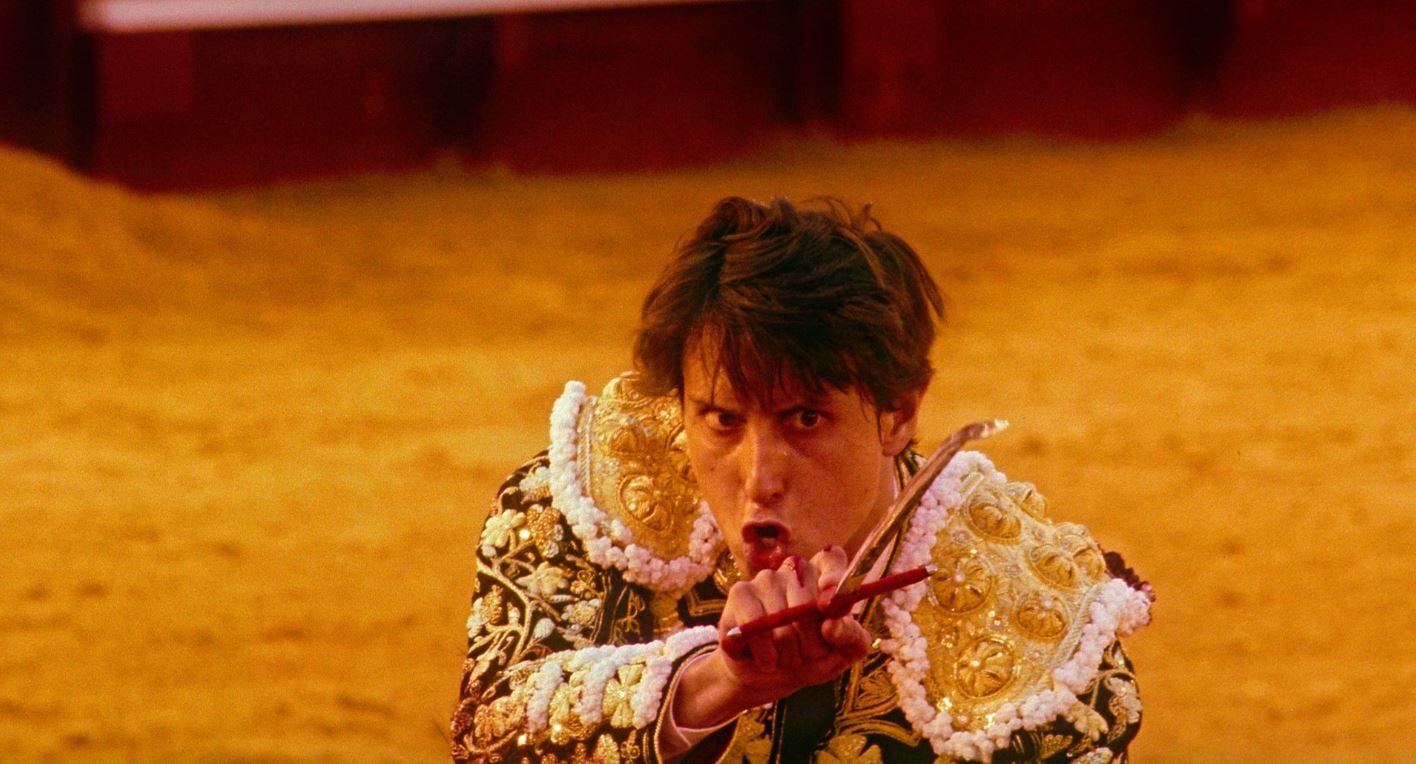
In his documentary Afternoons of Solitude, Catalan filmmaker Albert Serra renders corridas as equal parts graceful ballet and gladiatorial bloodsport. He follows the famed Peruvian torero Andrés Roca Rey across several matches over a year, all of which seem to bleed into one another. Their relentless repetition assumes a hypnotic rhythm as Serra distills the competitions down to their bare essence: as an existential conflict between man and nature.
Even as these fabled cultural events have drawn increasing scrutiny over the abusive treatment of animals, Afternoons of Solitude’s assiduously constructed images are more poetic than polemical. Serra captures both the mythological and the mundane elements of a matador’s life. The filmmaker presents what he caught on camera without privileging his perspective, thus allowing audiences to experience and evaluate the sensations for themselves.
I caught up with Serra while he was in New York to open Afternoons of Solitude at Film at Lincoln Center. Our conversation covered why he doesn’t consider the documentary a sports film, how intuition guides his editing process, and what filming the corridas changed about his understanding of the practice of bullfighting.
Why start with the bulls before we see the matadors? It seems like, based on the way they breathe, you’ve captured what feels like a language that we just don’t know how to translate.
It was a good beginning because we all know how it will end. To put a little bit of sadness already in the very beginning was quite a poetic way of starting. [It starts] with this idea of individualization. The bull isn’t just a little object with which they play. It’s a subject also that has its own…I will not say personality, maybe that’s too much, but has its own soul. I liked it because we will see much more cruel things afterwards, so this is there to balance a little bit.
Andrés’s skill is always kind of contextualized by the strength of the bull.
Well, it matters for him, for sure! He complained when he saw the film because the film lacked triumphs. It was somehow true because, by chance, the corridas I followed were so complicated. They were the great days of the season, and the most difficult, tense ones in the big arenas. [Because] they came with more expectations, he couldn’t perform at the highest level on those days. For me, it was useless if he was happy or not with his own performance. What I was interested in was the hell of the bullfighting, this intimate fight between the two.
Whether he can do it artistically better or not is for experts. It’s not for me or you—well, for me, I understand a little bit better, but it’s not for you or the normal audience. But the combat, the ritual, the liturgy, and the anthropological aspect are for everybody. The classic show is for everybody. What happens then in detail inside this frame, if it’s great moments fighting with the greatest torero, it’s all detail. The essence is what is important.
You threw out some religiously loaded words. Were any of those spiritual overtones and themes part of your initial attraction, or just something that you noticed emerging over the shooting?
It’s always there, but it’s not that important because I follow some other toreros, and he’s maybe the least religious one. Or, at least, he’s the one who’s showing [fewer] moments of really being focused on religion. For example, all the other toreros go to the church before entering the arena, because in all stadiums there’s a church, and he doesn’t [go]. He does some little gestures, but it’s more superstitious than true religious belief. I cannot say that, but he looked quite focused. Commitment was the most important thing I felt [from him].
Is this a sports movie?
I don’t think so, because there’s an important element that is absent from all other sports: the spiritual element. You can watch a tennis match or whatever, and there are a lot of human values and interesting things. But the spiritual approach is missing in this activity. The opposite [is true] here, the spiritual approach is an essential part of it—and whatever you can identify with a little bit of a religious approach. As it’s life-threatening, the spiritual approach is essential. This puts discipline or this art—as some people consider it, even—apart from other sports. It’s competitive, a little bit at the end if you can get a trophy or not and compete with the other toreros to see who’s better. But I think it’s a fight with the bull and, in fact, with yourself. There’s something self-reflective about the human condition, about society, and about our relation with the animal condition. It’s something from the beginning of the creation of the world, and there’s a spiritual element that’s more important. In sports, we don’t find this.
Is that part of why we don’t see the crowd very much?
Spike Lee asked this exact question yesterday. He said that in American sports, the audience is an essential part of the show—[that there’s] a total fusion between the audience and the show, and how [that’s something that] disappears in this film. I [agreed], then said exactly what I said before: that here, the most essential part is the spiritual one where we are the audience. It’s a mass of people. It cannot be inside this delicate, intimate, and introspective site of the spirituality that holds the torero. Because it’s life-threatening, nobody can feel this the same way. For that reason, [I took] a more conceptual and intimate approach at the level of sound and close-ups to feel a point of view of the torero. Sometimes, it’s even the point of view of the bull with all its sadness and fatality. That’s what’s important there. The audience? Who cares?
As you see in the film, sometimes he has a little bit of tension with the audience. It’s a bad element that distorts the concentration. Even if it’s a very supportive audience, it will not help the torero. This gets to the title of the film. The matador, he’s alone. It’s Afternoons of Solitude. There’s not even a connection with the audience. He’s totally apart, and they’re only bothering.
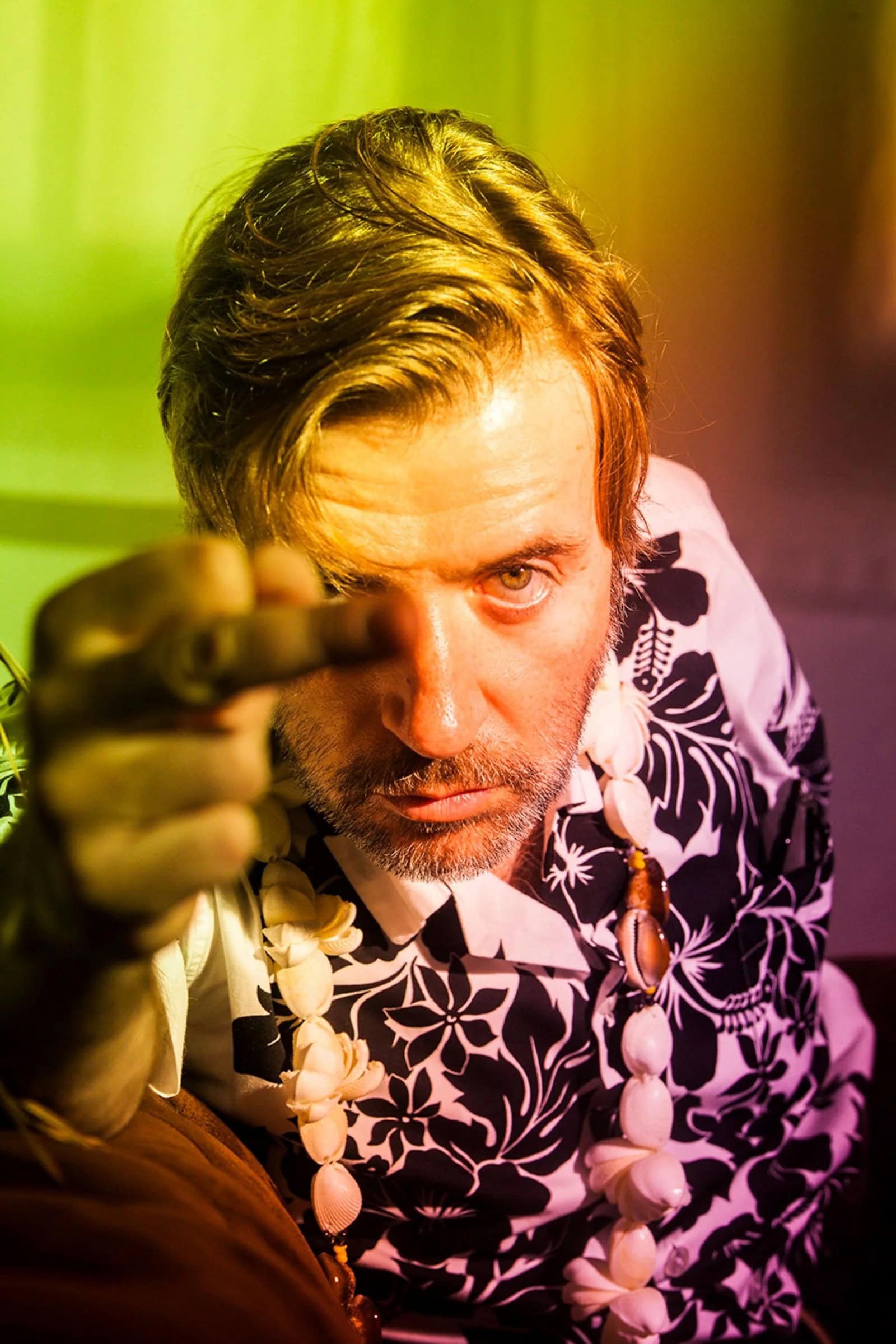
Did you ever play around making yourself more present in the film’s construction?
I think the film is quite stylish. Of course, it’s an anthropological document where I try to create some kind of subjectivity [with regard to] what’s going on inside the head of this [torero]. But at the same time, my main goal is to make an artistic film of my own. I’m the true artist. I’m the true torero in this story because this is what I do. If I choose the format of a documentary, it’s because there’s no other possible format with this subject. It can be a contradiction to make an auteur film that’s a documentary at the same time, because either you are what is in front of the camera or you are yourself behind the camera. But here, the artificial element is already in the subject. Everything with the costumes, the liturgy, the baroque plastic side, and the bull—all these things are already stylish. It’s not a pure reality. It’s an artificial construction.
This goes quite well with the idea that the film is also a parallel artificial construction. But it matches! It’s not the same as doing a documentary about, I don’t know, the problem of immigrants in the Mediterranean Sea, because there’s no stylish element in their tense, violent reality. Here, it’s a show. It was perfect for me to choose this subject because I could steal his eyes and create my own film without being snobbish.
You tout your editing above any other element of your filmmaking prowess. How did you determine the structure and form of this non-fictional story?
Exactly the same way with fiction. I analyze all the images. I didn’t control the images while we were shooting here, as it was 11 months. I checked a little bit on what we were doing. I never did it before during shooting, but here, I did it for 20 minutes, so it’s not a big deal. It’s after, when we edit the film, start checking all the images, and see what’s going on. It’s really arbitrary when I choose the images at the very beginning. It’s very fast, checking and watching all the images in play mode. Then, I choose what I like very fast on my intuition, and this will determine the structure slowly and gradually. It’s this choice at the beginning that prevents the possibility of putting ideology inside. This forced choice is so arbitrary. It’s so based on my taste and sensibility, and I’m already a person without big ideological beliefs.
I’m quite sensitive to what’s going on in front [of the camera] and not trying to think too much. The film is somehow a reflection of my own personality because it determines a lot, and I don’t have anything to say. It’s the images that talk to me at the beginning, and then I start going in deep only with the images I chose. I felt, I smelled, or I had a vibration or connection that made these images interesting, so it means that there’s a mystery to solve. When we edit, we try to solve this mystery without reaching any objective point because it’s very difficult. But you build something inevitably, and this something comes from the images. It’s never coming from me.
More than most directors, you decry and abhor the use of cliché. Where does cliché stop and ritual and tradition begin in Afternoons of Solitude?
It was easy to avoid clichés because nobody before me has had this access to the number one torero in the greatest events of the year, inside the room, inside the van, with microphones and transmitters sewn inside the costume. Only in the last five years, we had batteries that can go for five hours. Before, it wasn’t possible because every battery [lasted only] one hour. Now, it’s the first time in history that we can have this because of the generosity of the torero himself and the technology of sound and digital image. It will never be a cliché because nobody has ever seen this before. The clichés will be [from those] who will copy [what we did in] my film.
Of course, I had to make choices at the level of mise-en-scène. I decided on close-ups. I decided to take out the audience. I decided on the conceptual structure and repetition to go in deep on the ritual. Despite everything, I was never afraid of falling into cliché. Everything is so crude, and the sensation of the film is done without filter. In our childhood, these people were smart, but they were innocent somehow. After this film, no torero will be innocent anymore because they understand the capacity of penetration [of the bulls in the fights].
Cinema has a capacity for revealing details that they cannot control. From now on, they will be very suspicious of what’s going on. I was privileged. I was in the right moment, with the right mind, with the right modesty, with the right technology, and with a little bit of the right knowledge, but not too much. Everything went well because of that. I was lucky.
How did spending all this time with the footage of the corridas reshape your perception or experience of them?
The courage and strength of the torero in this situation impressed me a lot. It’s very dangerous, especially in the main events. The torero gave me a little bit of a lesson in how to control and deal with fear. We all have fear. You can fear being fired from your job. You can have fear that your girlfriend or boyfriend will leave you. Or you can have fear that tomorrow you have to take a plane. But how to control this without the possibility of escaping?
We can always escape, but he cannot. It’s a total shame. [People] say life is worth nothing, but you have to risk your life in order to understand what the value of life [is]. When you dismiss life, it’s when you accept it with all its risks and imperfections. The most beautiful imperfection is that it has an ending, and you never know when it is! [laughs] Being close to the torero taught me to take risks in my work. Already, choosing this project wasn’t that obvious at the beginning. Everybody told me when I decided to make the film, “Don’t touch it! There will be a lot of controversy, and you will be hated.” It was at the high moment of political correctness. But if you do it honestly with innocence and real artistic curiosity, who cares what people think?
I’m certainly looking forward to seeing how that all pays off in your next film as you make a jump into the English language!
Yeah, well…I will need more luck than in this one!
Since 2001, we've brought you uncompromising, candid takes on the world of film, music, television, video games, theater, and more. Independently owned and operated publications like Slant have been hit hard in recent years, but we’re committed to keeping our content free and accessible—meaning no paywalls or fees.
If you like what we do, please consider subscribing to our Patreon or making a donation.