“It never occurred to me that music was only sound,” reflects an older Lionel (Chris Cooper) in The History of Sound. The esteemed ethnomusicologist conceptualizes music as a force vibrating across multiple sensory dimensions, all of which he can harmonize in his interior world. The film’s primary journey shows the formative experience that sets a younger Lionel (Paul Mescal) on his path to gain such enlightenment.
This Kentucky farm boy with a preternatural understanding of the nature of sound heads north, to the New England Conservatory of Music in Boston, to receive a formal education on the subject in 1917. At a Boston bar, he hears a man, David (Josh O’Connor), singing a familiar folk tune at a piano, the sounds stirring something deep within him, and the way that director Oliver Hermanus shoots this moment sets the subdued but soulful tone for The History of Sound.
Lionel’s initial attraction to David is tied to perceiving his voice as he faces away from the music. Following that first recognition of something intangible working inside of him, the scene cuts to the back of David’s head at a distance as he continues singing. Even after they become sexual partners, and long after they part ways, the film doesn’t let you forget how profoundly they were drawn to each other, and how deeply rooted their bond is in their shared love of music.
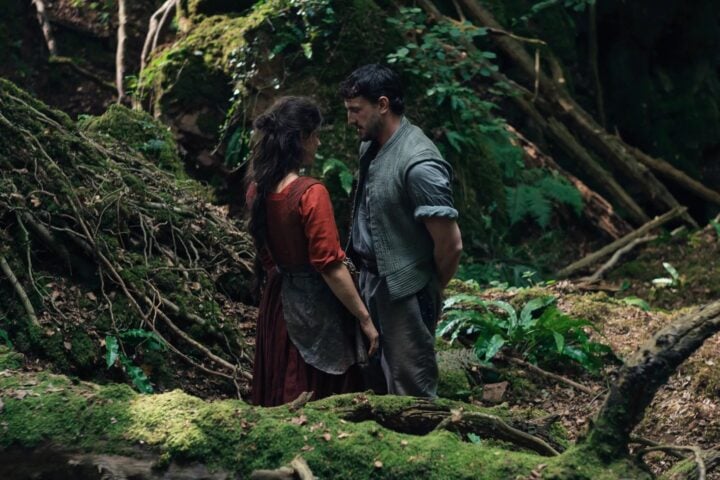
Lionel and David’s relationship blossoms at a hinge point in the history of music. Beginning in the 1920s, the technology to record and replay sound reached such ubiquity in America that David sees a noble use for the tool in preserving the heritage of American folk music. He enlists Lionel to join him on a walking trip through the backwoods of Maine to record these tunes, and it’s during this journey that The History of Sound truly sings. Away from their peers, the two men can explore a sensual and sentimental intimacy as well as reaffirm the dignity of salt-of-the-earth Americans by committing their history to wax cylinders.
Lionel and David’s efforts to help transform oral tradition through its recording reflects a parallel shift in their own relationship. Their private tenderness is a folk song that can only exist as a secret between themselves, and their voices begin to quiver as they contemplate what durability it might have outside the bounds of the trip. Differences emerge between the duo in their discussion of topics like justice and violence, many of which are informed by David’s time fighting in the Great War. The two men remain united by their desire to lead with listening rather than talking, an attentiveness that keeps their spark alive despite disagreements.
Nonetheless, they go their separate ways at the narrative’s midpoint. The History of Sound, adapted by Ben Shattuck from his own short story, yokes itself to Lionel’s perspective until its conclusion, and the film’s tempo comes to embody the young man’s transience as he cycles through various professional gigs and personal relationships in search of stability.
The second half of The History of Sound can often feel like a somber B-side to the central romance. A noticeable vitality feels drained from Hermanus’s film without O’Connor on screen, when Mescal is forced to carry the dramatic weight of the story almost entirely on his shoulders. At the same time, David’s absence is clearly a structuring one, as his absence leaves a vacuum in Lionel’s life that’s always felt, and hauntingly so.
But little in the film can rival the euphoric nature of Lionel and David experiencing the joy of doing what they cherish alongside someone they love. Their efforts create the possibility that folk tunes could be passed down through generations, and The History of Sound is never better than when Hermanus conjures the feeling of music’s creation of a suspended present tense. In these lyrical moments, the film harnesses Lionel’s ability to experience sound as something that’s not just heard but also spiritually and sensorially felt.
Since 2001, we've brought you uncompromising, candid takes on the world of film, music, television, video games, theater, and more. Independently owned and operated publications like Slant have been hit hard in recent years, but we’re committed to keeping our content free and accessible—meaning no paywalls or fees.
If you like what we do, please consider subscribing to our Patreon or making a donation.