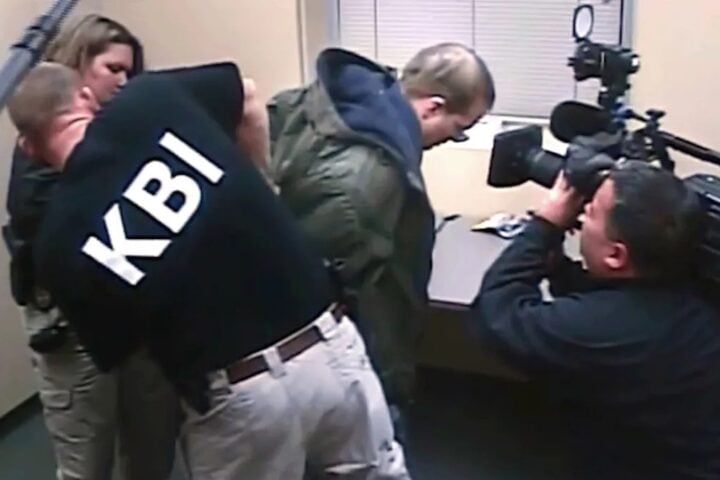
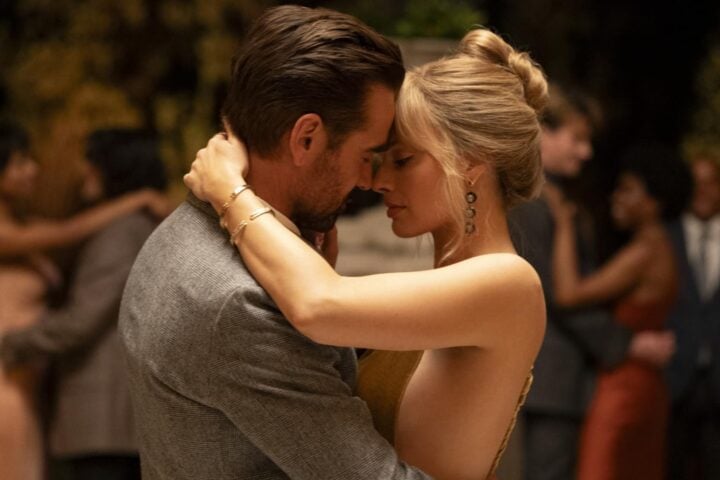
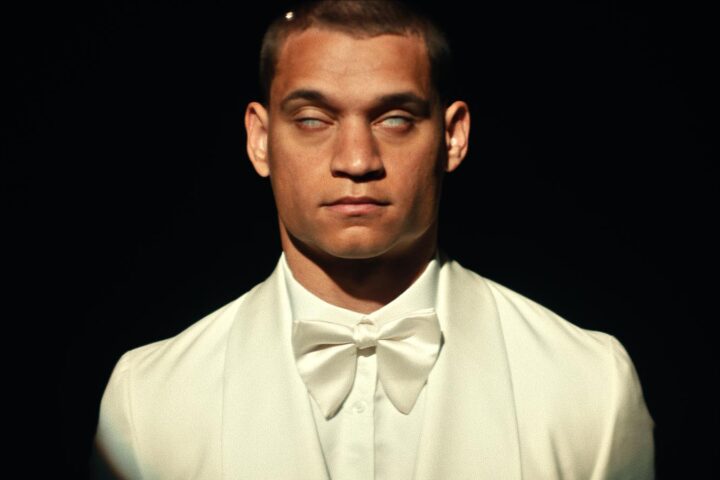
It may be difficult to recall the seismic impact that To Catch a Predator, which began as a segment on NBC’s Dateline, when it premiered in 2004. “Help me understand” was host Chris Hansen’s famous line posed to those caught in the show’s sting operations for online groomers. Now, it sounds like an unspoken animating question that’s powered decades of entertainment built around trying to explain and comprehend notorious acts of criminality.
Twenty-one years after its debut, David Osit examines the show’s impact in Predators. The documentary unfolds in three chapters, the first of which establishes the storytelling style that first captivated American viewers in the early 21st century. “As far as an audience is concerned, it’s just another true crime movie to begin, which was intentional,” Osit says.
But Predators quickly evolves as Osit continues to interrogate the legacy of To Catch a Predator, which helped form a genre on screen and created countless unintended consequences off screen. His documentary, unlike the program that serves as its inspiration, offers up no easy heroes or villains. Both the participants in its sting operations and the many aspirants who mimic its ethically murky mission come under scrutiny, as does the culture willing to condone and even celebrate a twisted fusion of law enforcement, journalism, and entertainment.
I spoke with Osit ahead of Predator’s theatrical release. Our conversation covered why he thinks the show took off when it did, how he assembled the film’s components in the editing room, and what Chris Hansen thinks about the documentary.
Oprah asks why the subjects of To Catch a Predator are willing to talk, and Chris Hansen says it’s a compulsion. What do you think?
Chris, later in the film, says something that I agree with even more, which is that there are lots of reasons that people might talk to him. I think that some of these men didn’t realize what might be around the corner for them. I think that some are deer in headlights in that moment, and they’re just talking to someone who’s in front of them, trying to be calm and polite. I think a lot of these men were probably not, as Chris would say, your typical definition of a criminal. Some weren’t even aware that they had done anything wrong, or that they were not having that much acuity to understand that they’d already broken a law. They thought that they could talk their way out of it. It’s very subjective, but ultimately, I think it’s as complicated as the issue is.
I don’t want to imply that Chris Hansen was disingenuous when he would say, “Help me understand,” but I do think that there’s a way to ask that without really looking for an answer. When you’re probing similar situations that you want to comprehend, how do you ask questions in a way that elicits the unknowable truth?
Saying the words “help me understand” doesn’t mean that the next thing someone says will help you to understand. There’s a lot of nuance that comes into what might be going through the mind of not just someone who’s a potential child predator, but anybody who believes in anything. I think that if I were doing an interview with someone about the genocide in Gaza, and they were [to say] to me, “Help me understand why you feel the way you do,” I wouldn’t then just be able to convince everybody as to what my opinions are on the topic.
For me, I think it’s about hearing what someone says, responding to the things they say, and trying to understand if they understand themselves and what they think or feel about an issue. But I think this maybe answers the heart of your question: There’s a difference between my work as a documentary filmmaker and what Chris is doing as a sort of enterprise journalist doing these investigations where the interview is five or 10 minutes long and is designed to hear the men speak for a few minutes before they’re then handed over to law enforcement.
There are many barriers in the film that you point out are breaking down, like that of a journalist. I don’t think Skeet Hansen, the online Chris Hansen impersonator, sees a ton of daylight between himself and the real Chris Hansen. Do you?
Maybe this is so obvious that it goes without saying, but everyone can be a journalist now. Everyone can be a content creator. Everyone’s their own best source of entertainment when it comes to the content they want to see. At this point, things are designed to be curated for what you want and what your interests are. There used to be a time when the only person who could go out and do what Chris Hansen did was Chris Hansen. Literally, it used to be the case where you couldn’t even have a camera for under $1,000, and now everyone has one in their pocket. So, in a very literal sense, it can’t be overstated how important it is that we can become our own creators of our content, which means that any sort of barrier to entry doesn’t exist anymore. You’re a journalist if you say you are now. Readers can decide what they think of that.
How did you go about incorporating the footage from the show into Predators, especially the raw video you got from the 2006 incident that resulted in a suicide?
I wanted to begin the film by revisiting what the show was and what its appeal was. I thought the best way to do that was to take what first compelled me to make the film, which is raw footage that I found on the internet. It came from a very small and passionate community of [fans], [who’ve] been collecting this footage for 20 years. They posted it online, and I remember watching it for the first time years after the show aired and really being struck by it. And I thought, “Well, what if I could take all that footage and all the discomfort and schadenfreude that you feel and show that to an audience and say, ‘Look, maybe you can see why this show was once popular.’” That was the way I wanted people to understand the show: this was a huge deal.
But I don’t actually put that much of the show in the film. There’s a lot of footage from the show. There’s a lot of talking about what the show meant to them, and people reflecting on their own roles in the show. But it’s more about asking people to consider how the show made them feel or what it felt like watching it, more than just a true beat-by-beat history of the show itself.
What was the process of finding talking heads for the film to add a further intellectual dimension to Predators?
It’s actually only one person in the film who’s not connected to any part of the story. He’s an ethnographer named Mark Durand who lives in the United Kingdom, and I met him while I was doing research on the film and the topics. He had been embedded with predator hunting communities in the U.K. for several years. I interviewed him, and I found that he had gone on a mirrored journey to the one that I was just embarking on, which is being fascinated by some of the ethical and moral questions that come up when you’re talking about this kind of work, but also having a sense of struggle for himself about how he felt about being involved in some of these sting operations as a silent bystander/journalist/academic. I liked that he was thinking about those questions because those were questions that were interesting to me as well. I “cast” him immediately, thinking that his voice would be a proxy for my own.
Was the inclusion of those interviews what inspired you to build your own personal narrative into the film?
It ended up being a really open conversation between me and him, who had some deep questions about kind of what sort of work we were doing. At a certain point, we just got to a level of rapport that felt really organic and surprising. When you make a film, you put everything on a timeline, and you watch it back. You see what you like and what you don’t like. This film was three hours long, and I remember watching some of those scenes where he and I would be talking about what our motivations were for doing the work we did, and even my motivations for making the film. Those moments stayed in the film, and they just never left. It just always felt like it was a moment that could be an axis by which the film could turn and reveal more depth. I wanted to see how that would feel for an audience, to have the film change shape halfway through and become more personal and become less of a typical true crime story and more of a look into our sociology as filmmakers and journalists.
Did you feel the political climate, particularly the pendulum swings of the 2020s around policing, seeping into the way you approached the film?
Even before I started making the film, I would say that television has enshrined police as the protectors of morality in our society. You have good guys and bad guys, and the police are the good guys by definition, as far as the world of true crime, right and wrong is concerned. The police are there to catch deviant behavior or bad, messed-up, and complicated people. That’s our social floor in America. There’s not going to be an army of therapists going to meet these men when Chris Hansen dismisses them. There’s going to be police officers. That’s all we got. That’s America. We have crime and punishment. That’s our thing. That’s our president. That’s our society. That’s just who we are. Whatever you feel about that is whatever you feel about that, but that’s not a new thing since 2020. That’s just what America’s built on.

What did making this film teach you about the nature of forgiveness and this noble ideal that the justice system could dispense restoration and mercy rather than just punishment and retribution?
I’m not sure that the justice system can dispense mercy the way it’s currently set up. Anything for profit is designed to create more profit. If you have an entire industry related to the incarceration system, I’m not sure that it’s ever incentivized to get people rehabilitated. It’s ultimately designed to perpetuate itself, not to be a bummer. Our society isn’t built to rehabilitate people. We just have tons of prisons.
There are tons of things I’ve learned about what a better society could look like, but I don’t necessarily believe that a better society means that we just lock up more people. In a better world, we stop the criminal from becoming a criminal, versus stop the crime and then arresting the person. Inside that idea is, maybe, that idea of mercy and care, which would be a nice thing to see. Especially given that so many child sex offenders are themselves victims when they were themselves children, or that it’s often a power dynamic that’s being enacted, or [it’s] an awful manifestation of an addiction to pornography. There are so many reasons that it happens, and I’m not sure that all of them are because these people are destined to be evil. I would love to see a society where we spent more time thinking about how to stop people from becoming criminals, rather than how to stop crimes.
We’re in a moment of unpacking the cultural meaning of the 2000s. Did making this film give you any insight into why To Catch a Predator took off when it did?
In the mid-2000s, the internet wasn’t in our pockets. There wasn’t a culture around keeping people off of it as much at that point. It was before social media, so chat rooms were the way that people would interact with strangers back then. AIM was the only way you could have a conversation with a stranger. And what if there was a TV crew waiting to meet you when you’re having this conversation? It was just a crazy idea, and it also, as Chris would say, would just let people into a crime in this remarkable way that you’d never seen before.
We’d all seen Cops, but we had never seen a show where you could identify with the criminal, the police officer, the decoy, and with the dad character, who Chris Hansen sometimes seemed like he was. It was entertainment for the masses while being journalism for the masses, and it was genuinely alerting people to a problem. They couldn’t stop watching, so it was really catnip for America at that time. It was a fusion of law enforcement and journalism to create entertainment. That is now our current model, but back then, it was brand new.
Are there any surprising arenas of American life where you see the legacy of To Catch a Predator manifesting?
What I see from a show like To Catch a Predator, and a lot of entertainment that it inspired, is that it helps us put people into categories and boxes of good and evil. It makes life a lot simpler, of course, if you’re on the side of good. But, typically, the people who are able to define those labels are the people with power, and the people who are subject to those labels are the people without power and standing in society. It’s very easy to put somebody in the box of “they don’t deserve care, they don’t deserve humanity, they don’t deserve proper treatment, they’re irredeemable.” And if we can do that to one group of people, we can do it to any group of people. I think you see that constantly, especially in the present day, with what’s going on in the Middle East and in political parties. We have the ability to say that someone is beyond redemption and repair, and that they’re not worthy of human rights because of their actions, or their purported actions. We can do that with anybody, and that’s a frightening thing for me, personally.
Have you heard from Chris Hansen since the film’s premiere? How does he feel about it?
I saw Chris last week. I still talk to him, and he’s seen the film. He appreciates it. One thing I really respect about Chris is that he’s not a zealot. He understands that what he does is complicated, and people have really mixed feelings about it. It’s going to cause a lot of discourse and always has, and that’s part of the appeal. He did make a show that, 20 years later, people are still talking about. Not that many things in journalism have that longevity. At a certain point, he was able to tap into something that people will be tapping into forever, which is the limits of our own discomfort and what kind of society we want to live in.
Since 2001, we've brought you uncompromising, candid takes on the world of film, music, television, video games, theater, and more. Independently owned and operated publications like Slant have been hit hard in recent years, but we’re committed to keeping our content free and accessible—meaning no paywalls or fees.
If you like what we do, please consider subscribing to our Patreon or making a donation.