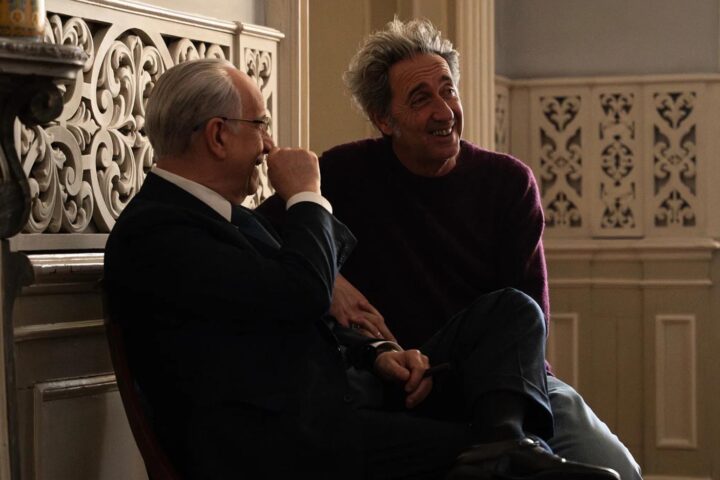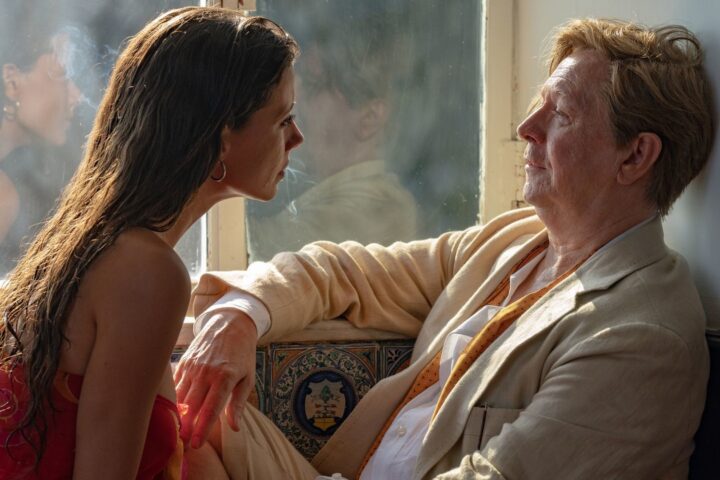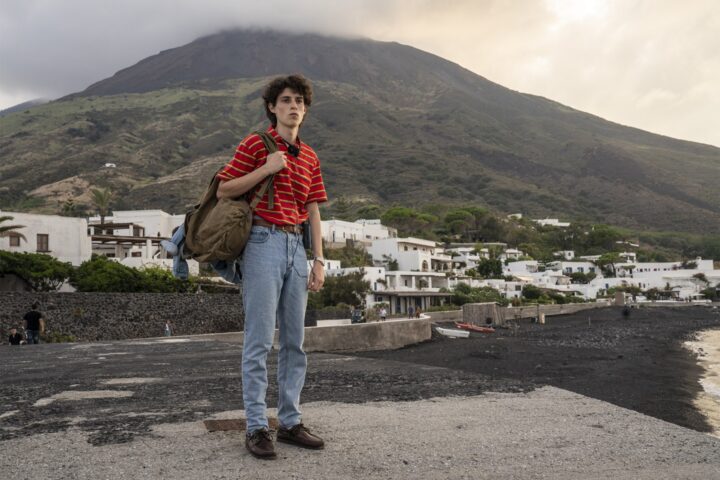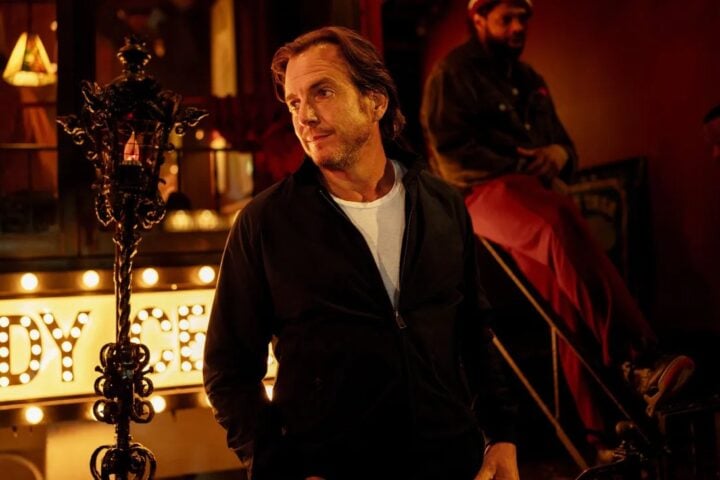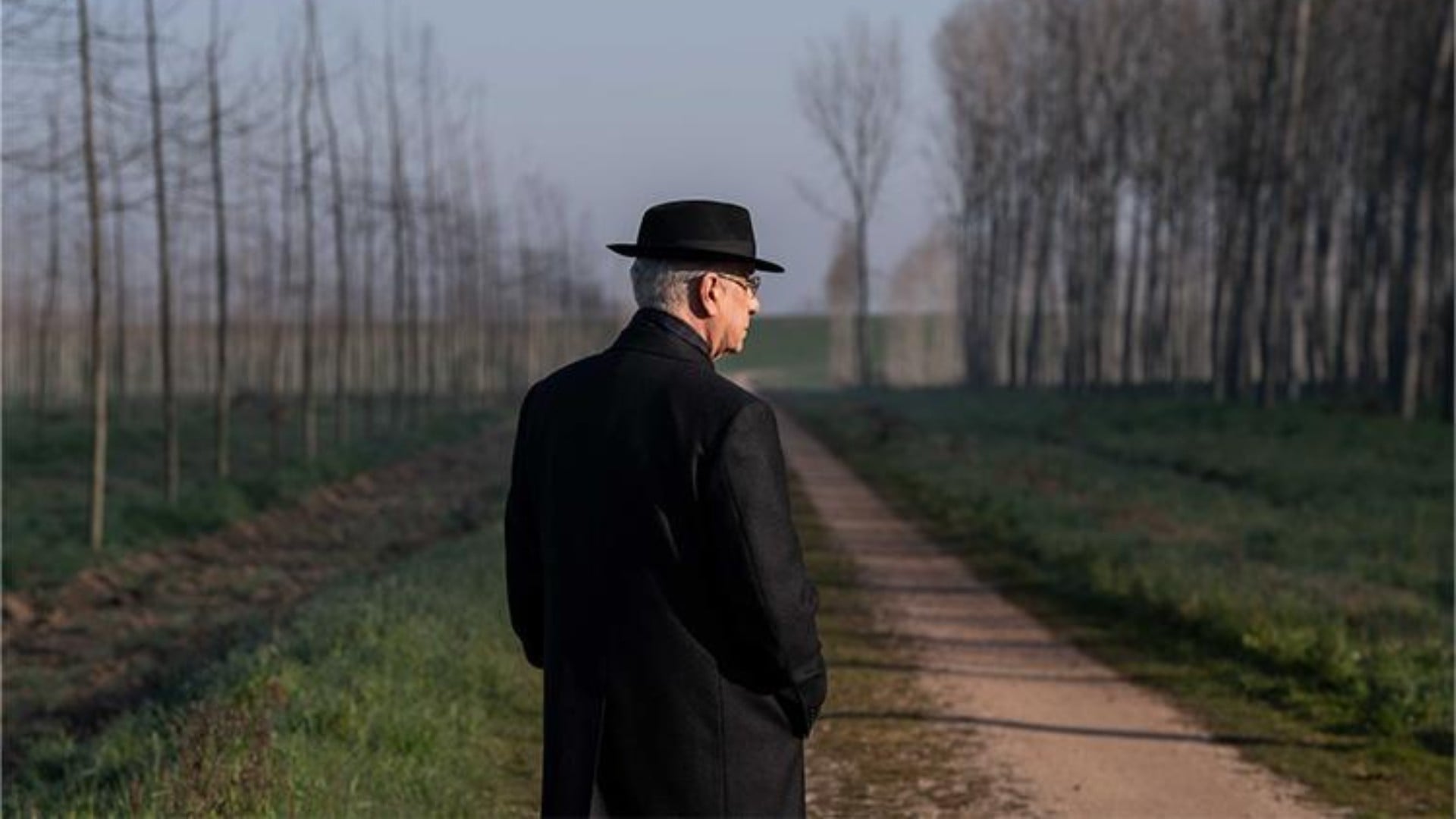
Paolo Sorrentino’s La Grazia, which sets its sights on a fictional Italian president in this last six months of his final term, sees the filmmaker shifting away from his typically bombastic style. Sorrentino unassumingly zeroes in on Mariano De Santis’s (Tony Servillo) creeping sense of despair as the man, taking meeting after dry meeting in the various rooms of Quirinal Palace, begins to see the end of his tenure in tandem with the end of his life. It’s a somewhat uncharacteristic approach for Sorrentino, and it affords the various moral crises that De Santis grapples with the space to breathe throughout the film.
De Santis must decide on both the passing of a bill that would legalize euthanasia and the pardon petitions of two murderers. But it’s more personal matters that truly weigh on him, informing his passive governance. De Santis’s son, Riccardo (Francesco Martino), has shifted from composing classical music to writing pop songs, which De Santis disapproves of, and he obsesses over an affair that his late wife had 40 years prior, as he believes the other man to be his best friend and potential successor, Ugo Romani (Massimo Venturiello).
The relative restraint of La Grazia—which translates to Grace in English—makes its baroque flourishes stand out all the more. In a standout sequence that affects an almost religious sense of awe, Portugal’s decrepit president arrives for a meeting before a sudden storm breaks out, with Sorrentino using slow motion to depict the the rain and winds blowing the man over, as well as De Santis’s mute reaction to the moment. Even if it were not such an outlier in the film, the significance of the sequence is undeniable, with the Portuguese president suggesting a spectral premonition of where De Santis could end up—discarded at the end of a dark tunnel.
De Santis’s dread leads him to wallow in apathy and self-pity, offloading his legislative work onto his staffers. Most notable among them is his daughter, Dorotea (Anna Ferzetti), who micromanages every aspect of his life, right down to his diet. The president has taken historically decisive actions, but between his age, the degree to which he’s been catered to up to this point in his life, and the moral minefield of the euthanasia bill, he now finds himself in a state of docility. As a man of reason, he worries that not signing the bill would make it easy for people to label him a torturer, and as a Catholic, he worries that signing it would make him a murderer. It is a catch-22, and Sorrentino uses it to demonstrate the dangers of inaction.
The film’s biggest strength lies in its ability to express De Santis’s passivity through the motif of the weight of things, from the physical to the spiritual. Nicknamed “Reinforced Concrete,” his reputation was once that of a jurist unshakable in his convictions. Nowadays, the nickname refers more to the burdens he places upon himself, to the point where he has deprived himself of an active existence. Everyone around him tells him he needs to lighten up, Dorotea is practically starving him to get his weight down, and he reflects on what life must be like for an astronaut currently stationed in space, able to sleep without anything weighing him down.
There’s no shortage of compelling figures in Sorrentino’s film that De Santis sees himself in, from the Portuguese president to the astronaut to his favorite horse, named Elvis, that’s on its last legs and he can’t bring himself to mercy kill. Indeed, De Santis’s decision paralysis leaves him in something of a similar state to the horse, which lies on the palace grounds. Perhaps the lengths Sorrentino goes to in order to underscore De Santis’s state of mind are a bit heavy-handed, but these moments are nonetheless moving and strikingly idiosyncratic.
Sorrentino also lightens the load of the film’s heavy themes through a consistently abrasive techno soundtrack, with De Santis’s embrace of contemporary music presented as something of a first step toward becoming a more active participant in the world around him. Soon, testimonies from the pardon petitioners—who, by cosmic coincidence, justify their crimes as acts of euthanasia—and wake-up calls from friends and family alike lead De Santis to take charge in the 11th hour of his term. While the sheer number of plot threads that Sorrentino weaves into the film’s design can grow fatiguing by the end, it’s in this final heel turn that a story about disillusionment and contemplation blooms into one of existential revitalization.
Since 2001, we've brought you uncompromising, candid takes on the world of film, music, television, video games, theater, and more. Independently owned and operated publications like Slant have been hit hard in recent years, but we’re committed to keeping our content free and accessible—meaning no paywalls or fees.
If you like what we do, please consider subscribing to our Patreon or making a donation.