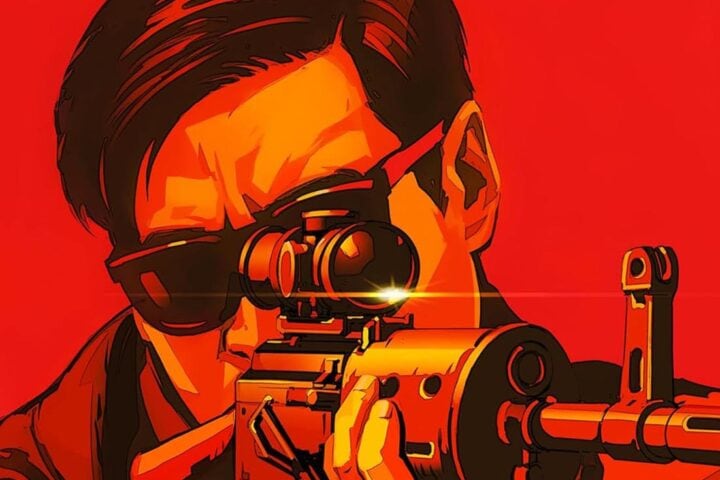
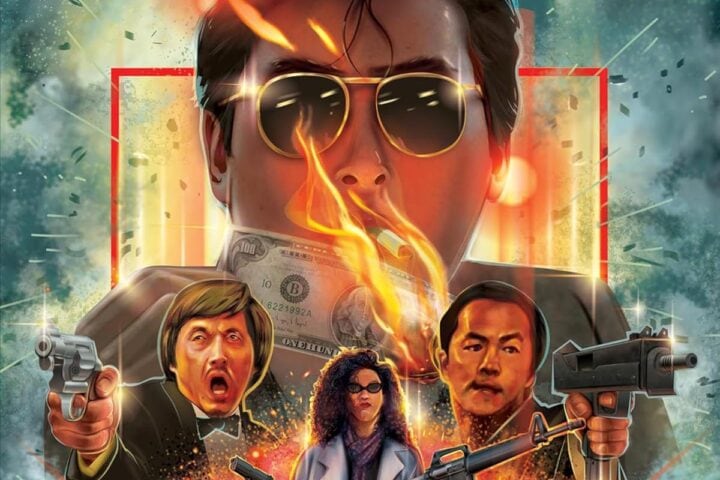
Tonally, Ringo Lam’s City on Fire stands far apart from most of the Heroic Bloodshed films of its time. Compared to the punkish outrage of Tsui Hark’s work and operatic morality plays of John Woo, it adopts a naturalistic style that suits the critical assessment of the corrupt games played between (and among) Hong Kong’s police and criminals.
The film begins with a group of jewel thieves rooting out and murdering an undercover cop (Elvis Tsui) embedded among them, a crime they shortly follow with a bank heist that ends with them killing a uniformed police officer amid a chaotic getaway. (Lam shoots this violence without elaborate camerawork, instead lingering on gruesome, realistic details like the blood that spews out of bullet wounds.) With the city on high alert, a special investigations head, Inspector Lau (Sun Yueh), taps one of his undercover agents, Ko Chow (Chow Yun-fat), to infiltrate and take down the gang.
Released as Chow’s star was on the rise thanks to hits like Woo’s A Better Tomorrow, City on Fire complicates the rakish persona that the actor was cementing at the time. Outwardly, the cocky Chow maintains a flippant attitude, entering the film chewing on the ends of cigarettes like a western antihero and making passes at molls in clubs in full view of the mobsters who claim them. But this is a thin mask for a cop who’s risked his life and gotten too close to some of his targets and who’s now afraid, even ashamed, of his work. When Lau approaches Chow with the assignment, the detective’s look of bravado instantly dissipates, replaced by a fidgety, almost whimpering expression as he all but begs to be spared.
And he has good reason to be afraid: Not only must Chow ingratiate himself with a gang that’s already killed one undercover agent, he also finds himself targeted by a group of police officers who don’t know his real identity and attempt to bust him as a supposed gun-runner. Throughout, the film’s depiction of police is unsparing: Lau eagerly puts Chow in jeopardy for his own career advancement, and the other officers who seek to take down the thieves care less about the public good than beating Lau to the punch for their own glory.
In a vicious bit of commentary, Chow ultimately finds more camaraderie and honor among the thieves than he does with his peers. In particular, he grows attached to Fu (Danny Lee), the man who killed the last cop embedded in the group. Fu talks about his personal life with Chow and often sounds more like a businessman showing photos of his family to a seatmate on an airplane than a ruthless outlaw. When the walls close in on the gang in the final act, Chow and Fu become bonded in a desperate show of mutual support—the depiction of which Quentin Tarantino would lift wholesale for Reservoir Dogs a few years later.
But where Tarantino’s film hinged on the suspense of whether the cop’s real identity would be revealed, City on Fire constantly focuses the increasingly bloody violence of the climax around the agony that each man feels for the other as they see doom on the horizon. Lam’s film is set at Christmastime, a context that’s milked for all its irony in the juxtaposition of Casio muzak renditions of carols blaring out from storefronts around town as things grow ever more violent. But in the genuine fraternity that forms between Chow and Fu despite knowing each other’s worst secret, there’s a subtle embrace of the spirit of the season in choosing goodwill for no other reason than to ease one’s own hard path in life.
Image/Sound
Shout! Factory’s UHD presentation beautifully renders the chromatic glow of Hong Kong’s streets, from the green and purple neons to the twinkling lights strung around town. Black levels are stable, and textures remain sharp throughout the film. The dense soundscape of Hong Kong ambient noise fills the soundtrack without overpowering dialogue in the front of the mix. There’s a surprising amount of depth to this stereo track, particularly in the threading of diegetic and non-diegetic Christmas music amid the other elements in the mix.
Extras
This release comes with a new audio commentary from film historians Frank Djeng and F.J. DeSanto that, like their other tracks for Shout! Factory and other labels behind the recent glut of Hong Kong releases, blends effusive praise for the film’s genre elements while providing copious context of the Hong Kong industry and wider political events of the time. The disc also comes with a spate of new interviews, one with screenwriter Tommy Sham and the rest with critics and historians Grady Hendrix, Ric Meyers, and Kim Newman. Naturally, Sham’s interview is the most anecdotal about working on the film and with Lam, while the critical interviews dig into the film’s place in Hong Kong cinema and its cast and crew’s respective careers.
Overall
Ringo Lam’s brutal Hong Kong thriller looks better than ever on Shout!’s 4K release.
Since 2001, we've brought you uncompromising, candid takes on the world of film, music, television, video games, theater, and more. Independently owned and operated publications like Slant have been hit hard in recent years, but we’re committed to keeping our content free and accessible—meaning no paywalls or fees.
If you like what we do, please consider subscribing to our Patreon or making a donation.