Tamara Stepanyan’s first narrative feature, In the Land of Arto, is a ghostly travelogue through a land ravaged by war and natural disaster. Months after her husband’s suicide, a French woman named Céline (Camille Cottin) brings her own ghosts to Armenia in an attempt to clear up some discrepancies with his birth certificate. Seeking to have his identity officially verified to help secure dual citizenship for their children, Céline quickly discovers that the man she knew as Arto Saryan was born under a different name, prompting a journey for answers that forces her to confront Armenia’s fraught modern history.
Navigating Arlo’s hometown of Gyumri with a French-speaking cabbie (Aleksandr Khachatryan), Céline comes face to face with decay emblematized by the once-formidable, now-rusted Iron Fountain monument erected during Armenia’s Soviet era. The colossal, modernist landmark sits in an overgrown square surrounded by shanties—the area seemingly never truly rebuilt in the wake of the 1988 earthquake that devastated the city. But other, less visible scars pervade the town and its residents, who all lost loved ones to the quake or various military conflicts. As the cabbie solemnly tells Céline when she searches for the cemetery where her husband’s parents might be buried, “Many Armenians don’t have graves.”
Eventually, Céline meets people with memories of her husband, and their furious recollections of his activities during the First Nagorno-Karabakh War shatter her notions of the man she loved. Favoring long takes in dialogue-heavy scenes, Stepanyan places particular attention on the pauses in communication that arise in multilingual conversations (Céline relies on Anglo- and Francophone interpreters among locals to translate Armenian). Those pauses are never more agonizing than when Céline watches Arto’s comrades and loved ones contorting their faces in rage and has to wait for an explanation for why they still carry such anger toward him.
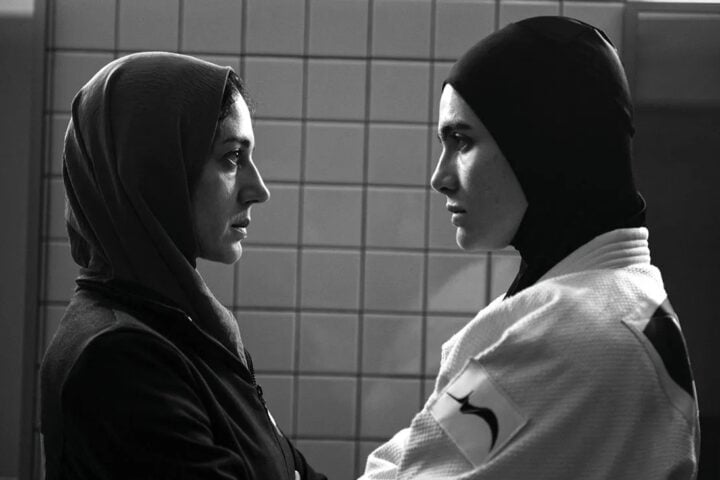
Dazed by what she learns about Arto and his departure from his homeland, Céline drifts toward an eastern region of Armenia, recently occupied by Azerbaijan, where he fought. To get there, she rides along with Arsine (Zar Amir Ebrahimi), a spiky local who may be exploiting Céline’s relatively protected status as a foreign national to get closer to the front. It would seem, then, that the film has the makings of a work of trauma tourism, but it crucially avoids reducing Céline to a mere witness of tragedy. For one, she approaches each encounter with genuine inquisitiveness, and even when learning of locals’ heartbreaking losses, she participates in the small ways in which people still extract some kind of joy from life.
The film also threads in a number of charming interludes where people attempt to enliven Céline’s stay in Armenia. One elderly woman even says that she wants the woman to leave with good memories, so she gives Céline apricots from her own garden and volunteers to take Céline and Arsine’s bags ahead to their hotel as the pair walk along a highway.
Throughout the film, Stepanyan subtly highlights how women bear up to the pressures of history far more sturdily than men, who often process their deprivation with explosive anger or boisterous machismo. By contrast, the women, though clearly possessed of their own rage and sorrow, find ways to keep calm and carry on. Even women with intimate, unpleasant memories of Arto treat Céline with empathy and patience, cathartically venting their revelations of Arto’s past to her, while also helping the widow navigate the shock of what she’s been told. This uneasy, naturalistic depiction of how people in this place reconcile past pain with future hope is perhaps best captured in a mordantly funny exchange Céline has with a local, who calmly tells her, “We are born in blood and war,” before adding, “Have fun!”
Since 2001, we've brought you uncompromising, candid takes on the world of film, music, television, video games, theater, and more. Independently owned and operated publications like Slant have been hit hard in recent years, but we’re committed to keeping our content free and accessible—meaning no paywalls or fees.
If you like what we do, please consider subscribing to our Patreon or making a donation.