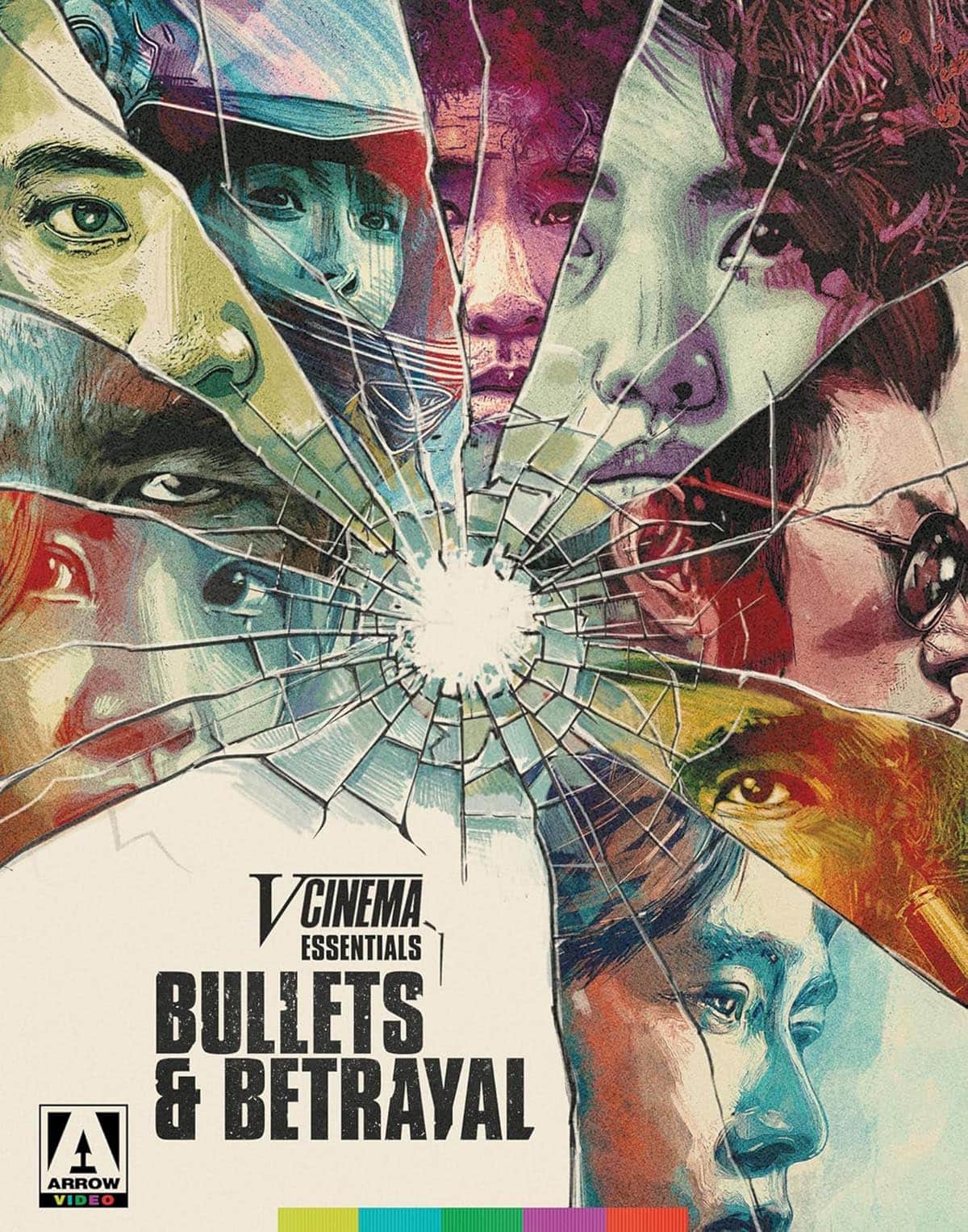
 In the 1980s, Japanese studios began to increasingly make direct-to-video animated and live-action movies as a means of controlling costs and giving filmmakers more freedom. And as the formerly robust economy of the nation crashed at the end of the decade, Toei Studios inaugurated its V-Cinema industry. Shot quickly on video, V-Cinema productions became not merely an additional revenue stream but a lifeline to keep the studio afloat. Now, Arrow Video’s V-Cinema Essentials: Bullets & Betrayal is the first disc collection in the West to pay tribute to this brief but crucial period in Japanese cinema that helped to incubate the country’s J-horror and gangster cinema of the late-’90s and beyond.
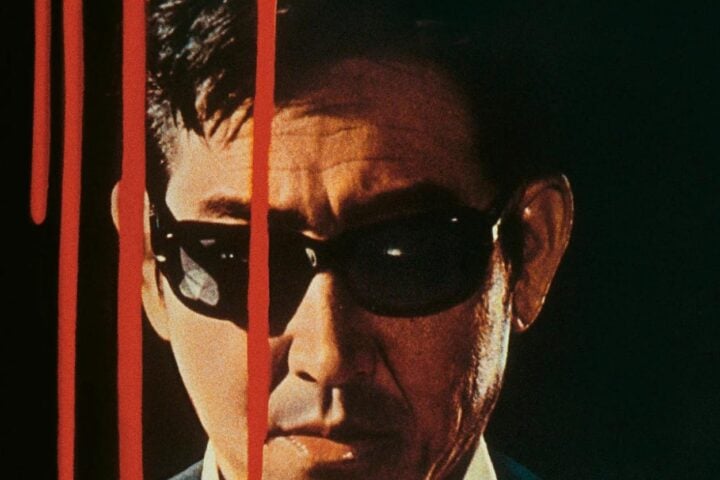
Toei’s first V-Cinema release was Okawa Toshimichi’s Crime Hunter: Bullets of Rage. Barely an hour long, the 1989 film might be best described as a bootleg tape of a Heroic Bloodshed movie with all the “boring stuff” removed, leaving only a series of incredibly bloody action scenes interspersed with badass poses by dirty cop Joe (Sera Masanori) as he avenges a partner’s murder. Adding to the absurdity is his unlikely partnership with a nun (Tanaka Minako) willing to take up arms to recover funds stolen from her church by Joe’s chief suspect.
The remainder of the films in Arrow Video’s set are about evenly split between crime movies in the key of Bullets of Rage and exploitation features redolent of the erotic Roman Porno films of the ’70s. The latter tend to be the weaker offerings in this set, if only because the grimy, made-for-video approach to a genre that worked best when maximizing the cinematic properties of its subject matter ends up foregrounding its merely pornographic side.
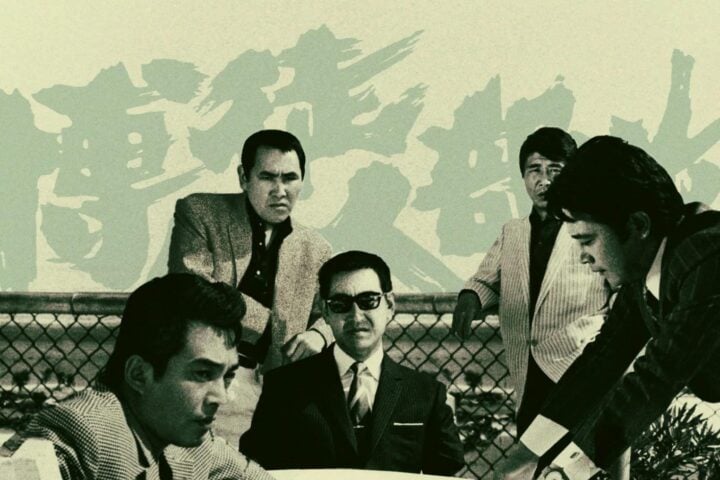
Neo Chinpira: Zoom Goes the Bullet, from 1990, and Danger Point: The Road to Hell, from 1991, are gangster movies filled with a dizzying number of double crosses. But where the latter maintains a steady sense of momentum and makes great use of a paternal chemistry between the gangsters played by legendary character actor Shishido Jô Shishido and Aikawa Show, the latter quickly gets bogged down in an overly convoluted but unengaging, generic plot.
Neo Chinpira, which also stars Shishido and Aikawa, has a promising hook—a wannabe yakuza is forced by his bosses to be the patsy for risky assassinations—but too often feels like a cheap retread of the ideas that Fukasaku Kinji had been mining for decades in such films as Yakuza Graveyard. Comparatively, Danger Point simply has fun with its premise of yakuza attempting to track down a missing case of loot and falling into a series of Coen-esque mishaps.
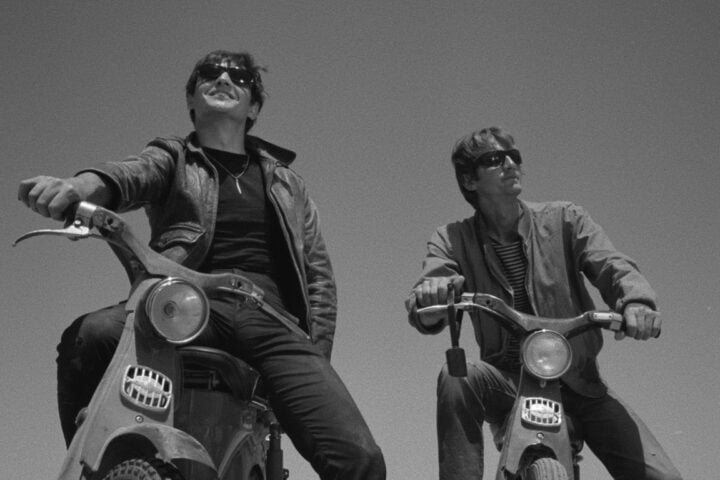
Stranger, from 1991, is a lean psychological thriller that takes a few tips from the spartan nature of John Carpenter’s work, milking deliberate compositions and a steady, intractable forward motion to induce dread, while Kiuchi Kazuhiro’s Carlos, also from 1991, is one of the more ornately stylish films in the set. Centered on a Brazilian-Japanese hitman (Takenaka Naoto) who operates out of a Latin nightclub, the film regularly takes swooning handheld tours through crowded dancefloors in musical moments that intriguingly break up the flow of action scenes.
V-Cinema’s aggressive targeting of young, male audiences often resulted in an excess of sleaze in such films as XX: Beautiful Hunter, from 1994, an aesthetically stodgy and morally destitute update of an Roman Porno picture that focuses on a succubus assassin (Kuno Makiko) forced to fight her own bosses when she fails to carry out a hit. A far better example of what XX seeks to accomplish is 1991’s Female Prisoner Scorpion: Death Threat, a loose continuation of Ito Shunya’s masterful exploitation series Female Prisoner Scorpion from the ’70s.

Lacking the original films’ baroque style and the magnetic presence of Kaji Meiko, Mermaid Legend director Ikeda Toshiharu’s film nonetheless taps into its predecessors’ deeply bleak spirit. Here, a prison warden commissions an assassin (Okamoto Natsuki) to kill the supposed Scorpion who resides under his watch, only to reveal that the real Scorpion died long ago and he keeps the name alive as a means of manipulating other prisoners.
But where Ito’s films are expressionistic psychological thrillers, here Ikeda pulls outward to craft a more political statement as the rest of the female prisoners mount a mass resistance against the warden, escalating into urban warfare. Only in the final minutes does Death Threat become a revenge movie in the vein of its predecessors, but even when the focus does shift fully onto Okamoto’s mistreated killer, the film works for how shrewdly it posits individual vengeance as meaningless if it isn’t striking out at the larger systems that allow people to be used.
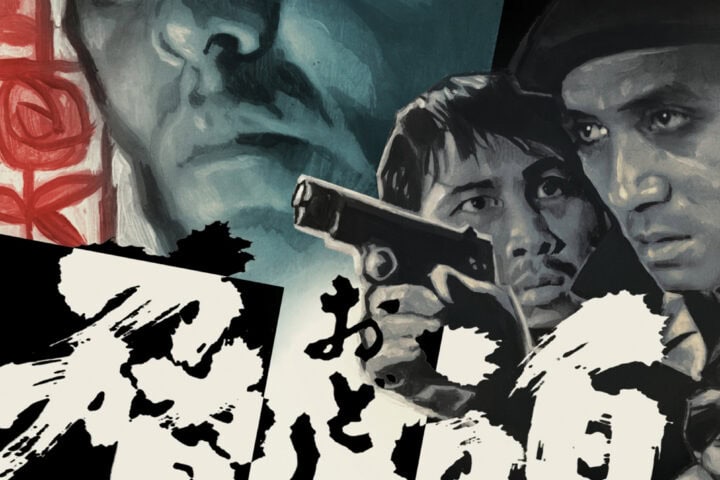
The highlight of the set, and the film that synthesizes all the vulgar pleasures of the others, is journeyman genre director Ishii Teruo’s The Hitman: Blood Smells Like Roses, also from 1991. The plot follows Takanashi (Saijo Hideki), whose fiancée died in the crossfire of a yakuza turf war. As a vengeance-bound Takanashi traverses the neon-soaked sin dens of Tokyo’s Shinjuku district to a score of acid jazz, the film freely indulges in displays of blood and breasts as its aloof cool slowly curdles into something strange and idiosyncratic.
Ishii gradually adds sudden lurches into absurdity like Takanashi running over a yakuza in a garbage truck and sending a fountain of blood spewing from his mouth, or a final shootout using explosive bullets that can blow out the side of a house with a single shot. Even the end credits are a riot, juxtaposing images of pistols and nude women in a lethal blow to nuance.
Image/Sound
There are fundamental limits to the visual clarity that movies shot on early-’90s video can offer, but Arrow’s transfers of the films are impressive in their faithful reproduction of the warts-and-all qualities of the format. Texture is as good as it can be when a certain softness and heavy color bleed is inevitable, and any instances of crushing artifacts or hazy detail are endemic to the source tapes. Even so, these transfers distantly outpace any VHS presentation, maximizing image stability and contrast. The soundtracks are equally modest but strong, the basic stereo tracking of each movie well-calibrated in its mix of sound effects, music, and dialogue.
Extras
Arrow’s box sets always come with a wealth of extras, and their V-Cinema release is no exception. Each movie comes with an introduction by Japanese film critic Tanioka Masaki and a video essay by various critics. There are also interviews with several of the movies’ directors, and a booklet with critical essays by Earl Jackson, Hayley Scanlon, and Miyao Daisuke that offer broad overviews of the films, situate them in the context of Japanese cinema, and delve into the recurring themes and stylistic tics of the V-Cinema era.
Overall
Arrow Video provides a respectful tribute to Japan’s cheap, grimy, ultimately influential V-Cinema era with some of its earliest standout offerings.
Since 2001, we've brought you uncompromising, candid takes on the world of film, music, television, video games, theater, and more. Independently owned and operated publications like Slant have been hit hard in recent years, but we’re committed to keeping our content free and accessible—meaning no paywalls or fees.
If you like what we do, please consider subscribing to our Patreon or making a donation.