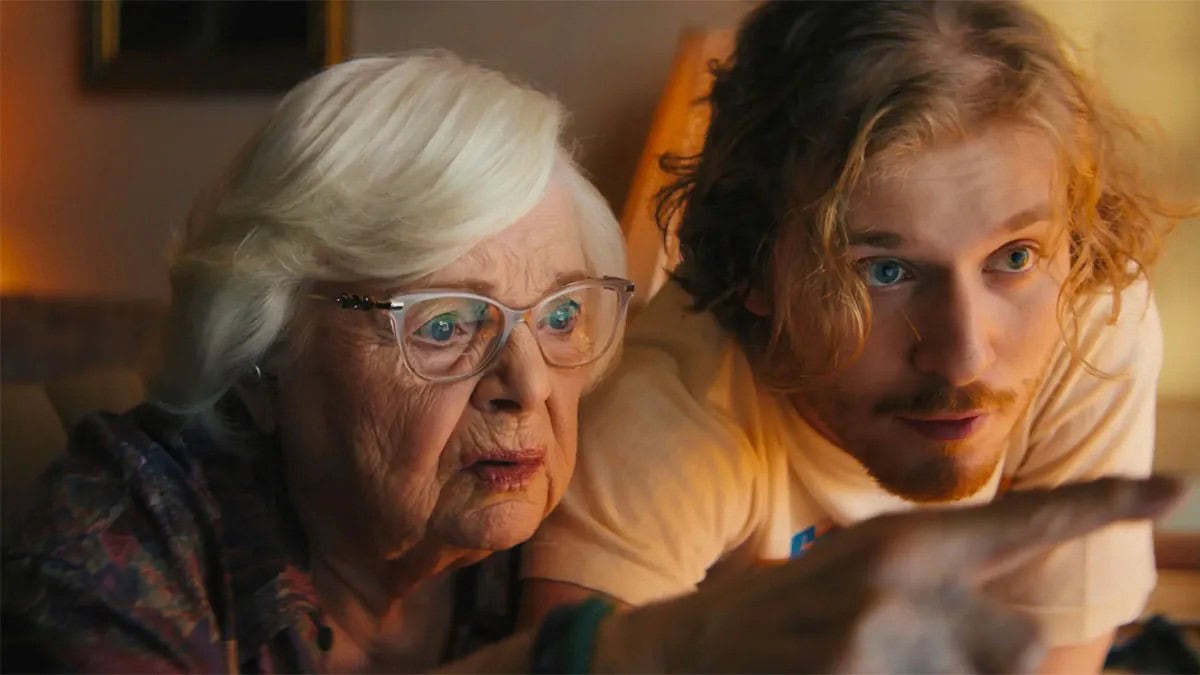
Even in this strange era of action films where characters played by Bob Odenkirk and Allison Janney have run around head-shotting hardened criminals with expert finesse, it’s safe to assume that nobody had money on 94-year-old June Squibb as the first great new action star of 2024. With Josh Margolin’s feature-length directorial debut, Thelma, the eponymous character, physically fragile but spiritually unbroken, has no intention of going quietly into that good night, and Squibb imbues her with a spark and presence that’s wholly unique to the actor, and on a very unlikely and unexpected quest for revenge.
Even compared to the motivations of Thelma’s often steely-eyed contemporaries in modern action cinema, though, not since the first John Wick have the stakes been so intimate and specific for a revenge flick. In Thelma’s case, a phone scammer manages to dupe her into sending $10,000 to bail her slacker grandson, Daniel (Fred Hechinger), out of jail. And once she finds out that she’s been had, and that the police are going to be zero help, Thelma decides to toss her LifeAlert bracelet to the wind and hit the streets to track down her money.
That setup bears more than a passing resemblance to that of The Beekeeper, and while Thelma isn’t chockablock with Brazilian jiu-jitsu takedowns, impossible headshots, and veiled threats to the mob, you wouldn’t no it at times from Margolin’s direction. The film operates on a similar wavelength as Edgar Wright’s Hot Fuzz, with normcore, high-octane action scenes centered around Thelma going to the post office, or sneaking around an old lady’s bedroom, or falling and not being able to get up. It’s not often enough to turn the whole film into a broad parody of the type of action film it’s meant to evoke, but enough to play up some frequent, absurd laughs.
More impressive is just how much Margolin doesn’t cheat the reality of this world, even through the editing. A chase scene where Thelma tries to steal a mobility scooter from a nursing home doesn’t turn into some slapstick comedy of errors, but a tense chase of near-misses, perfect timing, and hilariously executed soft crashes. The film’s big Mission: Impossible-style hacking sequence revolves around Thelma trying to remember how to use a banking website on the internet. The old spy-movie trope of someone needing to sneak into a hostile location assisted by someone talking through an earpiece happens thanks to the miracle of hearing aid apps.
The film’s ace in the hole, though, may be Richard Roundtree—in his final film role before his death from cancer last year—as Ben, Thelma’s partner-in-crime and voice of reason as she pushes herself far beyond her body’s limits. There’s a certain self-awareness to Roundtree playing a streetwise detective, but the script goes the extra mile by having the character grapple with the full, crushing realization of his mortality. The actor arguably gets the best and most haunting monologue of the film, screaming from the depths of his soul about how he and Thelma are “diminished” in their age, but he’s just as commanding a comedic presence in the film as he is a dramatic one, and it’s a lovely, unexpected send-off for him on screen.
It’s the balance of comedy and existential drama that truly elevates Thelma. So much of the story hinges on the innate knowledge that those closest to Thelma are gone or on their way out. Like John Wick and his poor dog, the money isn’t so much the problem for Thelma so much as what it represents: the idea that no one assumes she’s going to be around long enough to use it. She could simply walk away from this whole mission at any time and just surrender herself to a life of waiting around to die, but Squibb imbues Thelma with such sharpness, determination, and a good dose of stubbornness that it’s hard to not see her as invincible.
That is, until, of course, it’s obvious that she’s not. The film plays off of the old stereotype of the aging badass fighting through all their various infirmities taken to the absolute extreme, but Margolin is also clever enough to wrestle with the simple fact of Thelma being a senior citizen and feeling her body betray her when various parts straight up don’t work.
Thelma somewhat lets down its non-elderly cast. In particular, Parker Posey and Clark Gregg, as Thelma’s daughter and son-in-law, get some fun bits of dialogue, but they always feel somewhat tangential to the narrative. The B story of these characters trying to convince Daniel to learn to be an adult may as well have been spliced in from a different movie. That, though, doesn’t stop the heart of this warm and strangely affirming tale that just so happens to feel like an action film from shining through. Even then, the cinematic world didn’t know it needed June Squibb and Richard Roundtree doddering away from an explosion until it happened.
Since 2001, we've brought you uncompromising, candid takes on the world of film, music, television, video games, theater, and more. Independently owned and operated publications like Slant have been hit hard in recent years, but we’re committed to keeping our content free and accessible—meaning no paywalls or fees.
If you like what we do, please consider subscribing to our Patreon or making a donation.