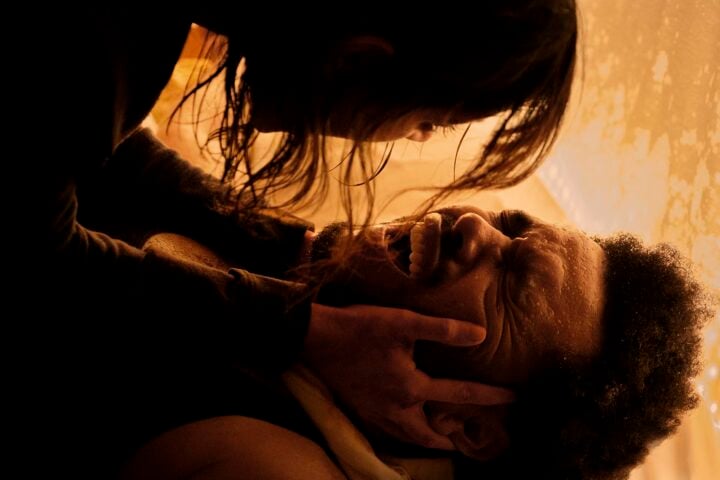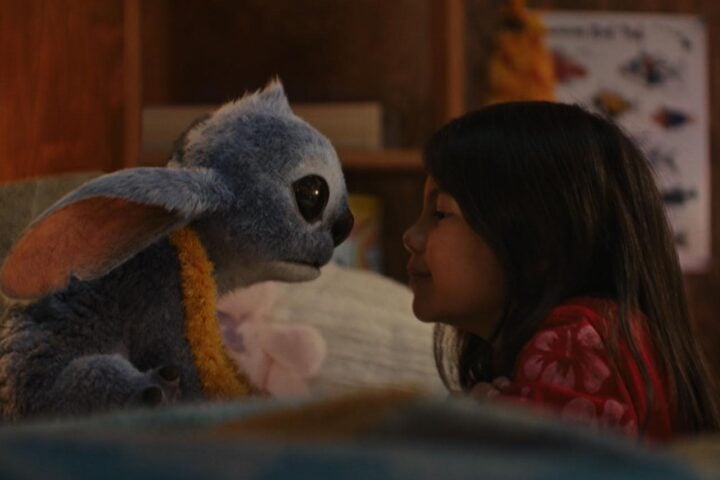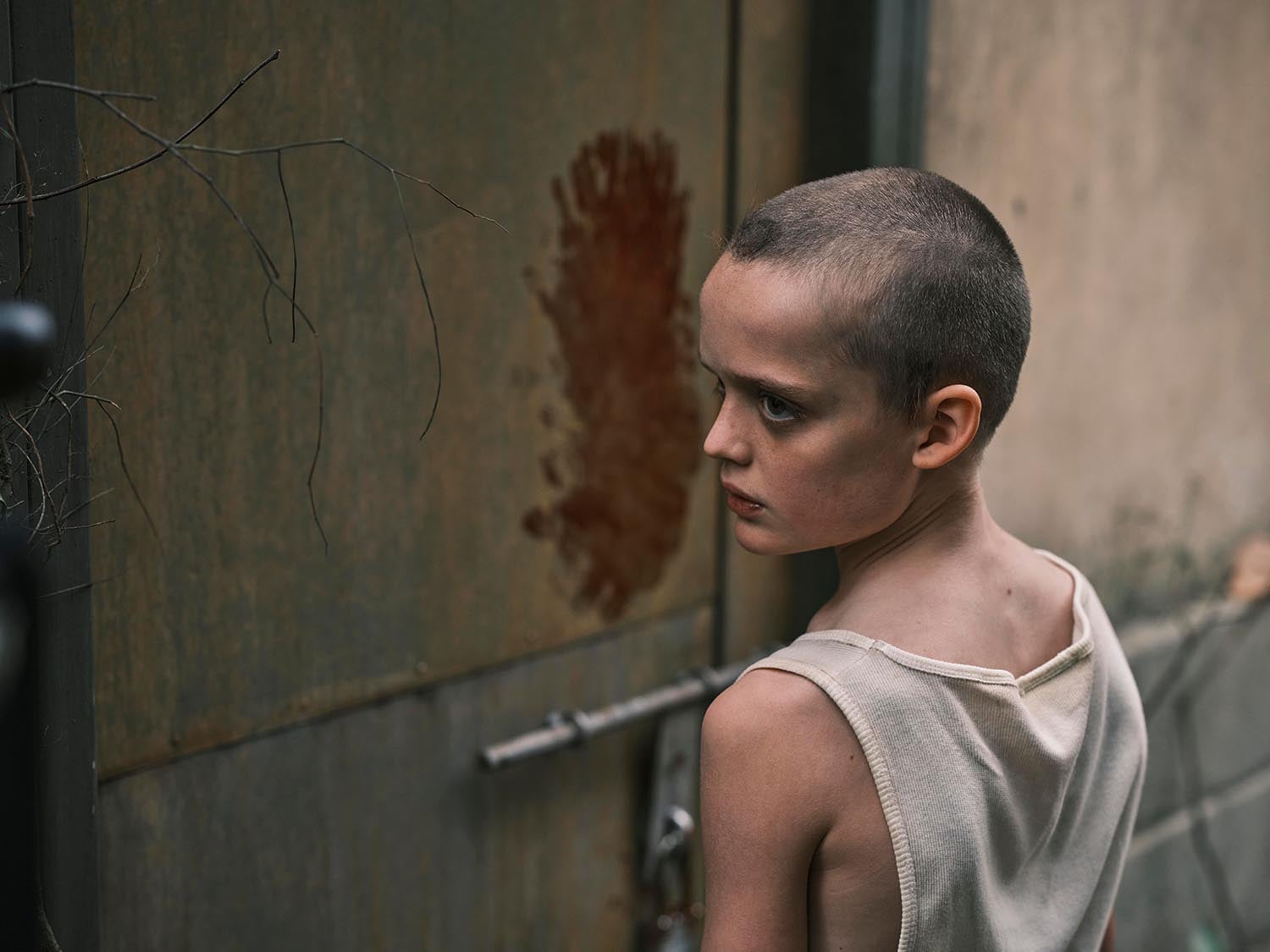
So much of modern horror is entwined with the twin serpents of grief and trauma, but the way filmmakers rely on distancing effects or project a tone of ironic detachment onto their characters often prevents the horrors at the center of their works from truly resonating. That detachment, not to mention the propensity for metaphor, endemic to the works of so many of horror’s most promising luminaries in recent years can be probing and evocative, but really it exists to allow audience to look at tragedy from a safe vantage point.
With Danny and Michael Philippou, however, you’re in the bleeding thick of it. That was as true of Talk to Me, the Australian twin filmmakers’ feature directorial debut, as it is of their follow-up, Bring Her Back, an unreservedly soul-sick portrait of grief that comes from a place of such inflamed, naked vulnerability that it becomes almost unbearable to sit with.
The film follows the experiences of two siblings in the wake of the sudden passing of their father. Andy (Billy Barratt) is highly devoted to his stepsister, Piper (Sora Wong), a partially sighted pre-teen who’s willful and independent despite her disability. Following their father’s death, the two are faced with separation by the Australian foster care system when former counselor Laura (Sally Hawkins) expresses interest in caring for Piper but refuses Andy due to his record.
Still, despite her initial reticence, Laura agrees to take the siblings in for the three months until Andy turns 18 and applies for permanent guardianship of Piper. Laura, who’s contending with a recent loss of her own, seems to be warm and welcoming, but there’s the faintest bitter edge to the way she treats Andy. There’s also something amiss with another of her fosters, Oliver (Jonah Wren Phillips). As the siblings settle in, it becomes abundantly clear that Laura is trying to create distance between them, but to what point and purpose?

The Philippous brought an unmistakable filmmaking swagger to Talk to Me that made it feel fresh despite its familiar elements. And while they delight in serving up needle drops and applying a freely tilting camera to precise and intense effect, Bring Her Back is ultimately less ostentatious in style than its predecessor, with more attention paid toward smart passages of shallow-focus photography and the liquid textures of blood, drool, piss, and especially rainwater, giving the impression that the film is itself bleeding out, bleary-eyed, and weeping.
Bring Her Back was written in tandem with Talk to Me, so it’s no surprise that both center adolescent abuse, neglect, and the loss of parents and children, but Bring Her Back has a white-hot nerve of pain running inside it that burns right through the screen. Andy and Piper are the ostensible leads, but it’s Hawkins’s Laura who we spend the most time with, and though there’s a mystery to be uncovered, we’re privy to her machinations in a way that makes us conspirators in her scheme and sharers in her immense emotional torment.
There’s a hint of Poppy, Hawkins’s cheery schoolteacher from Mike Leigh’s Happy-Go-Lucky, in Laura, and it’s hard to imagine the film working as well as it does without Hawkins’s thoughtful and dedicated handling of her character’s psychology—how she makes you sense the kindness within Laura that’s been largely curdled by something altogether hideous. As in Talk to Me, the Philippous establish a loose mythology that may or may not hold up to strict scrutiny but is kept simple and undefined enough that it hardly matters, functioning not as a metaphorical expression of Laura’s devastation but a monstrous thread coiled with it.
Looking at the work of Ari Aster, Oz Perkins, and many other modern horror filmmakers, much of the genre is currently entrenched in examining grief and trauma cycles in endlessly reducible patterns, traceable across generations from parents to children, that exist outside of the individual or unit, often as a satanic or supernatural influence that destroys from without. Bring Her Back is different, and uniquely devastating, in showing that grief’s causes may be external, but its manifestation is entirely internal: lonely, shapeless, ugly, and unfathomable.
Since 2001, we've brought you uncompromising, candid takes on the world of film, music, television, video games, theater, and more. Independently owned and operated publications like Slant have been hit hard in recent years, but we’re committed to keeping our content free and accessible—meaning no paywalls or fees.
If you like what we do, please consider subscribing to our Patreon or making a donation.