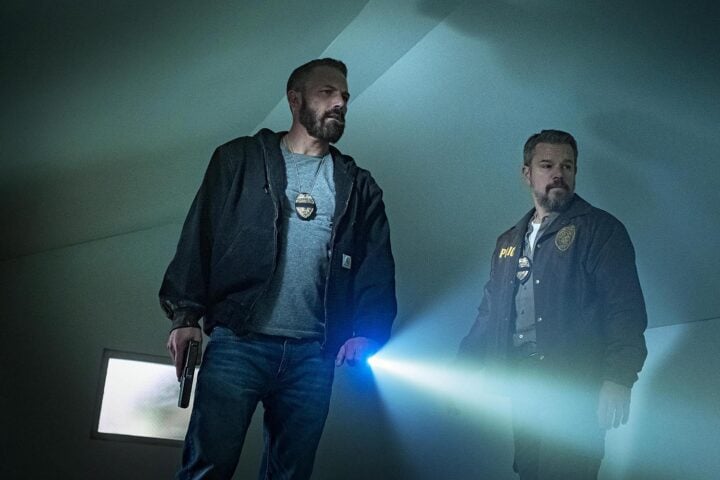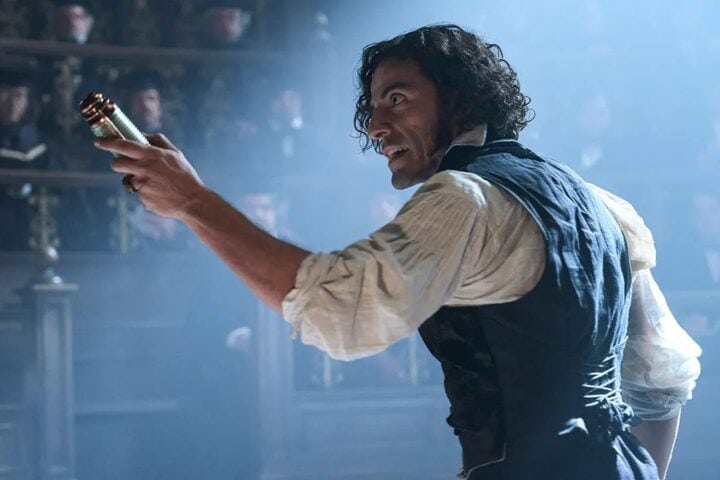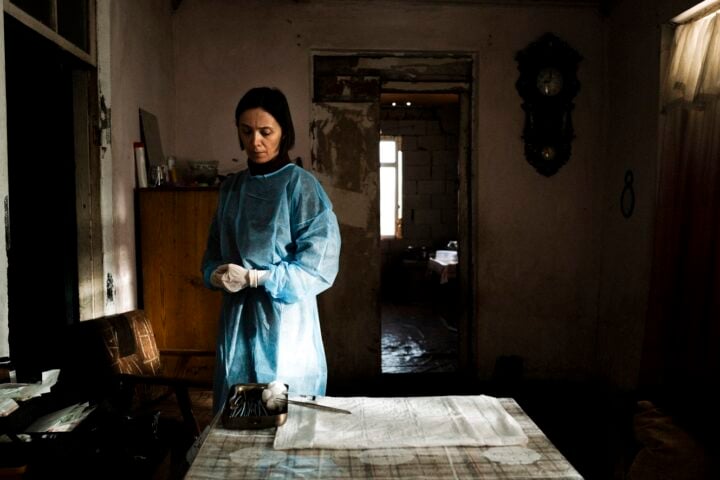
The American dream in all its slippery indefinability and spurious promise is the guiding light of Daniel Minihan’s On Swift Horses, based on the novel by Shannon Pufahl. In the tradition of The City and the Pillar, Giovanni’s Room, and The Price of Salt, the film looks at midcentury gay and lesbian life as a series of quotidian tragedies of compromise in the pursuit of health, wealth, and happiness. This was an era of national, capitalistic self-determinism that excluded queer individuals from the promised joys of the post-war boom.
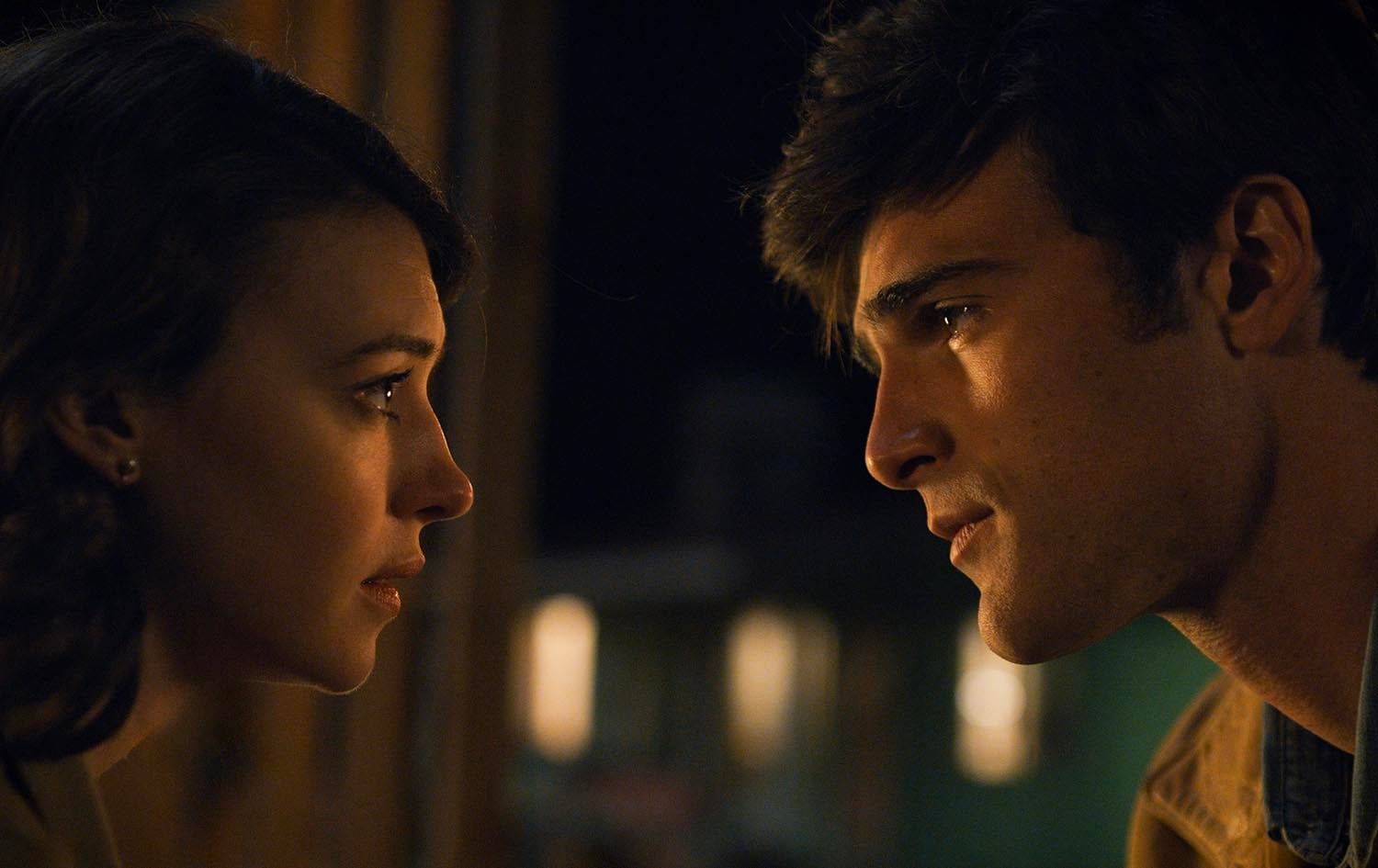
Jacob Elordi stars as Julius, who, after an early discharge from the Korean War, winds his way back to the homestead of his brother, Lee (Will Poulter), and sister-in-law to be, Muriel (Daisy Edgar-Jones). Lee is thrilled to have his wayward brother by his side, and the trio eagerly plan a future in California together. Six months later, though, Lee and Muriel are married in the Golden State while Julius is off in Vegas, scraping by as a card sharp and occasional gigolo.
Before the relocation, Julius and Muriel recognized something in each other that they couldn’t quite name, and they continue corresponding despite their divergent paths. Though everything should be wedded bliss for Muriel, she starts gambling on horse races and spending time with Sandra (Sasha Calle), the bandurria-strumming sapphic down the road, while Julius finds himself falling for Henry (Diego Calva), a small-time criminal with dangerous ambitions.
Minihan is best known for his television work, having spent the bulk of his career directing for numerous prestige dramas, including Six Feet Under, Game of Thrones, and Fellow Travelers, and On Swift Horses feels blandly telegenic. Cinematographer Luc Montpellier is on hand to capture interiors and actors believably dressed top to bottom in thoughtful period detail, but there’s little richness or poetry in the images he captures. Nor, however, is there an emphasis on realism, as everything is too clean and fastidious—the opposite of lived in.
The film’s approach to scenes of romance is equally tidy, with a collection of sex scenes that feel curiously staid, as if the filmmakers are more comfortable with the characters shimmying around virginally in their pristine white underthings than having sex. Compare these sequences to the erotic highs of other hushed ’50s-set same-sex romances like Todd Haynes’s Carol or Luca Guadagnino’s Queer and On Swift Horses looks positively chaste. This presents a problem for the viewer when Muriel and Julius’s romantic connections are meant to be understood as an escape from the smothering suburbanism and grinding aimlessness that characterize their day-to-day existences but ultimately feel just as humdrum as everything else.

Though the film’s romantic entanglements feel perfunctory, the camaraderie between Julius and Muriel provides thematic and emotional interest. Despite spending the majority of the screen time apart, the two are tethered heart to heart as queer people representing opposing ways of navigating a social and economic structure that’s hostile toward them.
Muriel, the reluctant housewife, attempts to toe the line in supporting her husband’s dreams of owning a modern tract house in a growing development, only exercising her will on the side, while Julius lives untethered, beholden to no one, removed from the economic striving of his brother and sister-in-law. Both approaches come with their share of self-denialism, and though the film often struggles to make its central gambling metaphor sing, it’s at its most coherent when a character states, “We’re all just a hair’s breadth from losing everything, all the time.” Julius and Muriel cast their lots, and there’s no guarantee that they’ll land on their feet.
On Swift Horses precious few moments of pathos come near the end, with a “dead letter board” in a gay bar depicting stories of missed connections, long lost lovers, and disappeared friends and family as a chirographic tapestry of loss and yearning across time. It’s a compelling visual representation for the pain queer people have faced in the fight to be themselves and attain the same rights as anyone else while struggling to forge lasting connections and put down roots.
But while Julius’s climactic reunion on horseback is meant to be soul stirring, it’s difficult to shake that there’s something tragic blaring from the sidelines that the film’s wistful, pitch-perfect Hollywood ending can’t acknowledge. Your mind returns to the dead letter board, with all its unanswered inquiries, and the lives and stories of anonymous queer people who gambled and lost everything just to experience even a taste of what its lead characters find—stories likely more honest and troubling than what the mollifying On Swift Horses has to offer.
Since 2001, we've brought you uncompromising, candid takes on the world of film, music, television, video games, theater, and more. Independently owned and operated publications like Slant have been hit hard in recent years, but we’re committed to keeping our content free and accessible—meaning no paywalls or fees.
If you like what we do, please consider subscribing to our Patreon or making a donation.