At the tail-end of the end credits for Matt Shakman’s Fantastic Four: First Steps, we get something we’ve never seen in the Marvel Cinematic Universe, in all its sprawling glory: a quote from Jack Kirby. And it reads, “If you look at my characters, you will find me. No matter what kind of character you create or assume, a little of yourself must remain there.”
The MCU has managed to admirably recreate so much of Kirby’s work and visual style over the years, but with a streak of cynicism and irony underpinning it all. Ironic detachment, though, runs counter to Kirby’s ethos. There’s a layer of wide-eyed, sincere, and forward-thinking optimism in those older comics around what people in extraordinary circumstances can accomplish, which worked like gangbusters at the time they were created but plays as old-fashioned for a 21st-century audience. And yet, to paraphrase the MCU’s own beloved Phil Coulson, with everything that’s happening, people might just need a little old-fashioned.
First Steps takes that assignment literally, going so far as to remove Marvel’s first family from not just the modern day, but from the tangled continuity of the MCU. Taking place in an adjacent multiverse’s 1964, the film skips merrily past retelling the hard details of the Fantastic Four’s origin story—one of a few things that it has in common with James Gunn’s Superman.
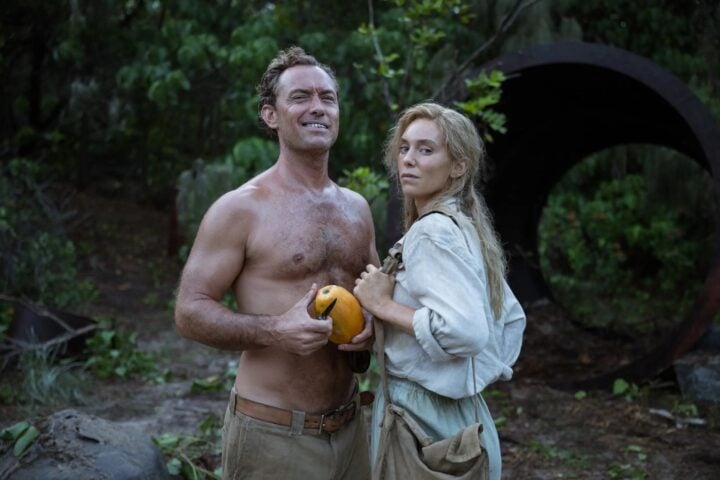
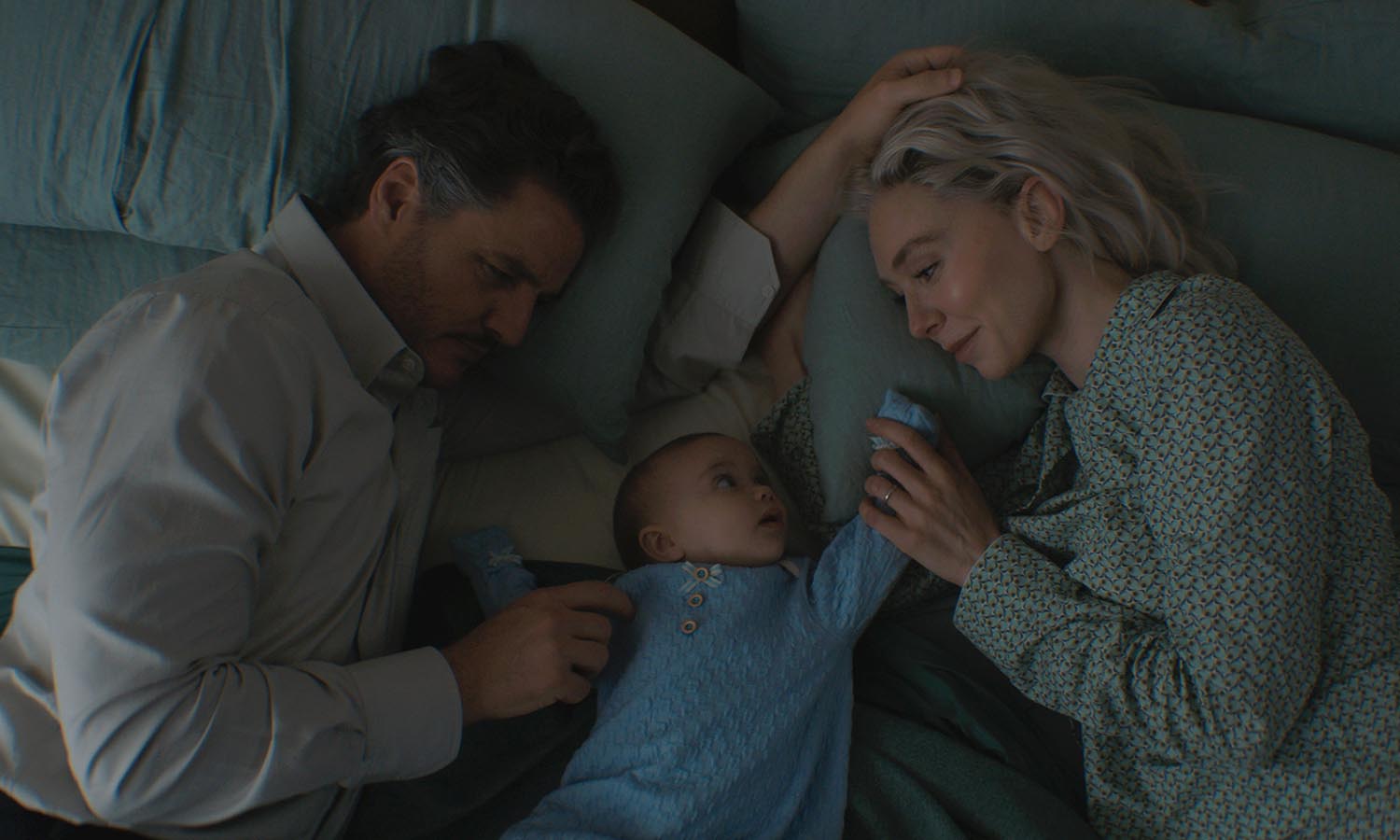
The film spends its opening act establishing the Fantastic Four as a successful, respected, beloved family of scientists, and the technological Tomorrowland of flying cars and kitschy, rounded-edge ’60s aesthetics that their work has helped to create as a utopia. Specifically, it begins on Reed Richards (Pedro Pascal) and Sue Storm (Vanessa Kirby) in the throes of love and expecting a child, with Johnny Storm (Joseph Quinn) and Ben Grimm (Ebon Moss-Bachrach) by their side as good-spirited uncles-to-be who actually get to enjoy being what they are.

It takes 10 minutes for the film to cohesively endear the world to the First Family of Comics. The two previous big-screen swings at these characters wearisomely mired themselves in real-world tensions, but this time the threat to their world originates from far beyond Earth, with Silver Surfer (Julia Garner) showing up to herald the coming of Galactus (Ralph Ineson).
The earthbound side of the film is more remarkable in how it channels Kirby’s optimism and faith in humanity, but make no mistake, the film is also very much tapped into Kirby’s psychedelic id. Shakman unleashes the power cosmic in every action beat. The Surfer, in particular, gets one of the most visually audacious action scenes in the entire history of comic book films—a light-speed chase culminating with her hanging 10 along the event horizon of a black hole. The whole film manages to beautifully defy the MCU’s reputation for lackluster cinematography, but that sequence in particular is above and beyond the call of duty.
The overarching plot feels less like the same-old superhero film shtick than a mega-budget Honda Ishirô kaiju film, where military might isn’t enough to stop what’s coming, questions of the needs of the many versus the few threaten to destabilize our heroes’ relationship with the rest of the world, and all of humanity must cooperate in earnest to solve problems. At the center of it all is the Fantastic Four, faced with an enormous moral quandary, and Reed Richards’s penchant for cold logic finding itself at war with all the love in his heart.
Every member of the Fantastic Four deals with the apocalyptic crisis in their own way, with the warm, sympathetic performances powering the characters shining brightly amid the special effects at play. This is a film that projects an unflinching sincerity and optimism, and the first in the MCU, a franchise that has brought much of Marvel Comics’s wildest flights of fancy to life, to really channel the spirit of Kirby’s creations and how that first endeared them to audiences.
Since 2001, we've brought you uncompromising, candid takes on the world of film, music, television, video games, theater, and more. Independently owned and operated publications like Slant have been hit hard in recent years, but we’re committed to keeping our content free and accessible—meaning no paywalls or fees.
If you like what we do, please consider subscribing to our Patreon or making a donation.