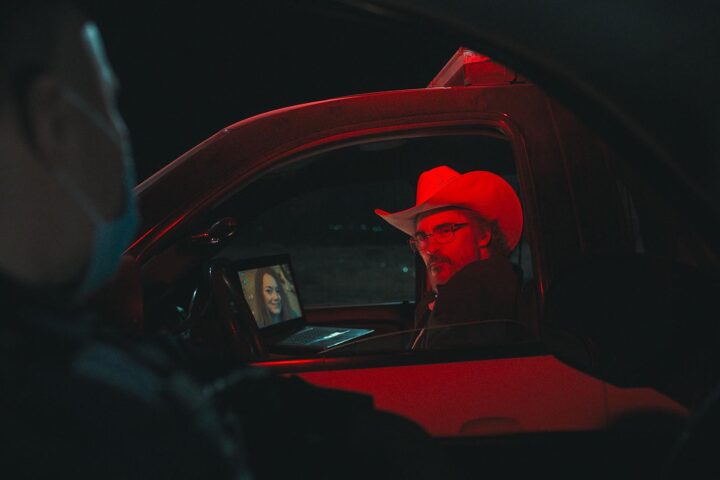
Alexandra Simpson’s feature-length directorial debut, No Sleep Till, is the latest micro-budget production from Omnes Films, the indie studio behind Ham on Rye, Christmas Eve in Miller’s Point, and Eephus. Another vibes-first, mostly plotless portrait of small-town America, the film is set in and around Atlantic Beach, a coastal Florida resort under evacuation orders ahead of a major hurricane due for landfall within the next 24 hours.
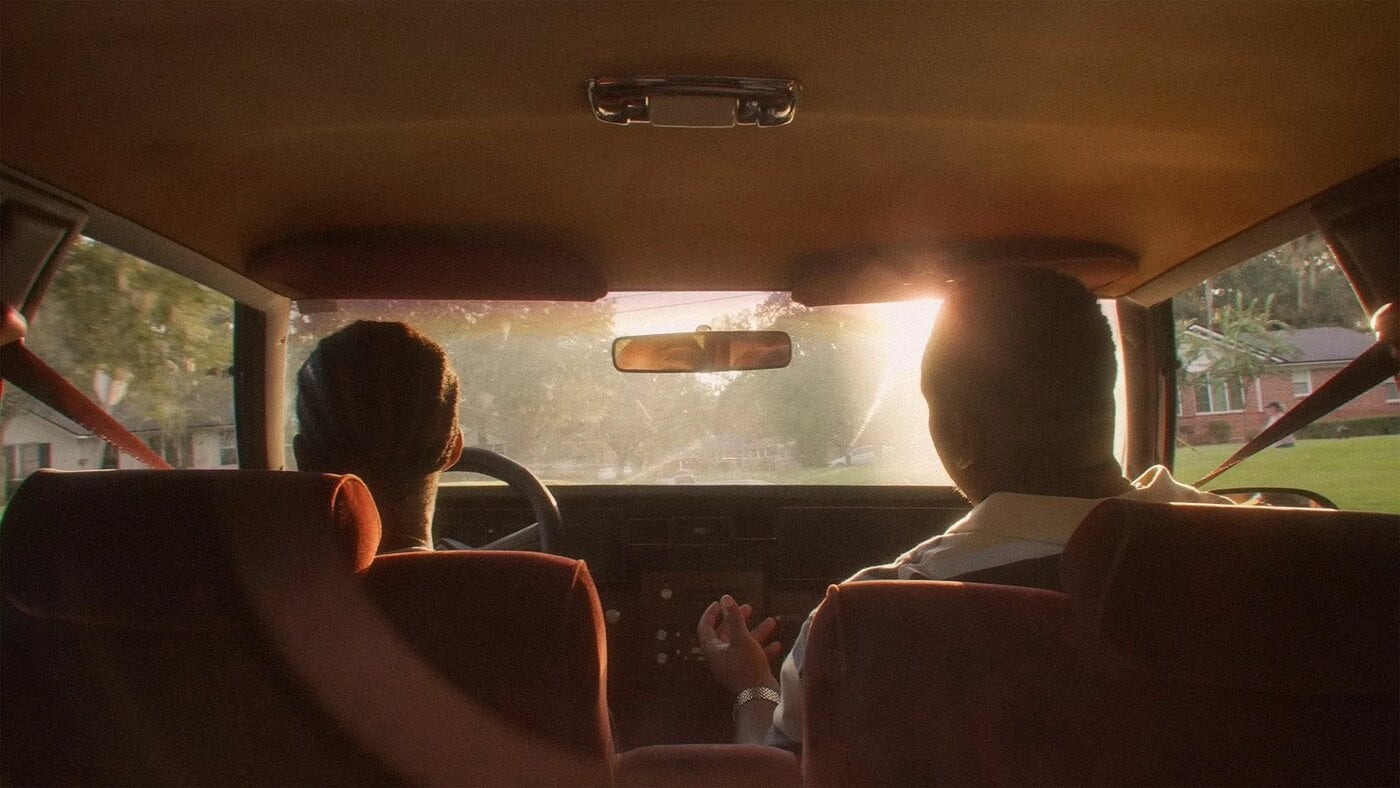
Simpson’s film drifts leisurely through a cast of a dozen or so characters, most of whom find themselves sticking around Atlantic Beach and responding to the threat of the storm in ways that aren’t always logical, or even directly comprehensible. In the scenes that most resemble a conventional story, a courier and small-time stand-up comedian named Will (Jordan Coley) persuades his initially hesitant friend Mike (Xavier Brown-Sanders) to drive with him up to Philadelphia, where he intends to permanently relocate. Not long after they pause their road trip for a brief stay at a nearby motel, the pair get lost and—in a moment that hints at their stalled ambitions and hesitant indecision—eventually end up circling back toward town.
Intimations of a self-defeating impulse are also present in brooding stormchaser Taylor (Taylor Benton), who arrives in town and ignores warnings from local police in order to document the historic weather he’s been anticipating for so long. Meanwhile, a surf store employee, June (Brynne Hofbauer), mostly cycles around Atlantic Beach, processing the loss of an unrequited crush who’s left her with a letter announcing his recent departure. Indeed, every character seems oddly ambivalent in the face of the potentially catastrophic event, just as curious as they are concerned about the upheaval that it promises to bring to their lives.
This uncertainty extends to the film’s mood, which fluctuates between dreamy ennui and slowly escalating dread. With cinematographer Sylvain Marco Froidevaux capturing the play of magic hour sunlight on the surface of a dirty pool or contrasting ominous black skies with brash motel neon, the film finds a hypnotic poetry in the characters’ aimless routines, made up primarily of precarious work, late-night swims, slow-mo skateboarding, and long, pensive stares.

Simpson is clearly intent on conjuring the feel of a place rather than getting caught up in the machinations of plot, but so insistently does she pursue this goal that the surfeit of lyricism can eventually become a little deadening. And in the absence of more concrete information about motivations or psychology, each scene begins to feel disconnected from the one prior, the film eventually becoming a progression of evocative images in search of a story to hang them on.
Often filmed from behind, fractured in close-up, or isolated off-center in long shots framed by windows and doors, Atlantic Beach’s inhabitants seem to function less as flesh-and-blood figures than as symbols for a more general kind of detachment and emptiness. This is made even more abstract as No Sleep Till wears on, with the fleeting screen time each character is afforded starting to dull the potency of the loose, naturalistic performances.
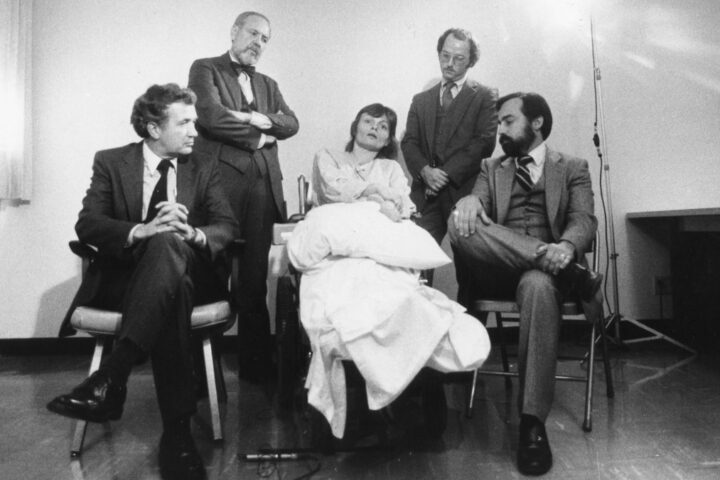
Breaking up the studied, deliberate rhythms of the film’s fragmentary editing, some of the scenes that resonate most are taken from what appears to be family home video footage, which seem to be beamed in from somewhere else entirely and which allow No Sleep Till to breathe a little. And the one sequence that perhaps serves as the skeleton key to unlocking Simpson’s enigmatic tone poem is simply an extended shot of a BMX rider performing tricks on his bike in a parking lot, immediately following Taylor’s musing that the apparently destructive power of a hurricane is just one way for a weather system to achieve a similar kind of balance.
It’s difficult not to feel like No Sleep Till would perhaps have benefitted from a few more grounded or recognizably human moments, as its own counterweight to an overly self-conscious formalism. But while it mostly struggles to transmit any deeper meaning from within it, the film’s meticulously sustained atmosphere is nevertheless an impressive feat.
Since 2001, we've brought you uncompromising, candid takes on the world of film, music, television, video games, theater, and more. Independently owned and operated publications like Slant have been hit hard in recent years, but we’re committed to keeping our content free and accessible—meaning no paywalls or fees.
If you like what we do, please consider subscribing to our Patreon or making a donation.