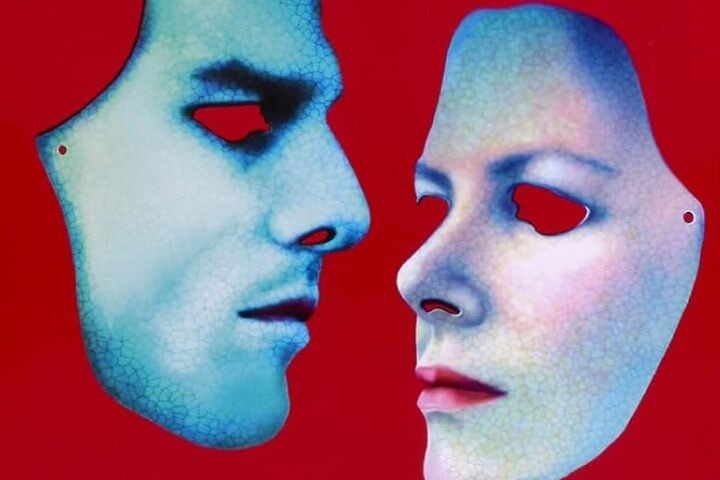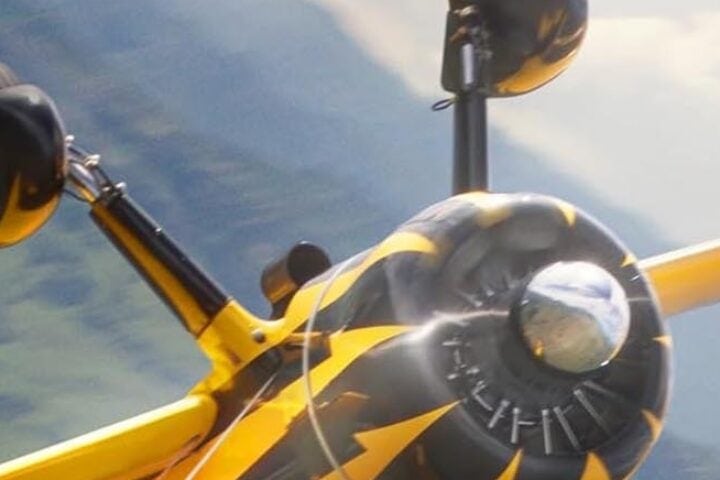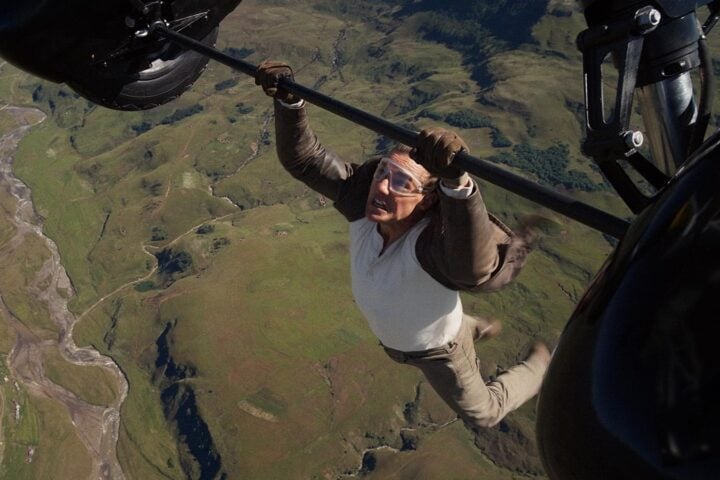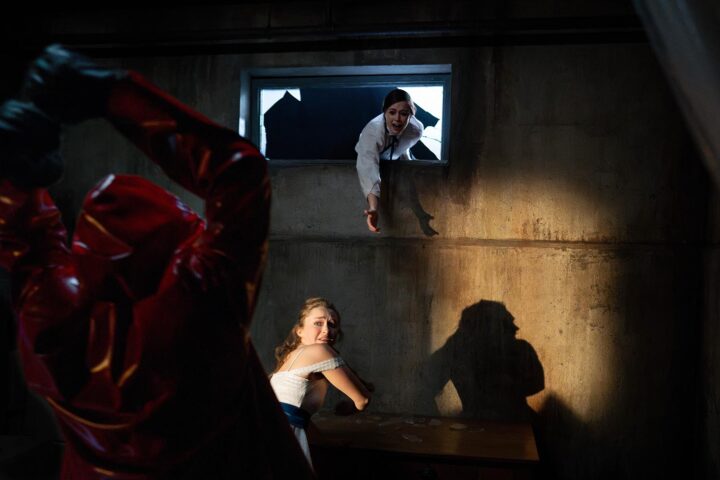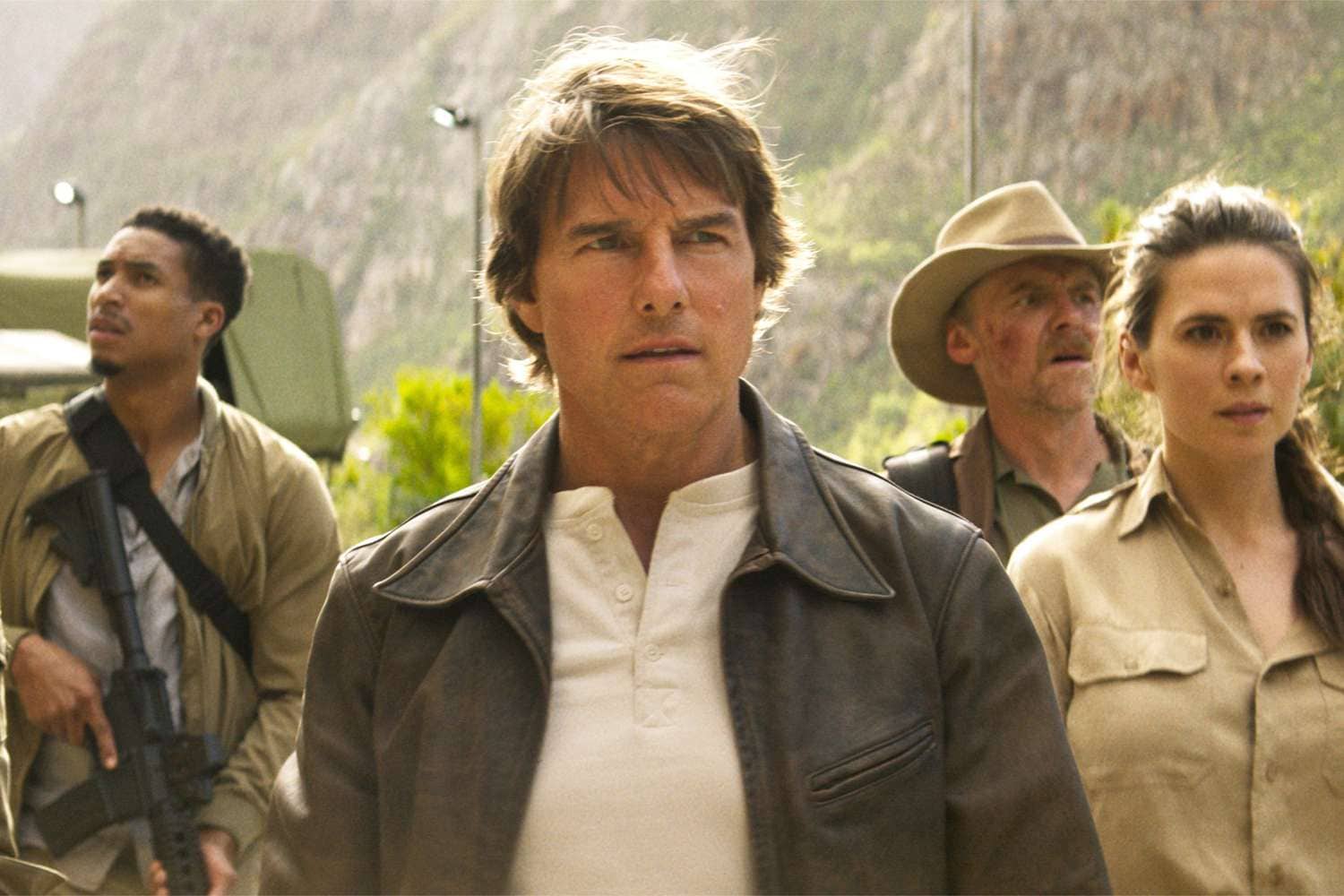
The hard drives are concealed in lipstick cases and the latex face masks are now molded with the help of a 3D printer, but the considerable and surprisingly consistent pleasures of the Mission: Impossible series rely on more vintage touches: ambiguous bombshells of a classical Hollywood beauty; Cold War-era villains; and Tom Cruise’s eternal commitment to scaling buildings, escaping shackles, and crashing through plates of glass.
Mirroring phases of the star’s career, the franchise has cast Ethan Hunt as a cocksure maverick (Brian De Palma’s original), devoted romantic (John Woo’s Mission: Impossible II), and a prospective husband (J.J. Abrams’s Mission: Impossible III). Since then, a series which has never shown much interest in character-building has become the perfect embodiment of Cruise’s illegible reputation. Brad Bird’s Ghost Protocol rendered Hunt an avatar, nearly silent in his service to the director’s kinetic set pieces, which played like Pixar scenes come to life.
And since Rogue Nation, Christopher McQuarrie has largely stayed the course, winking at how this franchise manages to defy the limits of both human endurance and its superstar’s rickety public status. That includes Mission: Impossible – The Final Reckoning, and on the occasion of its release, we ranked all the films in the Mission: Impossible series. Christopher Gray
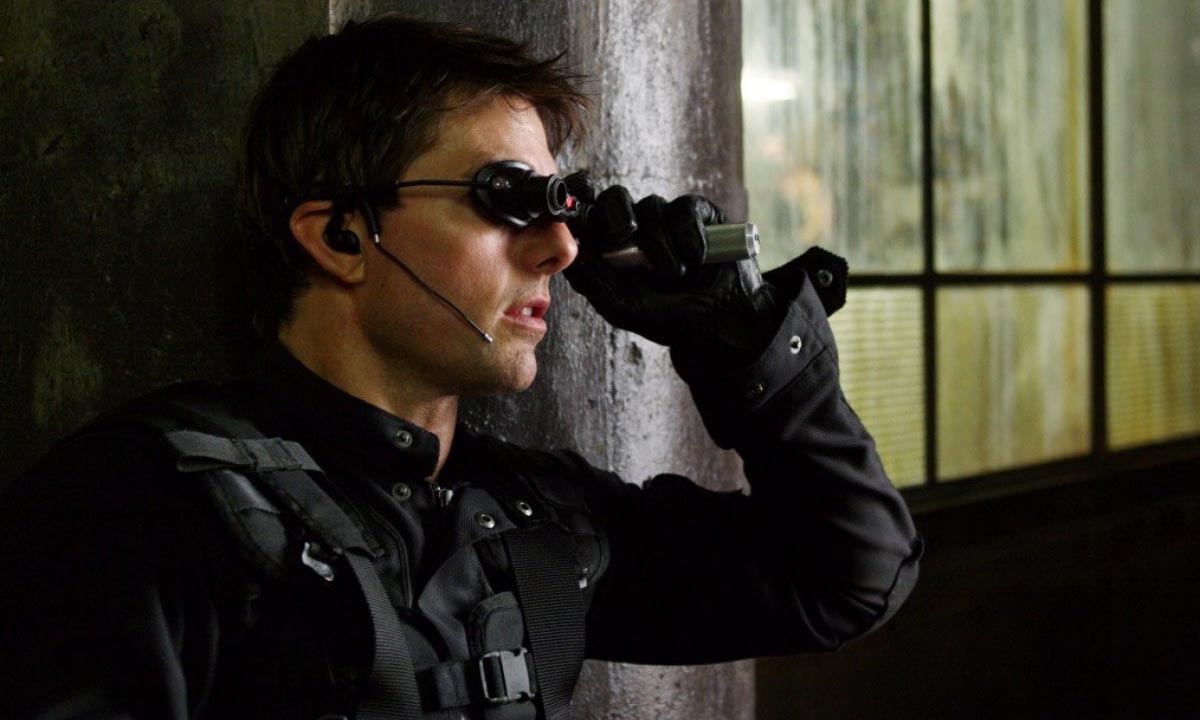
8. Mission: Impossible III (2006)
Less intricate than Brian De Palma’s 1996 original and far less flamboyant than John Woo’s 2001 divisive sequel, J.J. Abrams’s Mission: Impossible III is possibly the oddest entry in the series. Unlike its wildly divergent precursors, the film is a somewhat featureless espionage adventure, a straightforward tale of intelligence-agency heroics and arms-dealing intrigue that—with its cornucopia of high-tech gadgets, loved ones in peril, and corrupt government baddies, as well as its passing interest in the toll wrought by duty on a super-spy’s personal life—resembles two other small-screen techno-thrillers: 24 and Abrams’s own Alias. Nick Schager
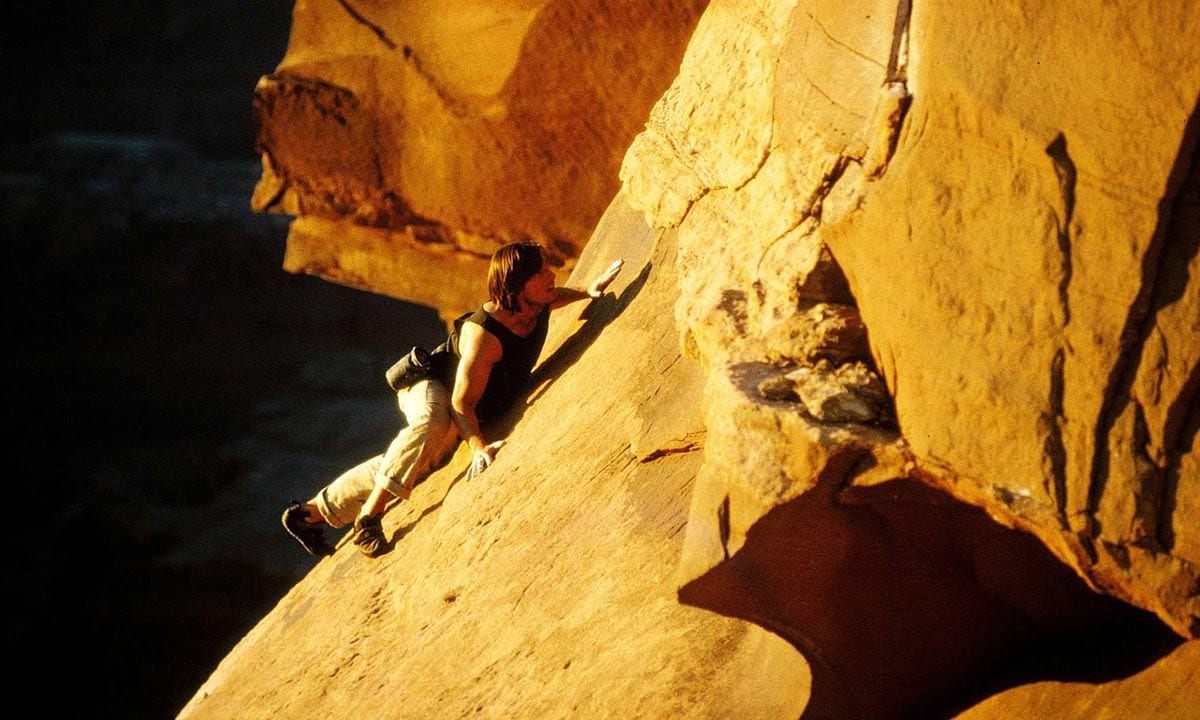
7. Mission: Impossible II (2002)
The first Mission: Impossible is a chilly, subversive, sublimely staged blockbuster driven by IMF super-agent Ethan Hunt’s realization that he’s a cog in a powerful and corrupt machine. In other words, the film is infused with the theme that’s concerned virtually every movie that Brian De Palma has ever made. And as Mission: Impossible II is directed by John Woo, that means that it’s overheated, poetic, and alternately irresistible and irritating. A faintly anonymous operative in the first film, Hunt is now an impeccably tanned, bruised romantic with a flowing mane that makes it seem like he’s stepped straight from the cover of a harlequin romance paperback. The sequel can’t touch the first film, but the new interpretation of Hunt suited Cruise, who’d never before shown this kind of sexy playfulness, and to a pleasantly surprising tee. Chuck Bowen

6. Mission: Impossible – Fallout (2018)
“No man aforetime was more blessed, nor shall ever be hereafter” is how Odysseus, the wandering protagonist of that ancient Greek epic, describes Achilles, confined to the underworld after his fateful demise by arrow on the Trojan battlefield. Mission: Impossible – Fallout follows through on at least the first part of Odysseus’s sentiment, missing no opportunity to prop up Cruise’s indomitable earthly ego while his character runs, jumps, falls, fist-fights, sky-dives, and clambers up rope and cliff in service of…what exactly? There’s barely a second to breathe in between the HALO jumping, the motorcycle crashing, the helicopter ramming, and, in the tedious countdown-clock climax, the frenetic frame-toggling between widescreen 2.39 and IMAX 1.90 aspect ratios. It would help if there was a single character worth caring about, though an unintended effect of reducing everyone on screen to a dewy-eyed Tom Cruise booster is that it no longer leaves poor Michelle Monaghan in the lone thankless role. Keith Uhlich
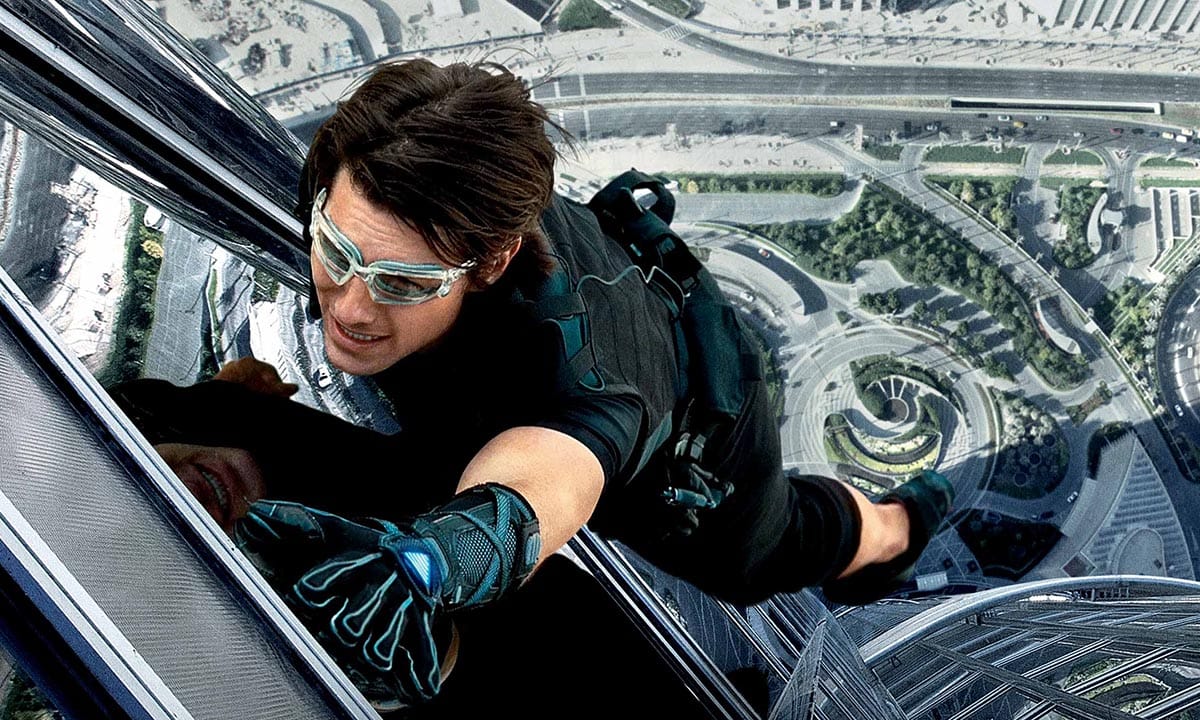
5. Mission: Impossible – Ghost Protocol (2011)
Brad Bird’s direction of Mission Impossible – Ghost Protocol works feverishly to acquire the same weightless kineticism as his past triumphs. Many scenes were shot in IMAX, and if ever one needs to summon the unwieldy format to serve a non-documentary purpose, surely the shot that follows Cruise as he creeps out onto the ledge of the Burj Khalifa is one of the very best reasons for doing so. Other small pleasures include Paula Patton, wearing what seems to be a delicate wisp of green silk to a Mumbai black-tie affair. Smitten by this marvel of feminine sculpture and sophistication, Anil Kapoor drools after her like a giggling, hyperactive child, hiding behind columns, confident his billions are a surefire aphrodisiac, but pleased beyond reason when she crushes his hand or slaps his silly face. Given the stakes, it may be the only impossible mission you may care about in a film that often feels secondhand. Jaime N. Christley

4. Mission: Impossible – Dead Reckoning Part One (2023)
In Mission: Impossible – Dead Reckoning Part One, there are too few demonstrations of a rogue A.I.’s actual power, and in the place of showing The Entity in action there’s endless exposition from other characters about its potential to do harm. Happily, Christopher McQuarrie’s film finds its footing when it comes to its action, even blatantly echoing signature moments from the franchise. The highlight is a climactic train sequence that’s as much a straightforward action showstopper as it is a tribute to Buster Keaton’s The General. The absurd images of characters clamoring out of a series of rail cars slipping into oblivion cap off a recurring element of visual comedy that runs through the film. The action consistently snaps the film into focus, but it also further illustrates how badly the decision to split this narrative into two parts throws off the delicate rhythm that’s made Mission: Impossible arguably the most consistently entertaining American action franchise of all time. Jake Cole

3. Mission: Impossible – The Final Reckoning (2025)
The first 20 minutes of Mission: Impossible – The Final Reckoning effectively lay out just how much control the Entity has gained over the world’s computer systems and driven mankind to the brink of total war. This allows for the rest of the film to proceed as a showcase for preposterous (and mostly practical) action and an unabashed sentimentality that Ethan Hunt feels for the makeshift family of spies he’s assembled over the course of the series. Most surprising about the film’s set pieces is the extent to which they lean into something that’s rarely acknowledged about this series: the absurdism that underlies its appetite for escalation. As if compensating for Gabriel’s shallow depth of characterization, the filmmakers essentially position tom Cruise’s Ethan as the Tom to Esai Morales’s Jerry, each subjecting the other to carnage so outrageous that it can’t help but elicit your laughter. Cole
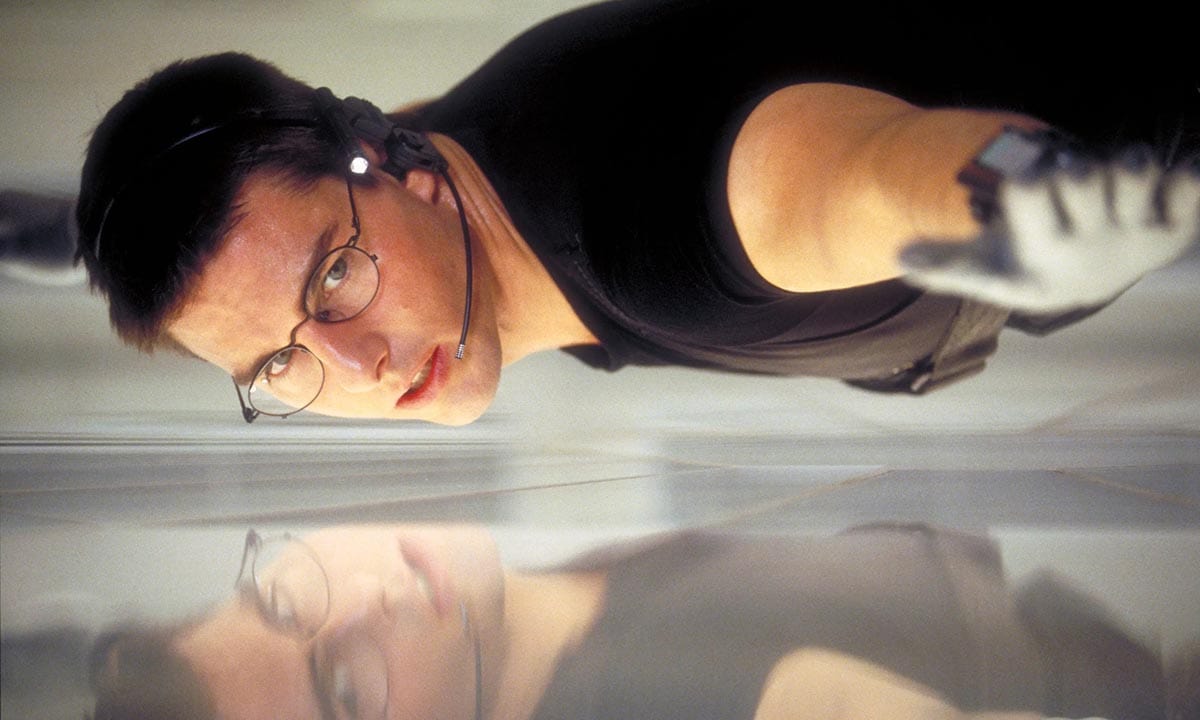
2. Mission: Impossible (1996)
Unlike most action films, Mission: Impossible’s distinct appeal operates not so much on suspense but on improbability. The timing is one defiant spectacle after another. As a helicopter crashes within the Chunnel late in Brian De Palma’s film, its charred husk and blades come swinging at Ethan Hunt, who holds for dear life onto the back of a train. Of course he’ll be safe, but look at how close that one revolving razor-sharp blade comes to his jugular. So very improbable, or, in the language of marketers, so very impossible. (John Woo, not to be outdone in Mission: Impossible II, had that fight scene where the knife blade came within a millimeter of Cruise’s pupil.) A compendium of unlikely situations, the original film’s parade of wonders are almost distinct from their narrative functions. Zach Campbell
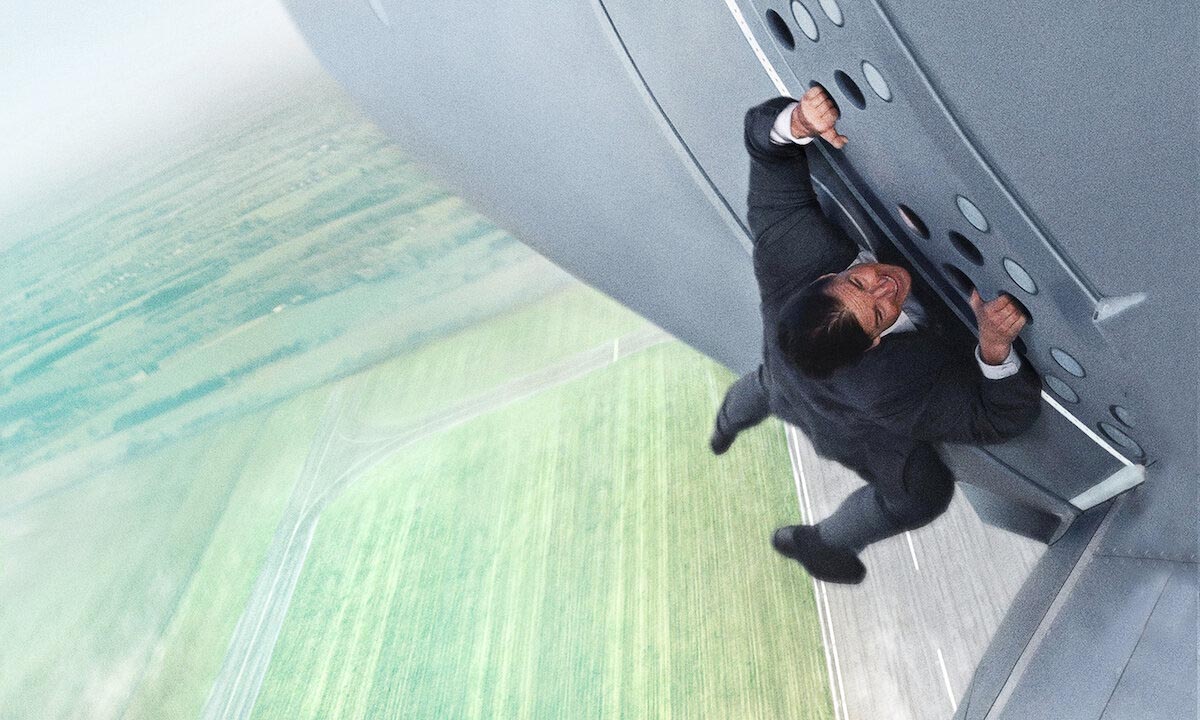
1. Mission: Impossible – Rogue Nation (2015)
Christopher McQuarrie may be the least distinctive filmmaker to take the M:I mantle, and his harsh cuts and blunt-force approach diminish one or two of Mission: Impossible – Rogue Nation’s many marquee action sequences. Brian De Palma could have mined even more tension out of the complex spatial dynamics at a performance of Turandot at the Vienna Opera House, and any previous series auteur would have improved a chaotic car chase through the alleys and temple steps of Casablanca. Nonetheless, the scenes offer a visceral kick, thanks to the franchise’s dedication to bending the limits of human potential, which innately channels its star’s thoroughgoing fixation on forcing the impossible to maintain a shred of plausibility. Rogue Nation doesn’t need the meta text about chance and skill to keep audiences engaged. With Cruise on board, the film is guaranteed a surfeit of subtext. Gray
Since 2001, we've brought you uncompromising, candid takes on the world of film, music, television, video games, theater, and more. Independently owned and operated publications like Slant have been hit hard in recent years, but we’re committed to keeping our content free and accessible—meaning no paywalls or fees.
If you like what we do, please consider subscribing to our Patreon or making a donation.