
Like Zoe Kravitz’s Blink Twice, Jaume Collet-Serra’s The Woman in the Yard offers what might be considered a paradox for our current moment. In trying to discuss everything deep, dark, and harrowing that the film manages to touch on, there’s the very real chance of spoiling the thing, and yet, it feels like mild neglect that the trigger warning that the film really deserves at the outset doesn’t show up until the moment the credits roll.
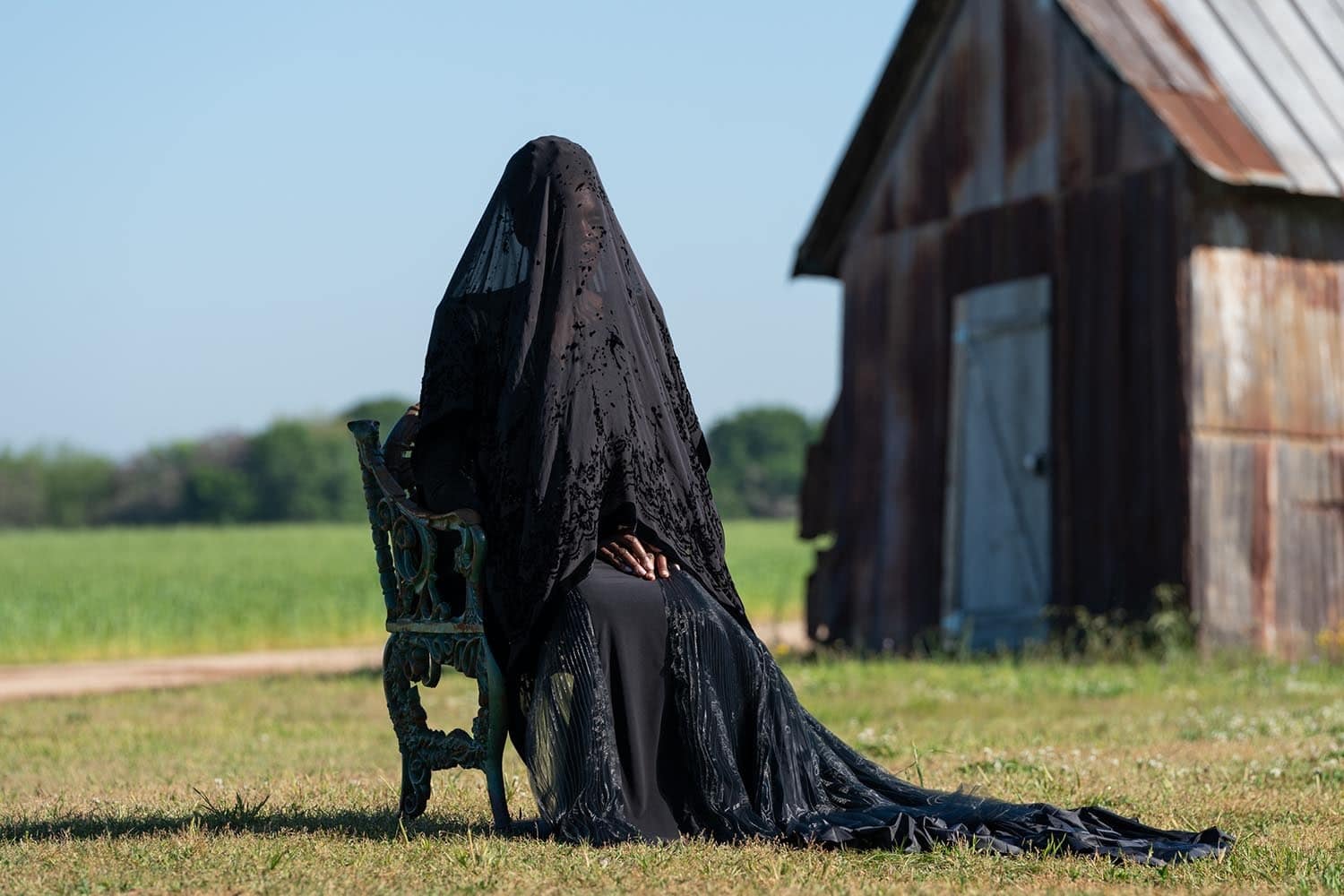
The Woman in the Yard isn’t the spooky and gimmicky jump-scare-a-thon suggested by its trailer. Written by Sam Stefanak, the film promises an oddball supernatural thriller about a Black woman, Ramona (Danielle Deadwyler), and her two children, Taylor (Peyton Jackson) and Annie (Estella Kahiha), living on a Georgia farm, where they’re visited by a nameless woman in black who patiently sits in a chair on their front lawn.
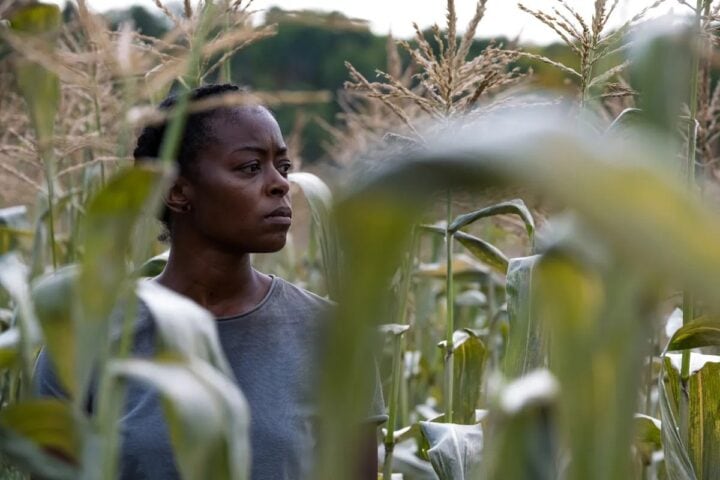
What the film actually delivers is a slow-burning tale of very real traumas suffered by a woman far out of her element and forced to process a tragedy on top of it all. That tragedy is the death of Ramona’s husband (Russell Hornsby), who was the reason that the family left the big city to live on the farm, and whose absence puts the stultifying weight of the place on the woman’s shoulders. The farm isn’t much more than 40 acres and a few chickens, but the culture shock combined with the stress of raising two children on her own is heavy for Ramona.
It’s rare for a film to shine a spotlight on one of the countless Black families that aren’t living in cities but also not living in poverty, as well as the tension and appeal of ditching both. But Woman in the Yard doesn’t do as much as it could to dive into all of that, as it’s ultimately more concerned with Ramona’s children and her own mental stability.

It’s a testament to Deadwyler’s talents that so much of Ramona’s problems are baked into the actress’s performance rather than the dialogue. We see the white lies that Romona tells her children, her barely contained resentment of them, especially when her oldest gets smart enough to see through those lies, and the anger and sorrow underlying Ramona’s every action. Still, you may wish that other big, interesting, and relevant issues had gotten more attention.
That still leaves the elephant in the room: the unnerving presence of the titular woman (Okwui Okpokwasili). Who and what she is ends up being one of the easiest twists to predict, but the way the veil peels back, as well as how preternaturally eerie Okpokwasili’s performance is, makes the woman a truly unique and arresting horror villain. Collet-Serra’s patient direction is consistently effective at conveying her shadow-based torments, but The Woman in the Yard’s latter half throws a curveball that’s disorienting more than unnerving.
It all climaxes with a painfully grim and poetic sequence: a memorable vision of a desperate love affair consummated with sweat and hate and self-loathing and, finally, an all-too-believable sense of failure. Of course, because Ramona is so underwritten as a character, we don’t fully buy into the moment of despair that she’s driven to, but Deadwyler at least makes you believe in the innate pressure of being a woman of color placed into an unthinkable situation, and of life moving too fast and chaotic for her character to make any sense of it.
The one moment of respite that Ramona enjoys occurs at the start, and it’s interrupted by a hungry child. It’s not hard to connect that moment to her feeling like she has only the one option left. That doesn’t make it any easier to watch, or the film more coherent in the telling, but even that minor gesture toward depth makes Woman in the Yard easier to respect.
Since 2001, we've brought you uncompromising, candid takes on the world of film, music, television, video games, theater, and more. Independently owned and operated publications like Slant have been hit hard in recent years, but we’re committed to keeping our content free and accessible—meaning no paywalls or fees.
If you like what we do, please consider subscribing to our Patreon or making a donation.



the babadook, but crappy and not even remotely scary . i was under the impression jaume-collet serra could craft a decent chiller/thriller, so what the hell happened here ? we’ve seen the “Grief/Mental Illness as Horror” allegory about a million times , i’m frankly sick of it
The Twilight Zone did it better 64 years ago in, “The Spur Of The Moment.”