
One of the big gaming industry questions that keeps everybody except the folks at Nintendo up at night is how to attract people to this big, weird, daunting medium who don’t already have a favorite game that they’re set on playing until the end of time.
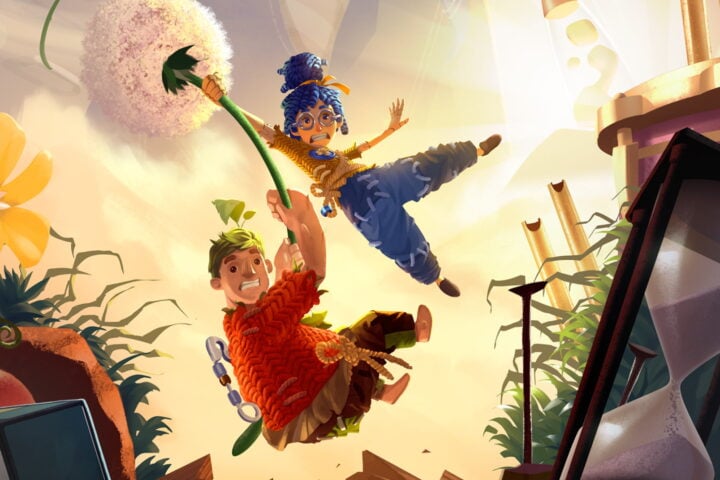
Josef Fares, then, was onto something with 2021’s It Takes Two, packaging up the best elements of modern gaming in such a way that almost anyone could pick up the game and, with the help of a second person, have a grand time running around interacting with a fantastical world defined by its quirky flights of fancy. Hell, I owe that game for teaching me and my current partner how we each approach problems and how to come together as a team.
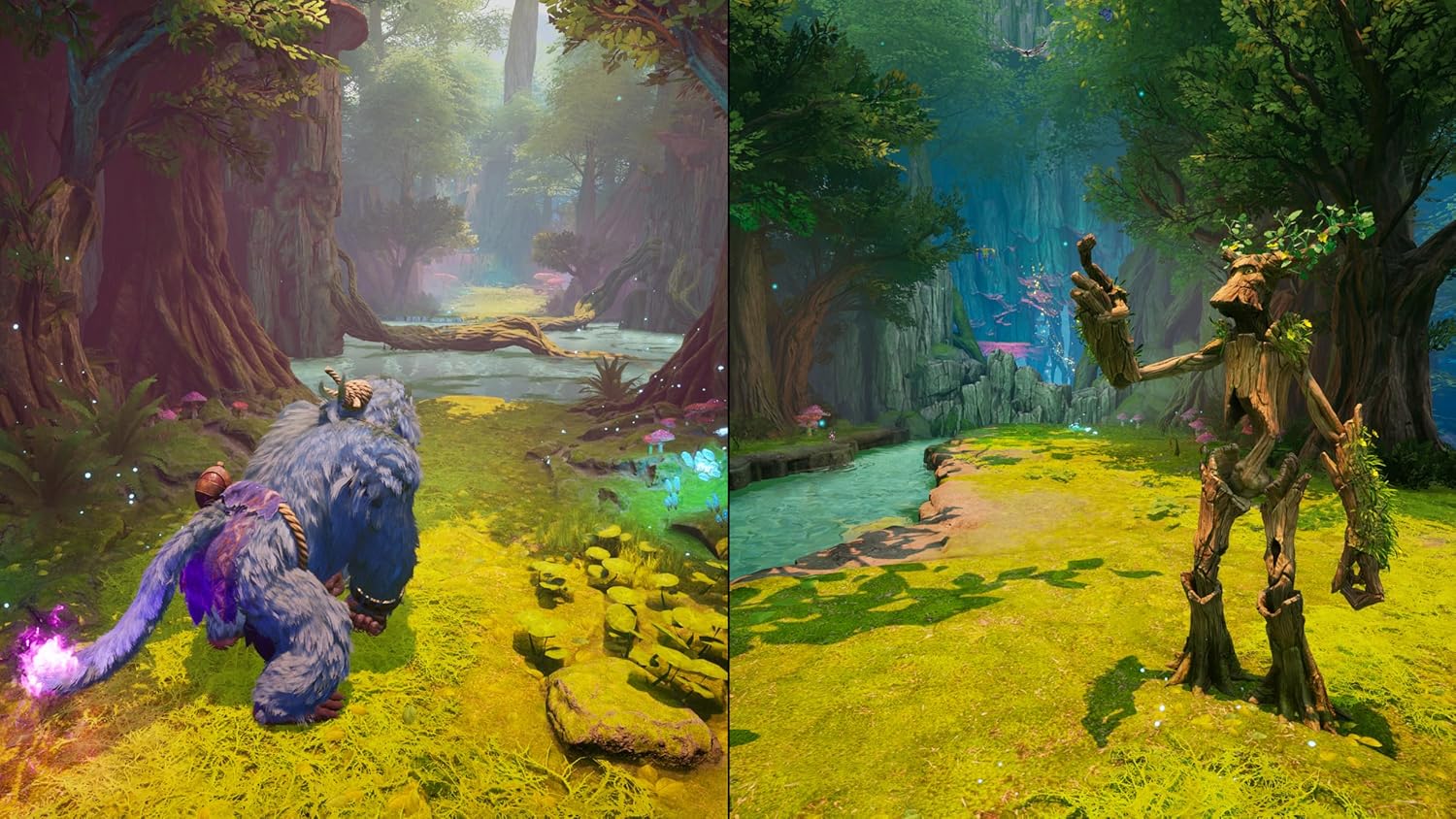
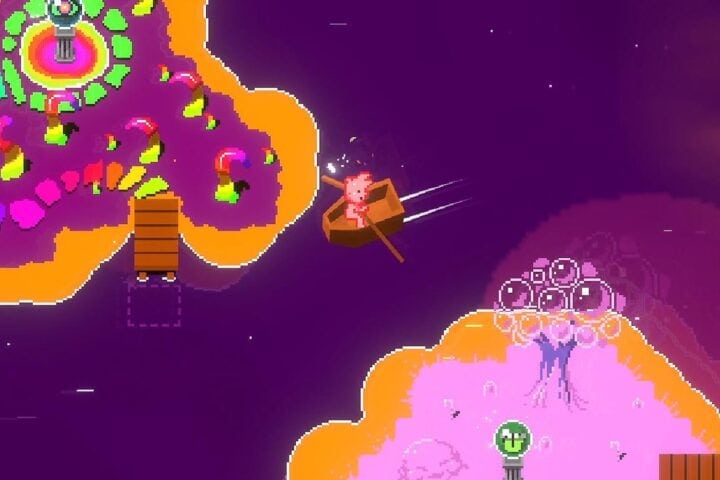
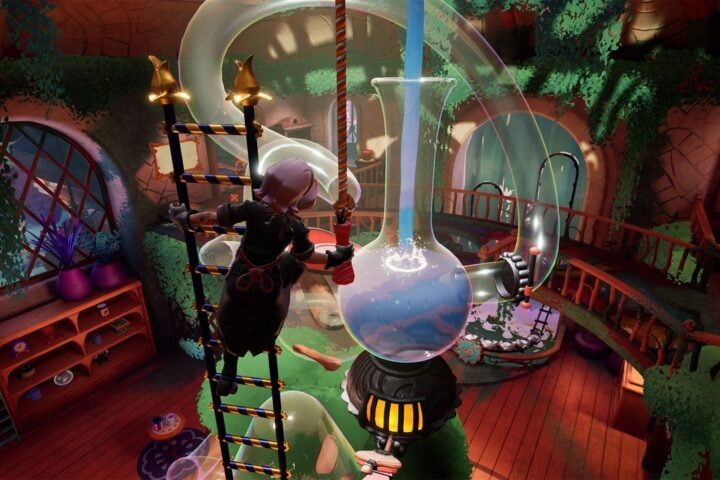
Split Fiction is another vast, breathtakingly detailed playground of a game that, across varied adventures that only gaming can deliver, ever so gently forces you and your co-op partner to communicate with one another to get past obstacles. Throughout, it flits back and forth between cyberpunk sci-fi and whimsical high fantasy, with side jaunts through delightfully surreal hidden stages that, while half-baked, are the most imaginative and unique parts of the game.
And it does all of that while walking a perilous tightrope as a feat of game design. Split Fiction is a tough game that throws all manner of challenges at the player, and it’s just forgiving enough with its respawn system and simplistic control scheme that just about anyone paying enough attention can grasp what needs to be done at any given moment to proceed.
Some stretches, though, will be tricky even for players familiar with the mechanical language of games. Boss encounters in particular tend to be chaotic multi-part affairs, closer to a bullet-hell experience than a Mario game. Sometimes even the game’s bombast and ambition can get in its way. As cool as it is to be dropped in a world where you spend a quick couple of minutes re-enacting a sandworm ride inspired by Dune, the jumping challenges and sheer speed of it all is a lot to acclimate to all at once. Thankfully, more often than not, the herculean effort on the part of the developers to find the sweet spot between challenge and accessibility pays dividends.

Whether the game is just as successful at motivating players to care in terms of its story and characters is the greater concern. Split Fiction’s heroes are Mio and Zoe, two ostensible twentysomething fiction writers whose novels have been picked up by a major publisher. Their grand ideas are being stolen by a futuristic VR-generating MacGuffin and form the basis of the massive worlds that players will find themselves running around within for hours on end.
To be perfectly blunt, Mio and Zoe kinda suck, both as people and as writers, what with their big ideas working off fantasy and sci-fi clichés that would make even Stephanie Meyer roll her eyes in contempt. Their best ideas, represented as glitches/side stories in the VR simulation, are treated as surreal afterthoughts, when they represent the game at its most inspired.
As people, Mio and Zoe are written in equally cliché fashion. Mio is a broody, EDM-loving city dweller forced to team up with Zoe, a bubbly country girl with dirt under her fingernails, and there’s nothing organic about their characterizations. Their banter feels forced and childish, and while it might fade into background noise as you and your co-op partners also banter back and forth IRL, the sheer volume of Mio and Zoe’s crosstalk makes it hard to ignore. It’s nothing short of a clunky, tin-eared albatross around Split Fiction’s neck.
There are far more egregious examples of a weak narrative dragging down a gaming experience, and in much worse games overall. In the end, Split Fiction is, against the odds, a smile-inducing charmer. But it’s for that exact reason that it deserved a script that put its best face forward. Split Fiction offers up a meticulously crafted playground, but it’s disappointing that the framework around it feels like it was fashioned by the 10-year-olds who’d play there.
This game was reviewed with a code provided by fortyseven communications.
Since 2001, we've brought you uncompromising, candid takes on the world of film, music, television, video games, theater, and more. Independently owned and operated publications like Slant have been hit hard in recent years, but we’re committed to keeping our content free and accessible—meaning no paywalls or fees.
If you like what we do, please consider subscribing to our Patreon or making a donation.

Respectfully, you don’t know what the heck you’re talking about. Cliches sure, but they are UNPUBLISHED writers. There’s a reason they’ve never been published before. And that fact allows them to get away with the cliches. Zoe and Mio are not boring terrible characters. Zoe is a sweetheart who is dealing with quite a lot in her life. And although I did not like Mio at first, it’s clear her rude attitude was a front to protect her heart from continuing to get hurt. And thanks to Zoe, her rude attitude gradually disappeared. Because she was able to open up. And these worlds are not like 10 year old playgrounds. I will say a couple of them were, but that was entirely due to the fact that Zoe and Mio wrote those when they themselves were children. I believe you are being way too harsh and using your own biases to judge this wonderful game in the wrong way. The lowest I would give this game is maybe a 7 out of 10. And that’s while being harsh. I believe you need to really think about why you are judging this game way too harshly. Probably have some problems of your own you need to deal with