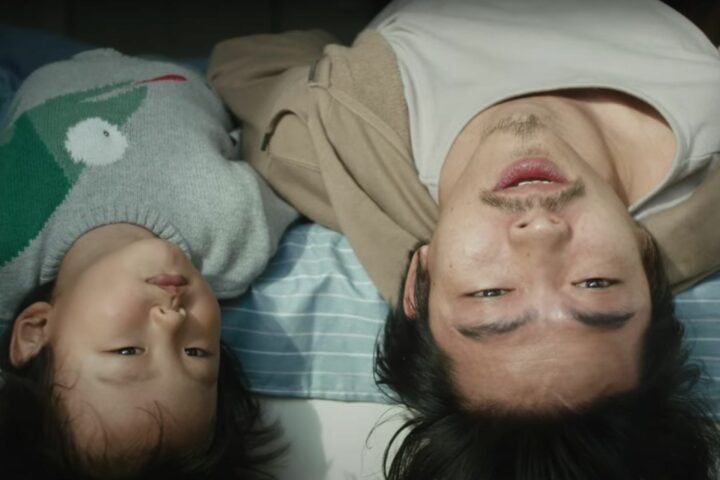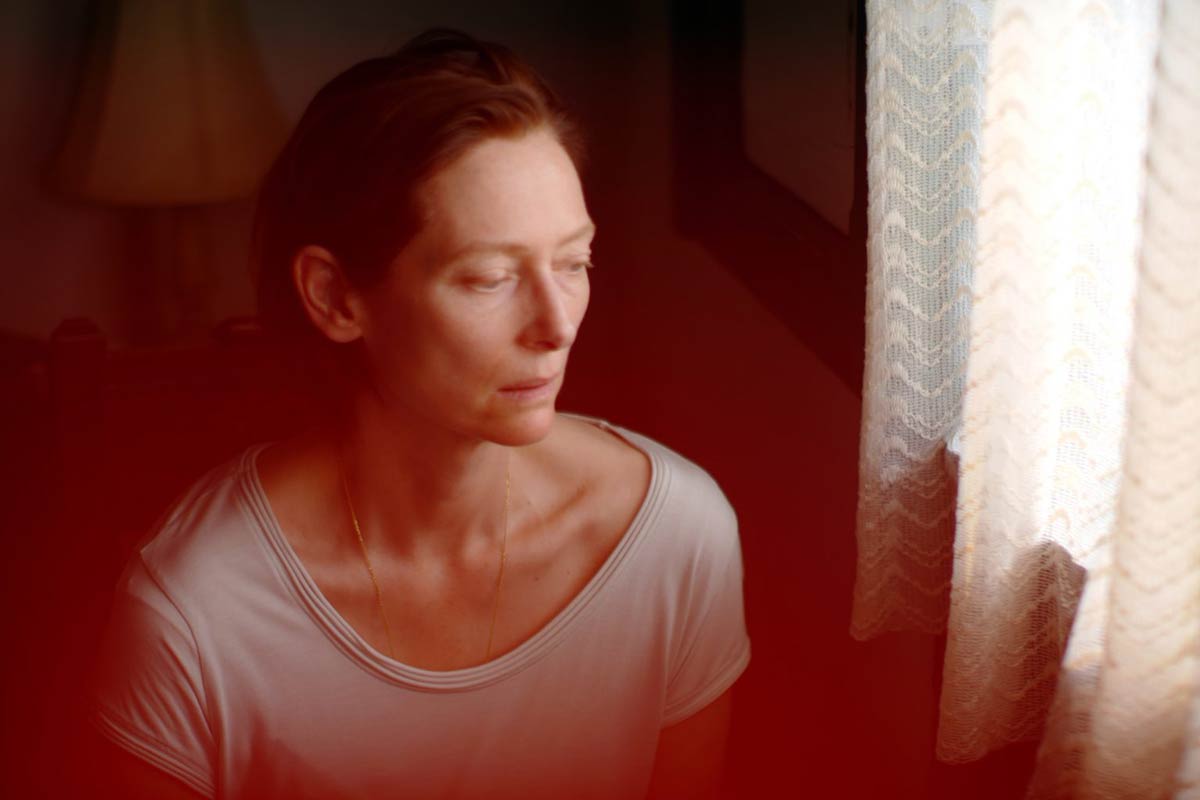
At the outset of Apichatpong Weerasethakul’s Memoria, there’s stillness and silence. Then, a startlingly loud booming sound jolts Jessica (Tilda Swinton) awake. Her anguished search for the source of the sound immediately serves to align us with the character. And thanks to American distributor Neon’s unique exhibition style, a purported never-ending roadshow that will only screen the film to a single audience at any given time, the experience of Memoria will also link a gathered theatrical crowd to each other.
It’s a fitting distribution method for the film, and not only because the sound mix is so precise that anything other than a theater’s speaker system would do the experience injustice. On a thematic level, Memoria explores how mysterious expressions such as the film’s central noise can cut across cultural boundaries and forge unexpected connections. Weerasethakul and Swinton’s collaboration in Colombia, a country to which neither artist had any existing ties, yields revelatory observations about what unites and evades us as humans.
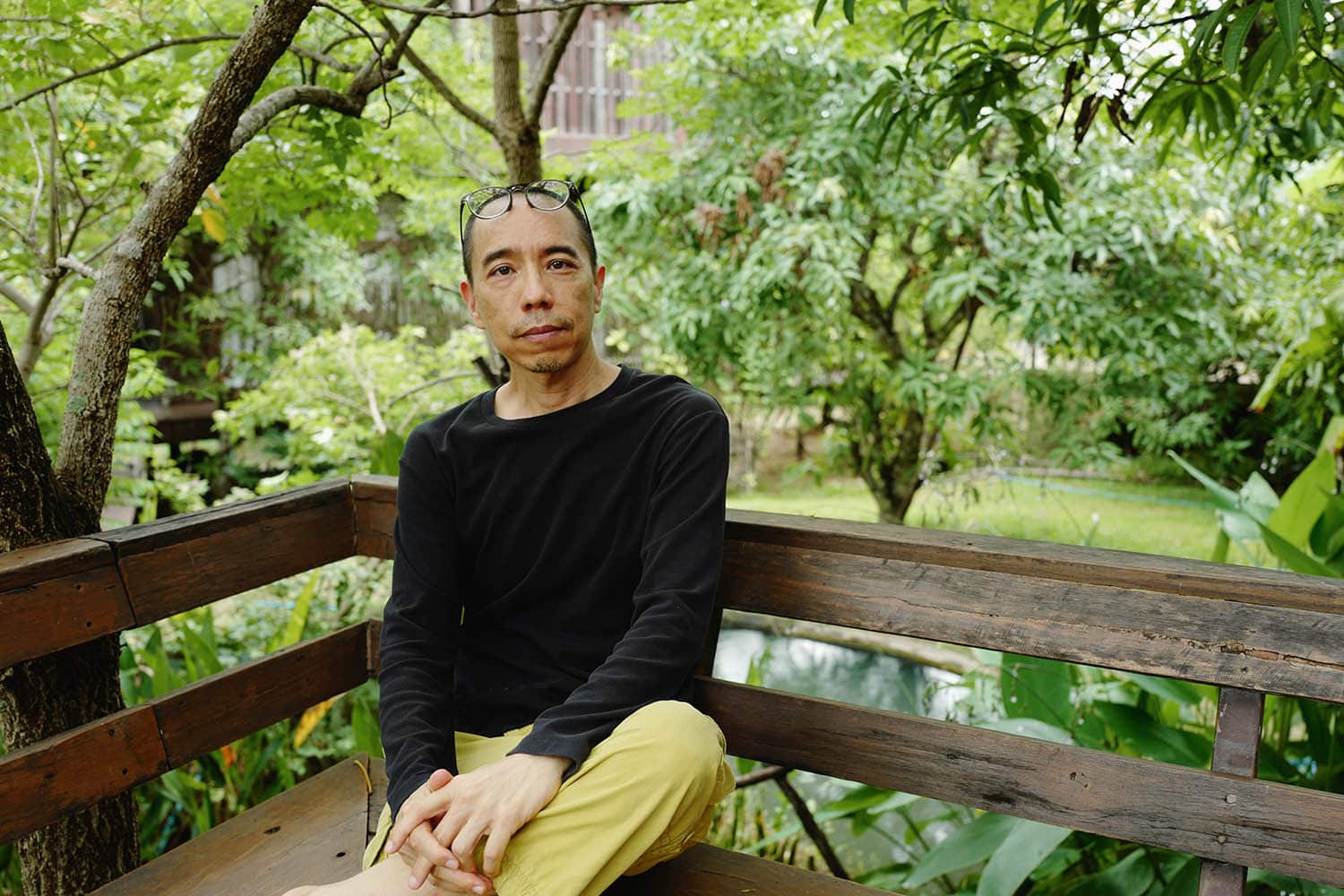
I spoke with Weerasethakul before Memoria begins its roadshow in December. Our talk covered how he found his comfort zone outside of his native Thailand, why he thinks of the film as a musical, and what he’s learned from sharing the project with a global audience.
You’ve described your preparation to make Memoria, your first non-Thailand-set feature, as a need to “synchronize” with Colombia. What does that look like in practice?
It’s pretty instinctive and random. Which is the best thing, I think, when it comes to approaching another landscape and memory because I just let myself go and talk to people. I travel around without too much planning. I actually focused on the hospital area, a place that I feel very comfortable in. I went to hospitals in Bogotá, in Medellín, in other places, and sometimes ideas or stories came out of that. So, when I went to this small town that appeared at this later part in the film, I basically had this sense of traveling to a small town to find a cure. And at that point, I was just looking for one hospital room that was overlooking the mountain. I spent many, many days just looking in that region and found this town.
Was there a point that felt like a stopping point to where you knew enough to speak to life in Colombia to not be a voyeur while still maintaining an outsider’s removal?
Oh, I don’t even think I can speak about Thailand! It’s so subjective and personal, and the way I approached Memoria is the same. It’s impossible. I just had the overall outline, and then really focused on what happened in front of the camera when we were shooting and what kind of sound we had on that day. I think the movie is [about evoking] an immediate reaction, either the joy or the meditation of just being. I think it allowed the audience, and also the character itself, to process their own idea of time and also memory through audio and sound.
Did you finalize the big thump noise before production started? It’s my understanding that you weren’t having the actors react to any sound on set, so if you hadn’t locked it in, did their reactions shape the sound itself?
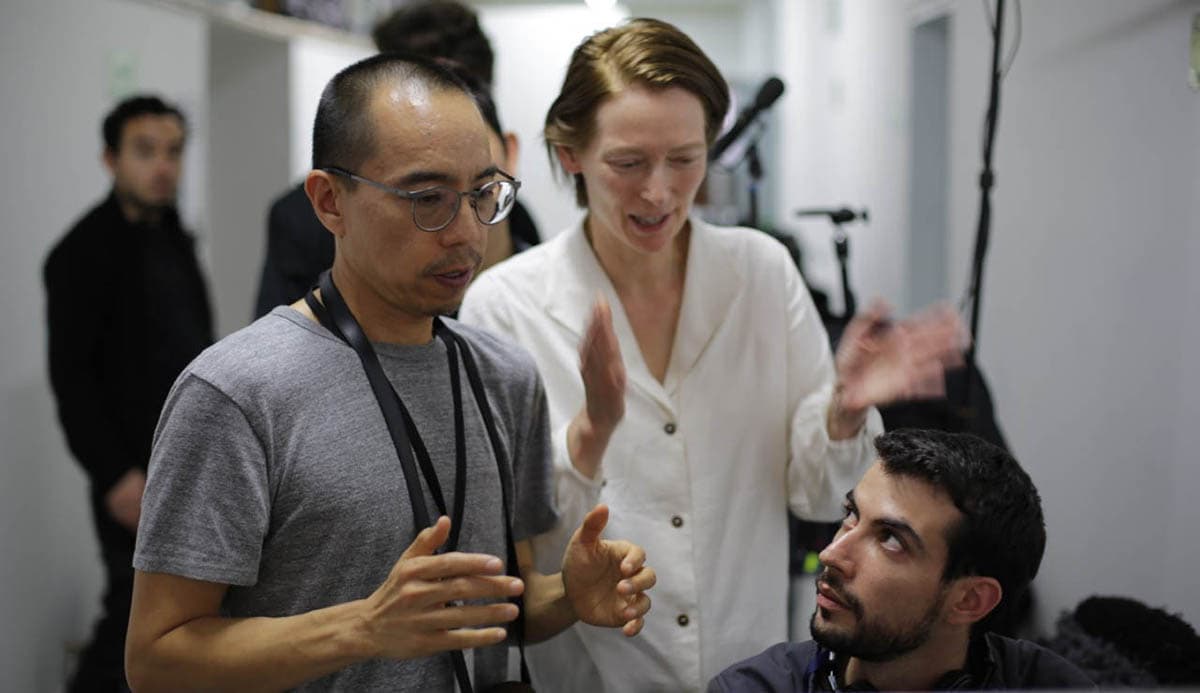
I think Tilda didn’t know. I’d just say “bang,” very softly. But of course, she has her own idea of the sound, and I didn’t want to jeopardize what she’s building because I think for her it’s intensified. The way she walks and interacts with her environment, I think, is more internal. I think it’s more joyful for me and for Tilda, too, to have our own idea of the film. We shot the film chronologically, and we [were] just little by little trying to find this lady.
Is the noise meant to resemble what experience with exploding head syndrome?
It’s not, because it’s so hard to explain. I met some people who had it after a screening of the film, and they said, “Oh, I have this thing too.” But it’s not one you can reproduce. It’s this thing, like when Jessica explains it, that’s underwater and has a metallic echo. But then it’s just an idea. I think that the movie is attempting to reflect how one really wants to reach across to this other life—to something that you cannot explain.
In interviews, you mentioned Steven Spielberg as the first formative filmmaker you remember. Subconsciously, do you think Memoria might at all be indebted to his early fantasies? Jessica is convinced of something strange, potentially paranormal, that she experiences alone and cannot find solace from in logic or friends.
I came to the realization later that this is like the sound and communication with the aliens in Close Encounters of the Third Kind. But when I was there shooting, no. It must be an unconscious thing. But I admire Spielberg a lot in terms of the way he pulls out emotion for a character. I think he’s really classical. He has a link to very classical film that I admire.
How did the moment come about where there’s a loud bus tire popping that leads one Colombian man to hit the deck but does not seem to faze Jessica?
In a way, the movie is like a sound diary of Colombia because many of the incidents did happen: that car alarm in the hospital, and also the bus tire explosion. I actually witnessed those, and even though the alarm is not that intense in the film, just a few can trigger this event in the film. I always have this little notebook to write down approaches to sound, mostly.
From all the press about Memoria, does it also strike you that no seems interested in discussing the sound of the car alarms?
Yes, yes. But also, different objects have a different sound [to each person]. The whole movie is like a musical. For me with Spanish, too, I didn’t understand much. I approached it like music as well. The whole sound design is an orchestration of human expressions.
It seems as if you had an idea making this film about a kind of collective memory that that can mysteriously unite people across cultures and other boundaries. Have your travels sharing Memoria across the world proved that thesis correct?
Yes, it was such a beautiful experience just from the shooting. I felt that what I thought was a barrier was not. We are so similar as humans. We suffer, we’re happy, [we experience] pleasure, these same moments. To share the film in Colombia, some people cried because it triggered certain memories about this anticipation of a bomb or gunshot in their neighborhood. These reactions are, for me, a revelation to feel really comfortable just making film anywhere.
Has it affected the way that you view the concept of universality?
Yeah, in a way. It has simplicity but complexity at the same time. When I thought of going out of Thailand to get out of my comfort zone, I realized the comfort zone is everywhere. It’s up to how you orient yourself. But that’s the thing about complexity in how you approach certain landscapes. I think I feel really addicted to finding new sounds and images.
You’ve said that the earliest germ of an idea for Memoria came from visiting South America and feeling the need to open a new chapter as a filmmaker. Do you still feel like this film functions as a starting point for what comes next for you?
I think so. I really treasured the process of making it. It’s really important to work with someone like Tilda or Jeanne Balibar, someone who’s already a friend and is like, “We just experienced this together and found out something.” It’s like a quest. It’s not by the book.
You might not view your experiential work as separate from feature filmmaking, but with the roadshow release of Memoria making it more of a site-specific experience, does the film assume the quality of a gallery work for you?
I think that, for Memoria, the screening [style] is not that way. It’s actually to reach a wider audience than it’s intended for. I don’t know if you agree, but it has to be in the theater. That’s what I found out from the first screening in Cannes. It worked totally different even from the screening in Thailand when we tested the sound with five people. It’s not the same. I feel like this is such a treasured moment for the people to be together.
Since 2001, we've brought you uncompromising, candid takes on the world of film, music, television, video games, theater, and more. Independently owned and operated publications like Slant have been hit hard in recent years, but we’re committed to keeping our content free and accessible—meaning no paywalls or fees.
If you like what we do, please consider subscribing to our Patreon or making a donation.