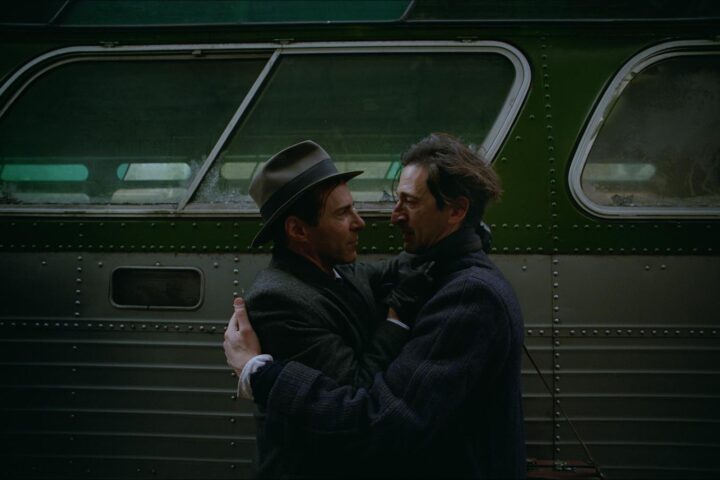
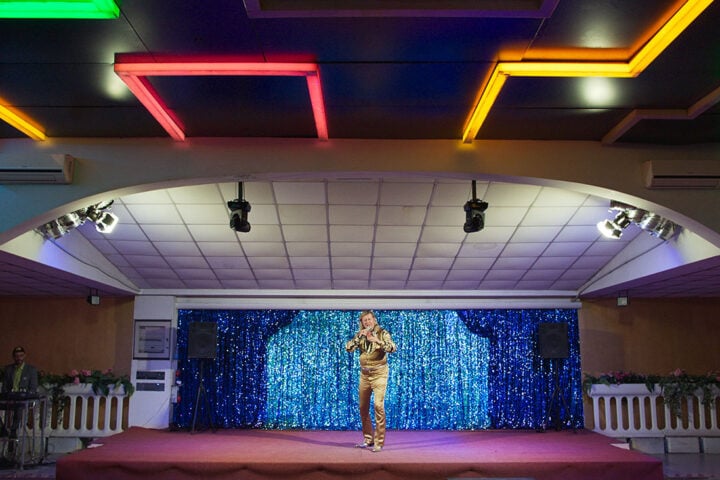
The concept of sonic catering, which involves turning the sounds of food and cooking into performance art, is too tidy a combination of Peter Strickland’s interest in bodies, viscera, and sound design to actually exist outside of his offbeat imagination. But it’s also not so far outside the bounds of contemporary art that it’s impossible to imagine that someday, somewhere, a private foundation might start offering comfy residencies to food-and-noise groups, as enigmatic aristo Jan Stevens (Gwendoline Christie) does in Flux Gourmet.
The flamboyantly attired and made-up Stevens’s new resident chefs-cum-performers are an unnamed “culinary collective” consisting of Billy Rubin (Asa Butterfield), Lamina Propria (Ariane Labed), and their driving creative force, Elle di Elle (frequent Strickland collaborator Fatma Mohamed). The crew has also brought on self-described hack writer named Stones (Makis Papadimitriou) to document their prestigious three-week residency.
The outsider Stones serves as both our entry point to this arcane world of high-end performance-art cooking and as the central figure in the film’s clearest unfolding storyline: the development of his indigestion and flatulence. The first scene gives us Stones’s visit to Stevens’s in-house doctor: the gaunt, sinister-looking, and coldly erudite Dr. Glock (Richard Bremmer). Amid hinting at some life-threatening bowl disorder, the supercilious Glock finds opportunities to chasten the writer for not being familiar with the classics. In line with the rest of Flux Gourmet, Strickland wrings both discomforting humor and commentary on the arduous, emotionally taxing process of artistic creation from the scene.
Throughout the film, Strickland heightens the clash between different artists’ egos, and between their conflicting visions of meaningful work, to absurd heights. A significant subplot even sees a rival collective, Earl and the Fatty Acids, performing escalating acts of sabotage on Elle, her group of performance artists, and the estate where they have their residency.
Strickland’s mischievous approach is on full display as we get to know the group and the inner tensions that are coming to bear as they struggle to fulfill Stevens’s expectations. Elle leaves the sound design to her counterparts and takes the lead in their performances—in that she does things like perform a modern dance interpretation of pigs being slaughtered in the buff, while Lamina and Billy cook food and adjust audio dials behind her. Resentment within the group, rooted in the fact that both of Elle’s technicians used to be among her lovers, begins to come to a head when Stevens suggests that they stop using flanging in their audio mix. Elle nearly goes apoplectic at this interference in a creative process that she calls her own.
As in his previous films, each detail that Strickland puts on screen, from Glock’s frail but menacing smile to the neon-lit lap-dissolve montages of the group’s customary post-performance orgies (so-called “audience tributes”), seems meticulously selected for its wicked, potentially subversive edge. In Flux Gourmet, his campy depiction of artists’ pretensions to political significance and purity of intent expresses a genuine anxiety about the sources and process of creation—even as the film wallows in self-conscious artifice.
That being said, Strickland’s playful mockery of performance art and excessively serious-minded “collectives” feels both insular and, at times, a shade too flavorless. Putting Stones’s troublesome gut and a rivalry born of an argument over a flanger effect at the center of the tongue-in-cheek drama is humorous enough. But the frivolity of these crises also keeps moments from having a significant impact, visceral or otherwise. Charming, quirky, and fun enough to look at, Flux Gourmet proves to also be something of a light meal.
Since 2001, we've brought you uncompromising, candid takes on the world of film, music, television, video games, theater, and more. Independently owned and operated publications like Slant have been hit hard in recent years, but we’re committed to keeping our content free and accessible—meaning no paywalls or fees.
If you like what we do, please consider subscribing to our Patreon or making a donation.