In the same way that Pavements served as Alex Ross Perry’s antidote to cookie-cutter musician biopics, Videoheaven aims to do right by an institution that the filmmaker views as misrepresented in recent movies and TV shows: the video store. Through the means of an essay film, he outlines the social and political functions of the video store and how the conventions built around its depiction on screen reflect a shifting American landscape from the 1980s through the early aughts. More than a mere cipher for the world around it, the video store becomes something much more self-reflexive across Videoheaven’s three-hour running time.
This is the first film Perry has made without producing primary source footage, following a shift from the character-forward narrative dramas that kick-started his career into a stronger fascination with formats as subjects unto themselves. Due to its repurposing of other media, the essay film takes pre-existing materials and seeks to produce something primary in its own right, and with Videoheaven, Perry sees the brick-and-mortar video store as a physical avatar of this pursuit—a literal collection of images that, through sheer proximity to each other on store shelves, create new meaning. A culminating example of this point is a clip from Seinfeld in which Julia Louis-Dreyfus’s Elaine builds a mental profile of a video store employee based on the titles on his Staff Picks rack, only to be disappointed by the real person once they meet.
Perry, too, homes in the social baggage that’s attached to the video store, most interestingly in his focus on how adult films are frequently shunned into a “proverbial back room” and how this led films and TV shows to peddle the trope of a character running into someone they know while renting illicit tapes. Using a clip from Beverly Hills, 90210 in which a priest encounters Tori Spelling’s character stumbling out of the adult section of a video store, Perry sees a trip to Blockbuster as sodden with Catholic guilt. At the video store, someone is always watching.
This is just one instance of Videoheaven identifying a secret language among films and TV shows that the filmmakers themselves likely weren’t even aware they were speaking. He draws broad conclusions from even the briefest glimpses of video stores on film, such as how Lethal Weapon 3 demonstrates an unsustainable coexistence between indie and corporate video stores by containing two different store signs in the background of a roving long take.

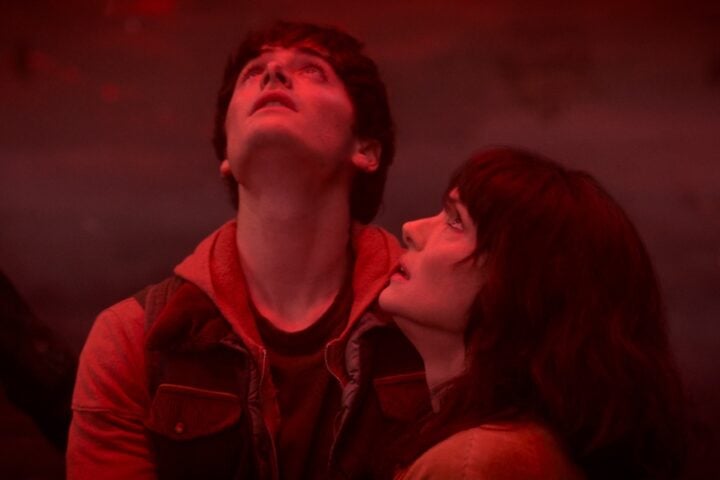
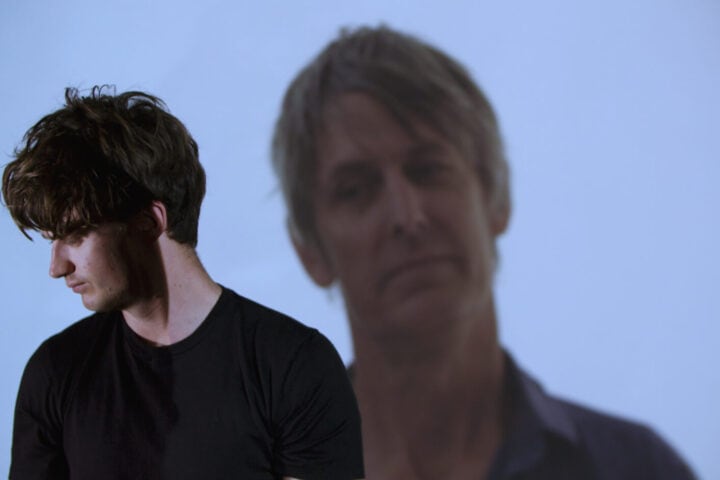
Perry’s interest in decoding these films takes precedence over drawing more personal connections to them. For instance, the film’s opening uses a scene from Michael Almereyda’s Hamlet to establish the transient nature of the video store, yet narrator Maya Hawke makes no mention of her father, Ethan Hawke, on screen. Later, she avoids making an easy callout when watching herself alongside Joe Keery (who plays Stephen Malkmus in Pavements’s fictional portion) in Stranger Things, in a segment about different archetypes of the video store clerk. No mention is made either of Perry’s personal connection to Kim’s Video, despite how easily his contributions to reconstructing the iconic store in the lower Manhattan Alamo Drafthouse would have slotted into the narrative of the video store’s decline.
So, on paper, Videoheaven’s clinical presentation may seem like an emotionless experience. But as Perry explores such topics as the evolution of the video store clerk on screen, how “chance encounters” became an expectation at the video store, and, crucially, how going to the video store inherently involves interacting with people in a regulated social environment, it becomes clear how personal this subject is to him, not in spite of his didactic approach but because of it. He doesn’t insert himself into something he views as bigger than himself, and that sense of reverence lends an emotional anchor to even the driest, disaffected parts of Videoheaven.
The film’s epilogue critiques contemporary video store representation, whether in period pieces amounting to empty pastiche (ABC’s The Goldbergs) or limp contemporary films that ring out of touch (Marianna Palka’s Good Dick). The physical space of the video store no longer reflects the reality of people who outlived it, and Perry, by way of Hawke, claims, “[F]or many of us, our only opportunity to visit a video store now is to see one on screen.”
Videoheaven, then, isn’t simply a history of video stores; it’s at once an act of canonizing even the most trivial depictions of them on screen and Perry’s own entry into that canon. As it rings the death bell, the film transports us to a video store of our collective consciousness, built entirely from repurposed materials. Perry isn’t digging up images from movies and TV to retreat into a world no longer accessible to us, not calling for a return to the past. Rather, he’s showcasing a new way, and perhaps the only way left, of keeping the torch burning.
Since 2001, we've brought you uncompromising, candid takes on the world of film, music, television, video games, theater, and more. Independently owned and operated publications like Slant have been hit hard in recent years, but we’re committed to keeping our content free and accessible—meaning no paywalls or fees.
If you like what we do, please consider subscribing to our Patreon or making a donation.