
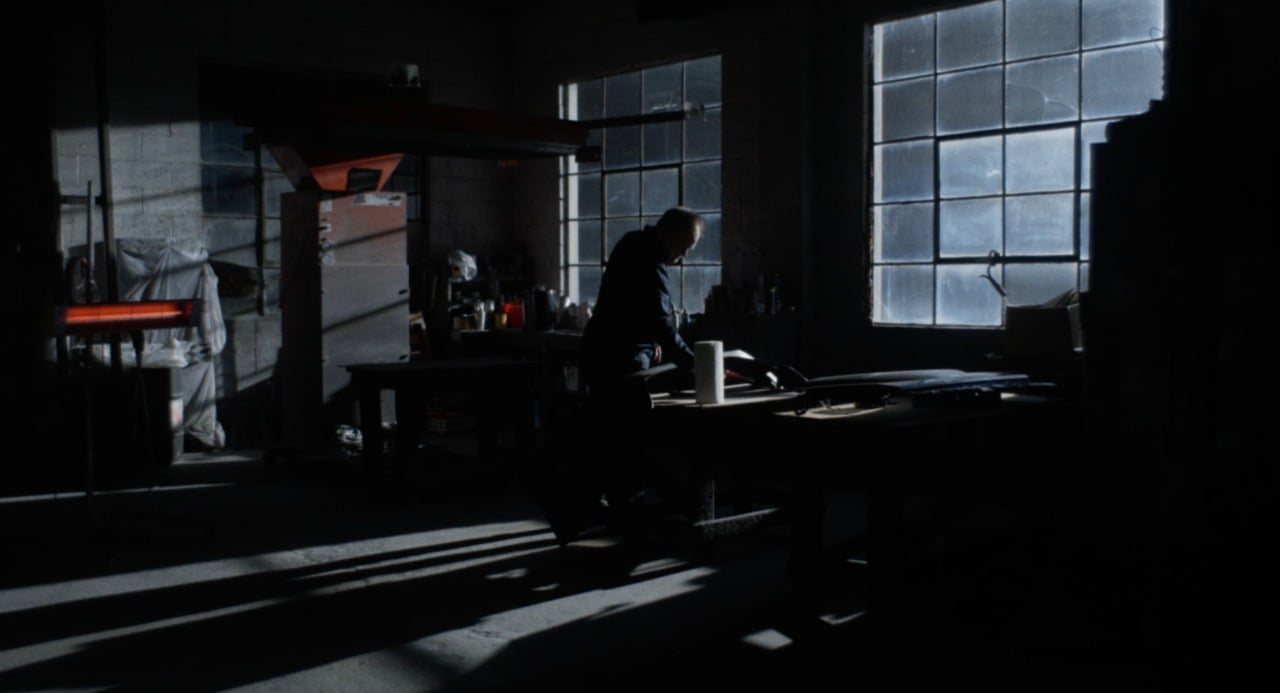
Shot entirely in writer-director Tyler Taormina’s suburban Long Island hometown during the eerie hours between midnight and predawn, Happer’s Comet surveys an array of empty spaces and sleepless figures. What lighting there is comes from one of two ambient sources—electricity or the moon—and yet to call the film a noir would be misleading. Rather than menacing or oppressive, its sense of obscurity is almost soothing.
The film’s camera is drawn to anything that gleams and shimmers: the speaks of dust floating in a swimming pool, the blinking of electronic gizmos, the galaxy of water droplets across a windshield. Taormina’s unique sensibility makes the film, more than anything, a cinematic tone poem, expressing a reconciliation with sleeplessness as time yawns into strange infinitudes.
Happer’s Comet has no real plot or characters. As pure montage, the film derives its coherency from the time of day and, to a lesser extent—because suburbs tend to resemble each other to the point of interchangeability—the place where its images are shot. In the total absence of dialogue, the film’s sound design steps in as a kind of protagonist. The design suggests the naturalism of a field recording, albeit a particularly strange one, amplifying the sort of noises we hear so often that we tend to sleep through them: croaking frogs and chirping crickets, clattering sprinkler systems and gurgling drains, the swish of cars and dopplering of trains, the chatter of distant radios and televisions. Non-diegetic music inflects the mood of a scene only sparingly.
In a few sequences scattered across the film, there’s the tantalizing whiff of a story. In one, a terrier scuttles through a shadowy living room and up the stairs, the rattle of its claws on the parquet melding into that of machine guns in a war movie playing elsewhere in the house. We never see the screen itself, but its light glows and flickers against the walls. The dim figure of a woman glides toward the door of her home and slips out into the night. Turns out, she’s on rollerblades. And on a phone with a photo of the terrier as its background, a notification chimes, displaying the ominous message: “There is motion at your front door.”

In another notable sequence, an older man (Brenden Burt) working late at an auto body shop contemplates the empty street outside as he listens to a song on the radio about decadence and sin. After a while, as if moved to it by the song, he starts doing pushups. As with most of the characters in Happer’s Comet, it’s the first and last time he makes an appearance.
If there’s a through line to Taormina’s film, it’s the disquieting number of people who seem to be out rollerblading through the half-light of this town. There’s a certain tension in the action itself. Besides the merging of exhilaration and danger, there’s the mystery to the proceedings. Is this mass hysteria or an even stranger phenomenon, somehow related to the otherwise inscrutable title of the film? It’s possible to imagine that Taormina chose rollerblades purely for the sound of their wheels, like that of distant thunder, trundling over concrete or asphalt.
Whereas films like John Carpenter’s Halloween and David Lynch’s Blue Velvet expose the violence and perversion that underlies the manicured artifice of so many suburban environs, Taormina, by means of a simple temporal displacement, gestures above all at their arbitrariness. Happer’s Comet’s thesis, to the extent that it has one, is not that such spaces are necessarily disturbing or even eerie. Rather, it’s that they’re not as insulated or self-contained as they seem, nor are they destined to last forever. They’re a mere blip in the temporality that the 62-minute film steeps us in—an almost primordial rhythm exempt from routine or history.
The liminality that Happer’s Comet so readily evokes makes a lot of sense given that Taormina shot the film with a skeleton crew during lockdown. But this is a Covid-era film in the same sense that Justin Benson and Aaron Moorhead’s Something in the Dirt is: both made during lockdown, both subject to restricted resources, both avoiding any direct commentary on the situation. With a scrappy responsiveness available only to independent filmmakers, they turn limitations that would tank any studio production into a generative formal constraint, in the process showing new facets of a world we thought we knew already.
Since 2001, we've brought you uncompromising, candid takes on the world of film, music, television, video games, theater, and more. Independently owned and operated publications like Slant have been hit hard in recent years, but we’re committed to keeping our content free and accessible—meaning no paywalls or fees.
If you like what we do, please consider subscribing to our Patreon or making a donation.
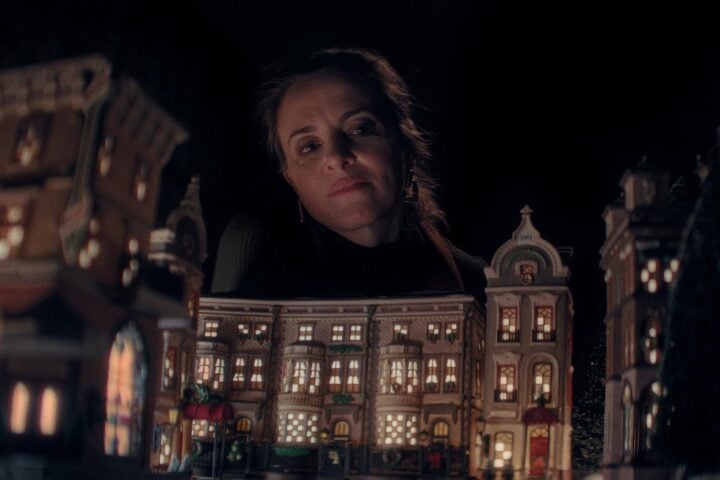
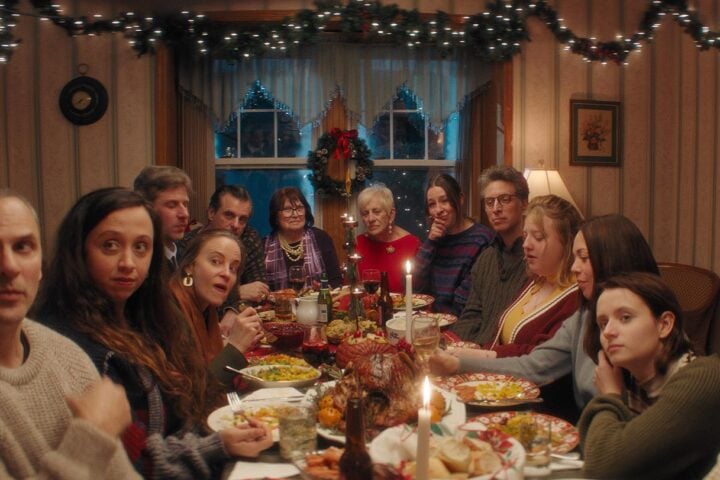



The title is not inscrutable. “Happer’s Comet” refers directly to events the 1983 Bill Forsyth film, Local Hero: a truly great movie, by the way, if you haven’t seen it.