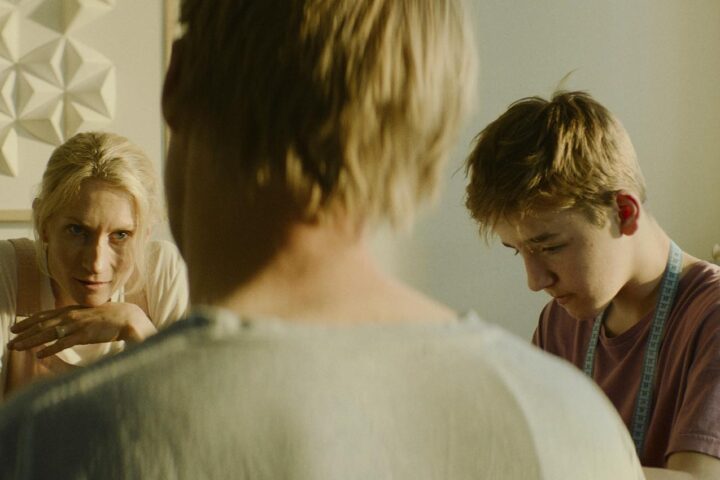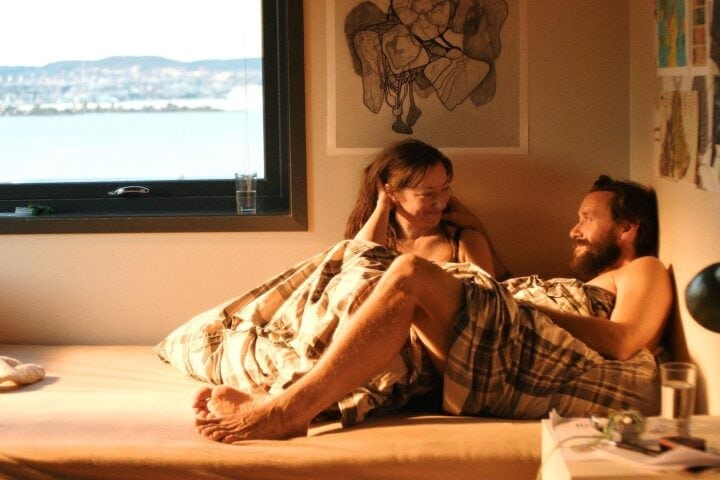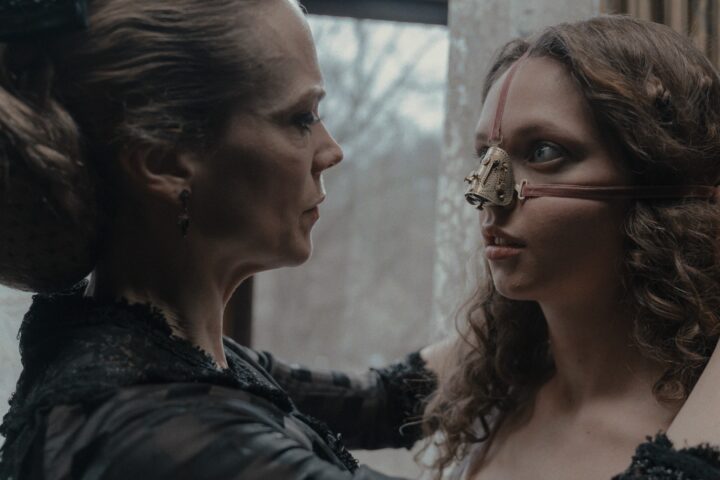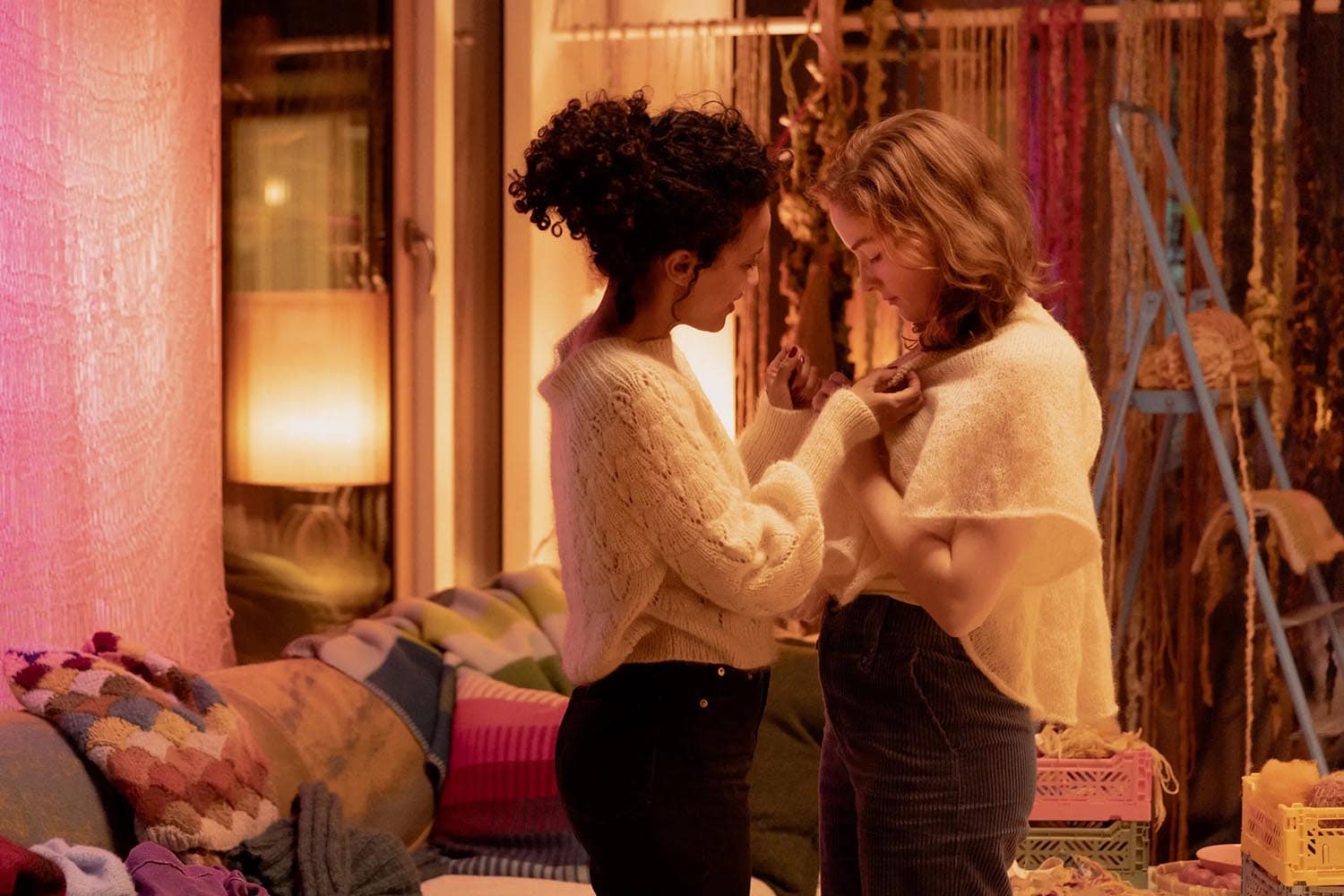
In the opening of Dreams, the final entry in a trilogy of films by writer-director Dag Johan Haugerud set in Oslo, 17-year-old Johanne (Ella Øverbye) describes how her body and soul feel separated. The accompanying shots of moving clouds are a fitting visualization of her fragile emotional state, as her once innocent crush on her new teacher, Johanna (Selome Emnetu), has led her to a sexual awakening. A story of hazy memories that’s also a city symphony, Dreams elegantly captures the disorienting rush of first love and the frustrations and anguish that stem from romantic fantasies colliding with reality.
Much of the film’s first half-hour is narrated by Johanne, who, we later learn, wrote a novella of sorts about her experience over the past few months. This opening act is, then, expectedly hermetic, with Johanne’s documentation of her internal life dense with sensory detail and revelation. From Johanne’s over-analysis of what every glance from Johanna could mean, to the surges of jealousy that she feels when other students become the center of the teacher’s attention, this stretch of the film beautifully weaves together the novelistic and the sensual.
At one point, Johanne opines, “I could feel her presence all through my body,” and Haugerud sensitively and evocatively conveys the overwhelming sensation of rapidly expanding emotions. Then, when Johanne appears at Johanna’s door in tears and is welcomed in, the film subtly shifts narrative registers. It’s at this point that we see our heroine speak to her grandmother, the open-minded poet Karin (Anne Marit Jacobsen), and ask the older woman to read what she wrote simply so she no longer has to keep the secret of her unrequited love to herself.
Johanne says that she wrote about her experience as a way of sustaining the woozy euphoria of first love, yet once she shares her work, we immediately sense that the power of her memories, or at least the pureness of her initial recollections, is starting to dissipate. Indeed, as Karin and, eventually, Johanne’s mother, Kristin (Ane Dahl Torp), read the young woman’s novella, the opportunity to misinterpret the content and purpose of Johanne’s writing arises. Where Karin sees the potential of publishing it as a book, Kristin initially notices only a series of red flags, leading her to wonder if her daughter, caught in the crosshairs of infatuation and young love, may have been the victim of abuse in a friendship with a clear power imbalance.
As in Sex and Love before it, Dreams approaches touchy material in a non-judgmental and graceful manner. The film interrogates how these three generations of women respond to and grapple with Johanne’s writing and its fusion of truth and fiction. Their opinions remain in flux, reshaped by conversations with Johanne, yet Haugerud avoids ever revealing the full truth of exactly what went on between Johanne and Johanna outside of how the former remembers it.
When Johanna, who up until the final act is seen only through her lovestruck student’s eyes, finally gets a say, the truth of things has become so slippery that neither Johanne nor the audience can get a hold on it. What can be fully grasped is Haugerud’s immaculate control over the shapeshifting narrative and his warm-hearted approach to the women’s perspectives, all of which shed new light on the subjective nature of Johanne’s experiences.
How much of Johanne’s novella is true ultimately is less important than the impact that her newfound emotions have on her and her relationships with her mother and grandmother. While Johanne was initially concerned with preserving the memories of her intoxicating feelings for her teacher, Dreams understands that that’s not the way things work. Memories fade and those feelings that were once so raw, exhilarating, and aggravating take a final shape that’s more mundane, perhaps even juvenile, in the rear‐view mirror of memory. And in revealing Johanne’s inner life with such striking lucidity, Haugerud envelops us in the joys and confusion of feverish passion with no outlet, while also leaving ample room for the bittersweetness of its passing.
Since 2001, we've brought you uncompromising, candid takes on the world of film, music, television, video games, theater, and more. Independently owned and operated publications like Slant have been hit hard in recent years, but we’re committed to keeping our content free and accessible—meaning no paywalls or fees.
If you like what we do, please consider subscribing to our Patreon or making a donation.