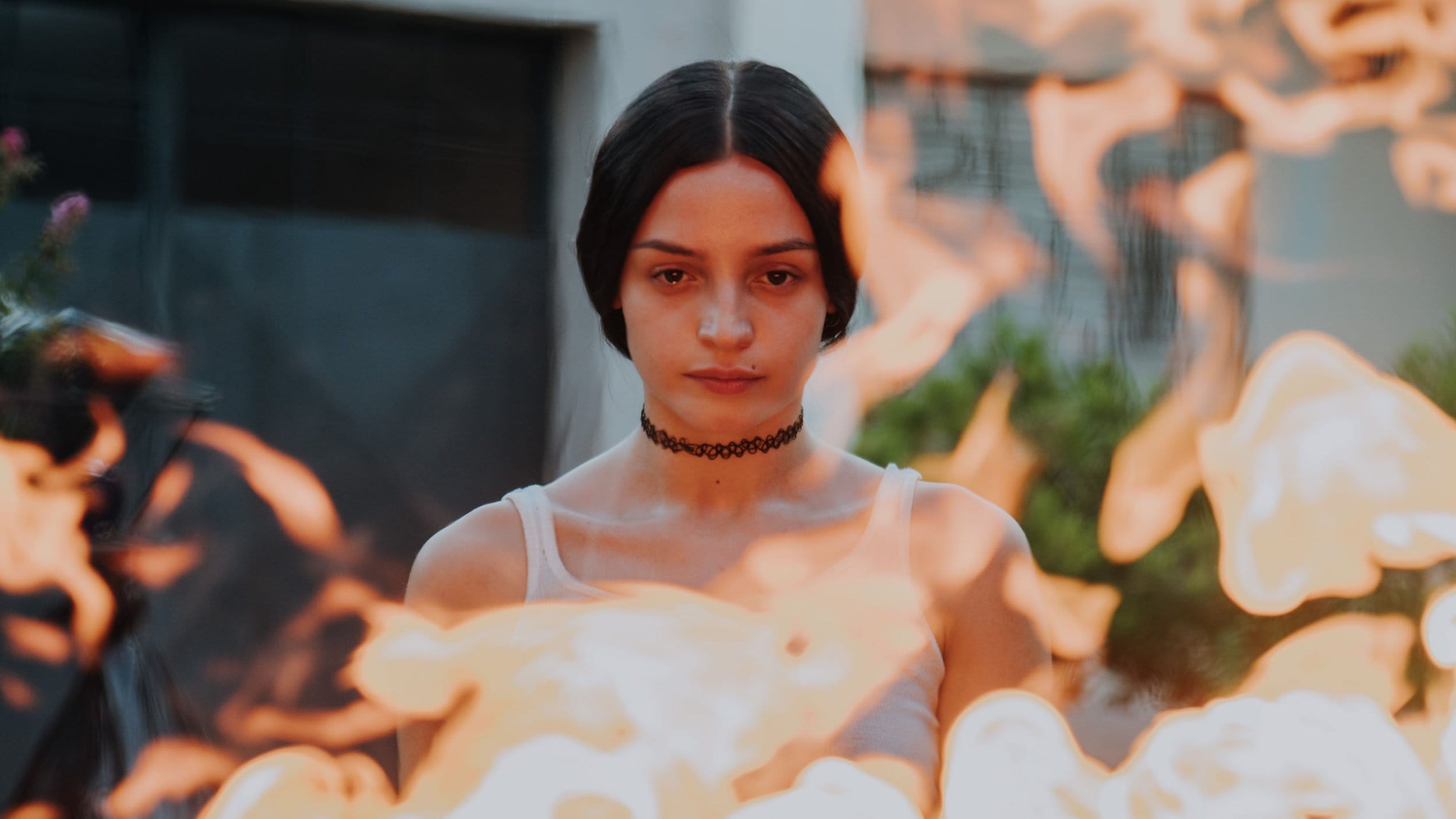
The deep genre roots of Laura Casabé’s The Virgin of the Quarry Lake, adapted by Benjamin Naishtat from a series of horror stories by acclaimed Argentinian writer Mariana Enríquez, might not be immediately apparent. But well before Casabé delivers on the promise teased by some ominous mystical tropes, the story already feels more fraught and frightening than your typical coming-of-age drama. The way the film sees it, there’s no terror quite like a teenage girl with no outlet for her emotions.
The year is 2001, which doesn’t take long to discern given the sight of choker necklaces, AIM chats, and a big poster of Leonardo DiCaprio in The Beach plastered on a bedroom wall. But the real signs of the time that seep into the soul of 19-year-old Natalia (Dolores Oliviero) are more localized. As Argentina slumps into a devastating economic crisis, the manifestations of destitution and deprivation are impossible to ignore all around her.
The film opens with those macro-level market forces becoming unavoidable, with a beggar arriving on the scene with a shopping cart full of his belongings on the street where Natalia lives with her grandparents (Luisa Merelas and Dady Brieva). The vagrant leaves after a neighbor beats him up, but the cart, improbably, stays put for the film’s duration. Be it a problem of government resourcing, a failure of collective action, or a haphazardly placed hex by its original owner, the smelly eyesore festers like an open wound that no one has a will or way to treat.
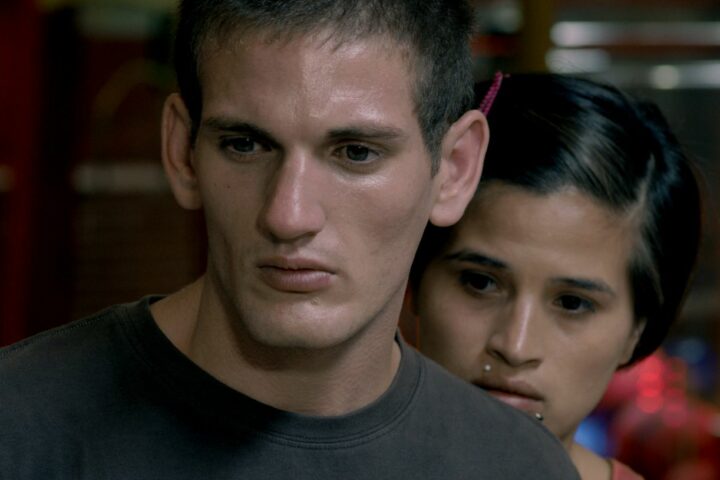
No amount of socioeconomic instability, though, is enough to deter the self-interested Natalia’s quest to lose her virginity, ideally with the slightly older Diego (Agustín Sosa). While she thinks she maintains an edge in wooing him over the other two girls in her clique, Josefina (Isabel Bracamonte) and Mariela (Candela Flores), she fails to anticipate the rivalry that emerges from an outside force in the older and more experienced Silvia (Fernanda Echeverría).
Your average coming-of-age film tends to dramatize the maturation into society at large through the miniaturized conflict of assimilation into groups. The Virgin of the Quarry Lake, however, finds its narrative propulsion by dissolving a social unit already in place at the start of the film. Isolation and alienation come to define the final year of Natalia’s teens as the protracted battle for male attention drives a wedge in her friendships with Josefina and Mariela.
Not since newcomer Katie Jarvis burned up the screen in Andrea Arnold’s Fish Tank has a performer rendered teen angst with the rawness and resonance of Oliviero. Her portrayal of Natalia resolutely avoids the obvious traps of playing an immature character as careening from one volatile state to another. As The Virgin of the Quarry Lake shifts tonal and genre registers, Oliviero remains the film’s one constant through line. Across the performance, the actress methodically tracks how Natalia’s envy curdles into self-loathing.
Casabé abstracts these typical emotions of tortured teens, only to then amplify them, a reminder of how outsized these sensations seemed to us when we experienced them during the vulnerable age of adolescence. The routine deployment of subjective sound design in The Virgin of the Quarry Lake plunges the viewer directly into Natalia’s turbulent headspace as she hits familiar but no less frustrating milestones of misery within her various relationships.
This increasing convergence of the mundane and the magical allows Casabé to stick the landing on the film’s harder pivot to horror as Natalia’s anxieties reach a breaking point. Visual motifs of blood or the specter of an alleged curse by the homeless man who left the cart are but faint specters of the supernatural early in The Virgin of the Quarry Lake. For a while, these elements feel like they might amount to nothing more than false starts or, worse, red herrings that artificially inflate the narrative stakes by hinting at greater forces that will never rear their head.
Casabé, though, brings everything to a head in a finale that sees an explosion of Natalia’s pent-up anguish sublimate into overt anger. It’s here where she tonally reconciles the warring elements raised by Naishtat’s script: the society-wide turmoil and the individualized torment, not to mention the extraordinary power of teenage rage as embodied by an otherwise ordinary girl. Casabé’s purpose for making The Virgin of the Quarry Lake crystallizes in its gory, gratifying conclusion: to show the pains of growing up and ensure they’re felt on a visceral level.
Since 2001, we've brought you uncompromising, candid takes on the world of film, music, television, video games, theater, and more. Independently owned and operated publications like Slant have been hit hard in recent years, but we’re committed to keeping our content free and accessible—meaning no paywalls or fees.
If you like what we do, please consider subscribing to our Patreon or making a donation.