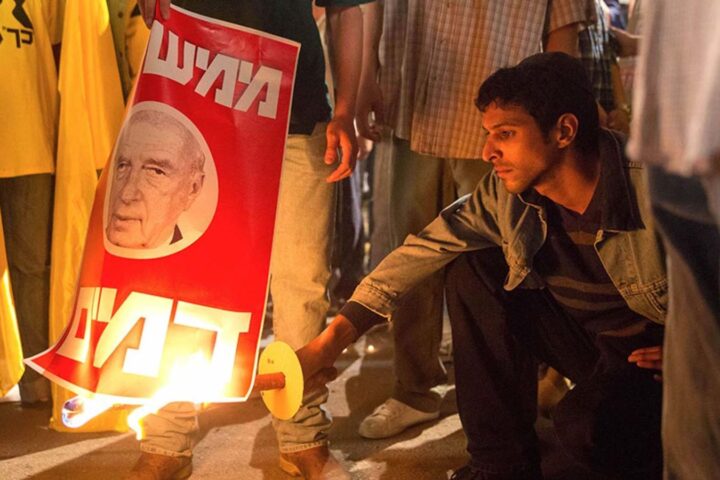
In the 1963 book that largely came to define her career, Eichmann in Jerusalem, historian and philosopher Hannah Arendt surmised that “the trouble with [Adolf] Eichmann was precisely that so many were like him, and that the many were neither perverted nor sadistic, that they were, and still are, terribly and terrifyingly normal.” The year was 1961, and the state of Israel was very publicly trying Eichmann for his architectural hand in the Holocaust.
Arendt had begun covering the controversial spectacle for The New Yorker before it ballooned into a larger project. With Eichmann in Jerusalem, she, among other things, coined the term “the banality of evil,” as well as suggested that the court case against Eichmann was an exercise in theatrics. A frequent critic of early Zionism, Arendt wondered for whom the trial was for, and questioned its necessity. With June Zero, director and co-writer Jake Paltrow, offers his own possible retort: that even if historical memory is malleable, shaped and molded by the people privileged enough to wield it, it still must be passed on to subsequent generations.
June Zero is a triptych of stories surrounding Jews on the outskirts of early Israeli society. It’s a film that provides viewers with provocative questions about the prickly morality of Eichmann’s extradition and execution (the former illegal under international law and the latter the first in the nation’s history), as much about its country’s own founding, wondering if a land built partly on retribution is at risk of falling under its own traumatic anger. Like Steven Spielberg’s Munich before it, June Zero is a stirring meditation on the cycle of state violence.
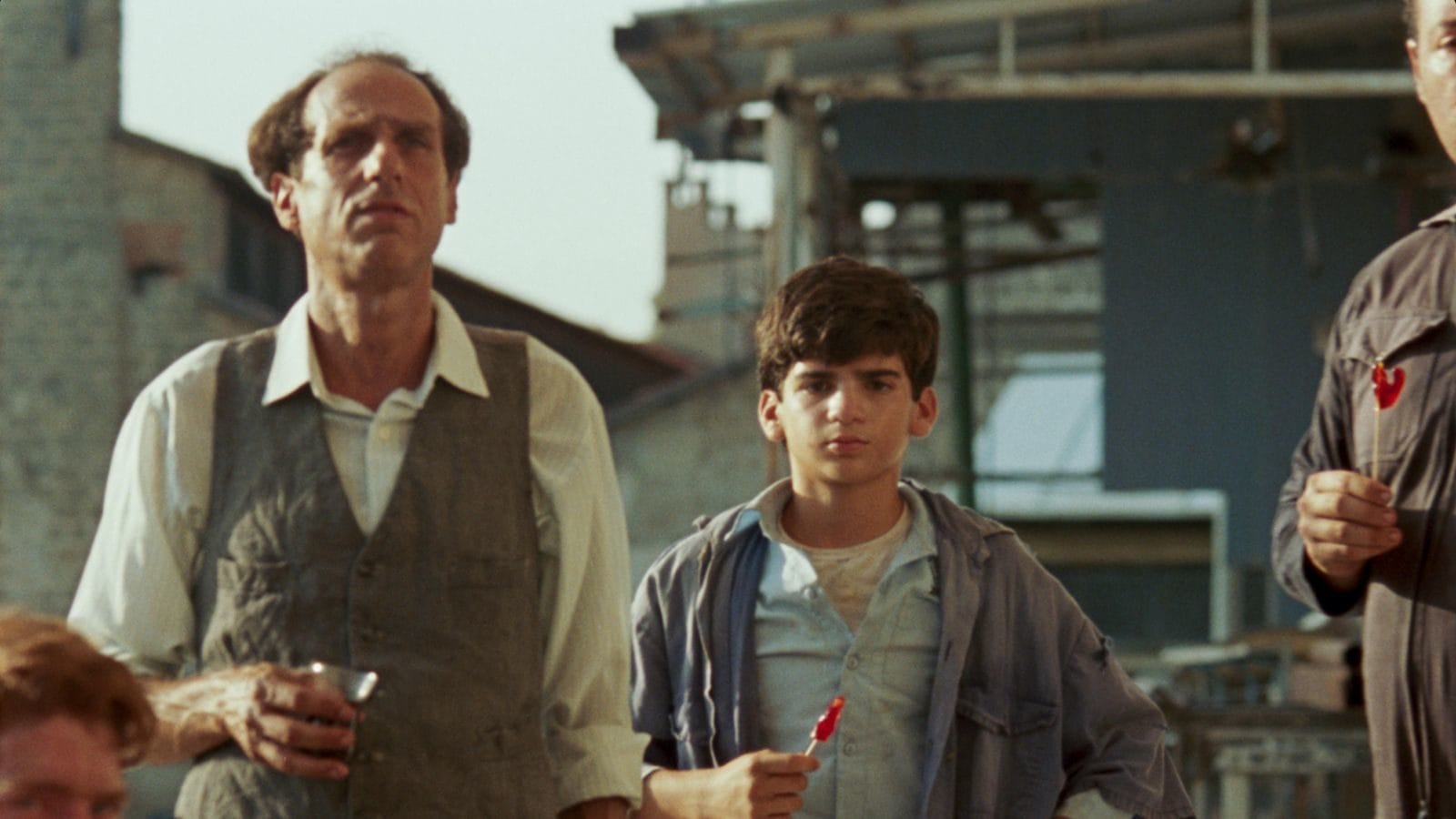
The film, shot entirely on 16mm, begins by following David (Koby Aderet), a precocious Libyan-Israeli child whose identity as an Arab and Sephardic Jew immediately places him on the fringes. Soon after being caught stealing candy from a local store, David’s father finds him a job at a power plant run by Shlomi Zebco (Tzahi Grad), a former soldier for the violent Zionist paramilitary outfit Etzel. Zebco’s past exploits are hinted at by employees and soldiers who suggest he took particular pleasure in murdering Arabs. Regardless, he quickly becomes a mentor to the impressionable David, who ingratiates himself well into Zebco’s team by becoming a tiny muscle man to his boss and through his ability to squeeze into tight spaces.
The relationship seems to teach David that vengeance is righteous if doled out against the proper victims, a philosophy that extends to Zebco’s angling for the contract to build the crematorium that will eventually burn Eichmann’s body. The team raises the alarm when they realize they’re working off blueprints similar to the ones that the Nazis used to build their crematoriums. It’s a plot point, too, that recalls Zionist collaboration with the Nazis before and during the Holocaust, a historical footnote that Arendt herself frequently criticized.

Zebco’s team earns the hairy job through Hayim (Yoav Levi), the Moroccan-born guard assigned to Eichmann’s jail to protect him as he awaited certain death. Because the Holocaust targeted mostly Ashkenazi Jews, only Sephardic Jews were allowed to watch over Eichmann during his holding, and June Zero shows this strange racial dynamic via Hayim, who’s plagued as much by a toothache and a burst blood vessel in his eye as he is by his conscience.
The two speak in Spanish, their one common language, creating an unnerving intimacy between them that ultimately results in Eichmann tenderly asking his bodyguard to hand-deliver his last letter to his wife. Paltrow builds tension well, particularly during a scene in which Hayim paranoiacally polices a Tunisian barber’s (Assi Itzhaki) cutting of Eichmann’s hair, highlighting Hayim’s anxious position of being close to a man who was largely responsible for the mass murder of his countrymen. In a particularly inspired choice, Eichmann is shot exclusively from behind and in extreme close-ups of his hands and the back of his head, cementing the notion that this Nazi leader was extraordinarily human yet ultimately unknowable.
The film’s third segment jarringly changes locales to Poland, where Micha (Tom Hagi) is leading one of the first-ever tour groups of the former ghettos, along with the help of Ada (Joy Rieger), an expat representative for the Jewish Agency for Israel. After Micha, a Polish survivor of Auschwitz, tells a story to the group about being whipped as a kid on the streets, Ada sneaks him into a local bar to plead with him about the potential of capitalistic exploitation of grief. She warns him that her company wants to parade him around like a “circus animal.” Speaking almost directly to the camera, Ada argues, “If we invest ourselves in this pain, we’ll become the biggest ghetto ever built, but this time we’ll have walled ourselves in.” (Considering the film’s release during Israel’s ongoing operations in Gaza, the scene is unnervingly prescient.)
Micha responds to Ada’s charge by asserting that he’s a “fossil,” a living memory, for his existence concretizes the memory of the Holocaust. The film suggests that the existence of Israel as a state does the same, but rather than proffer a single answer to the Zionist question, Paltrow and co-writer Tom Shoval give credence to multiple perspectives from the diaspora. While certainly not an anti-Zionist film, June Zero at least allows space to consider both the assimilationist who believes in a future of Jewry beyond trauma and nationalism alongside the Zionist who insists on the presence of Israel as a necessary aspect of Jewish survivalism.
Ada’s perception that Israel is in danger of indulging in the pain of the past to “justify the present” elicits Micha’s counter that memory never remains in the past. Micha is based on Michael Goldman-Gilad, who took depositions for the Eichmann trial as a personal aide to Gideon Hausner, and his place in history is secure. By contrast, so many others in the film long to be acknowledged for their own mark in that history, however brutal the mark may be.
June Zero is a tender, if sometimes cynical, portrait of a new country on old land struggling through the growing pains of establishing its presence both to the international community and its own people. While the film doesn’t include depictions of Palestinian life, nor does it acknowledge the public debate surrounding Palestinians in the 1960s, it does dramatize anti-Arab racism and a cycle of retribution that recalls Audre Lorde’s assertion that “the master’s tool will never dismantle the master’s house…they will never enable us to bring about genuine change.” With June Zero, the filmmakers also wonder what good it is to use these tools if they have the power to distort and weaponize our collective memory.
Since 2001, we've brought you uncompromising, candid takes on the world of film, music, television, video games, theater, and more. Independently owned and operated publications like Slant have been hit hard in recent years, but we’re committed to keeping our content free and accessible—meaning no paywalls or fees.
If you like what we do, please consider subscribing to our Patreon or making a donation.