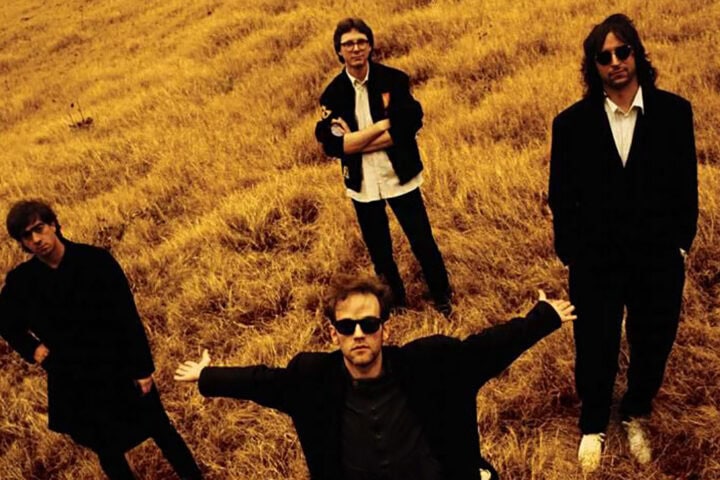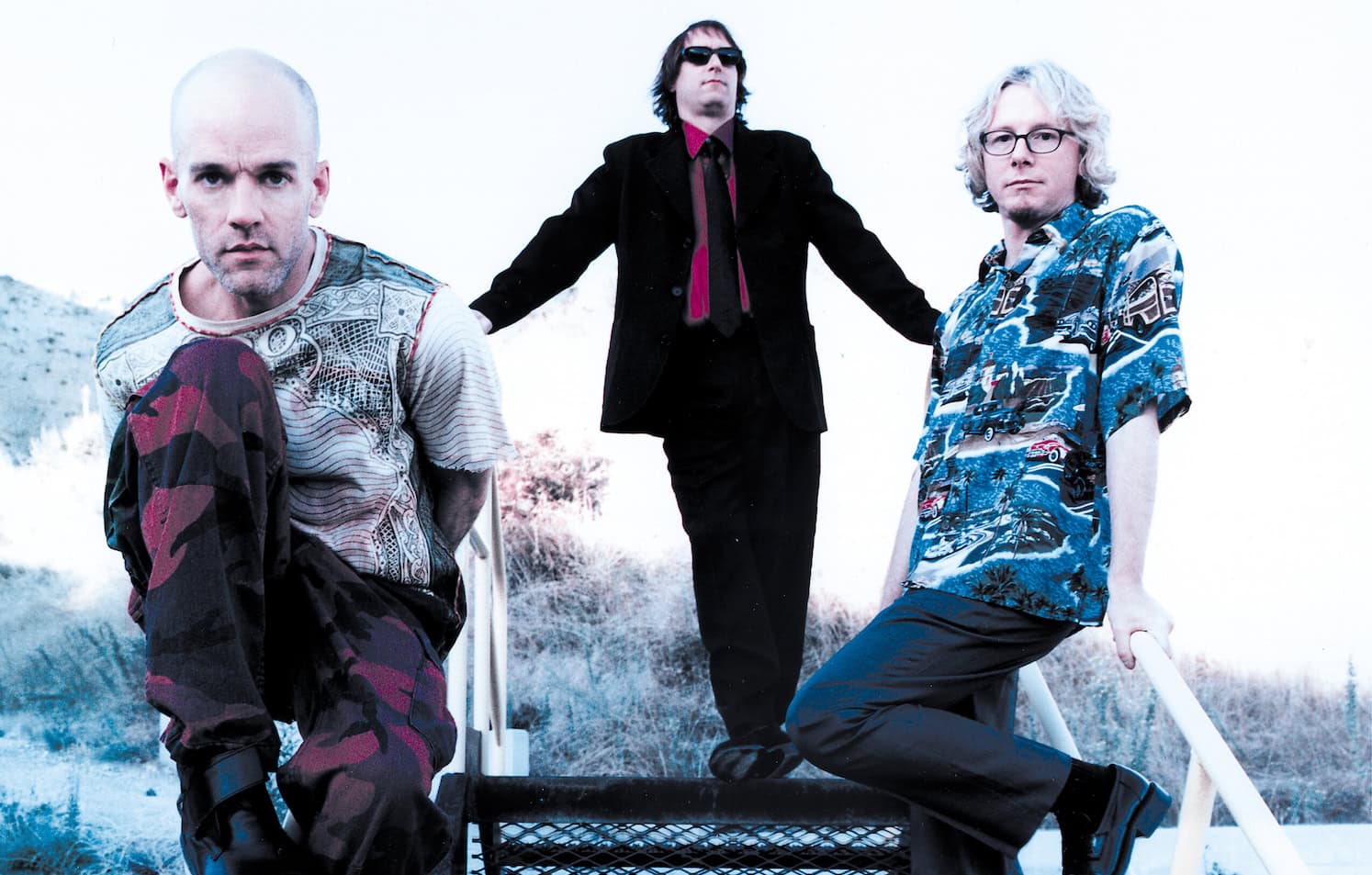
R.E.M.’s 11th studio album, Up, informally flagged the start of the third and final phase of the band’s career, following both their early I.R.S. years and their mainstream peak in the 1990s. Drummer Bill Berry departed the band after suffering a brain aneurysm while on tour in 1995, but the remaining members opted not to replace him, instead employing electronic drum programming throughout the majority of the album. And the timing, it seemed, was serendipitous, as the electronica movement was reaching its apotheosis.
Up subsequently marked the end of R.E.M.’s decade-long relationship with rock producer Scott Litt, replaced by Ray of Light knob-twirler Pat McCarthy and mixer Nigel Godrich, who produced OK Computer. And yet, the album doesn’t immerse itself as vigorously in the genre as those two watershed releases. Sonically, tracks like the Eno-esque opener “Airportman” and the gently percolating “Suspicion” are more analogous to the chilled-out soundscapes of French electronic duo Air’s Moon Safari, released earlier that year.
A slice of buzzy lo-fi that prefigured early-aughts indietronica acts like the Postal Service, “Hope” lifts its melody from Leonard Cohen’s “Suzanne” and nods to R.E.M.’s own “World Leader Pretend.” Drawing on the pop poet laureate’s style of spiritual lyricism, frontman Michael Stipe details a quest for immortality and salvation with a wry sense of humor that’s distinctly his own: “You want to cross your DNA…with something reptile/And you’re questioning the sciences/And questioning religion/You’re looking like an idiot/And you no longer care.”
Stipe is infamous for his opaque wordplay, so it’s ironic that Up, R.E.M.’s first album to include a lyric sheet, found him embracing comparatively more straightforward narratives. The Beach Boys-inspired “At My Most Beautiful” is widely considered to be the band’s first bona fide love song, while the anthemic “Walk Unafraid” and “Why Not Smile” betray a newfound directness and simplicity that borders on sanguine: “You’ve been so sad/It makes me worry/Why not smile?” They’re arguably the only songs here that justify the largely downcast album’s title.

Otherwise, Up bristles with anxiety, no doubt inspired by the newly minted three piece’s uncertain future. “The Apologist” casts a cynical eye toward self-help and recovery programs—its sarcastic, repetitive mantra of “So sorry” is bolstered by reverse-looped backing vocals—while the more stripped-down “Sad Professor” is a character study of an aging, self-loathing alcoholic.
Like OK Computer, Up attempts to reckon with the burdens of late-20th century capitalism on the human body and soul. “Airportman” and “Daysleeper”—an underrated entry in a long streak of great R.E.M. singles, thanks to its infectious hook and sublime, deconstructed bridge—are told from the perspectives of a traveling businessman and a night-shift worker, respectively. “Great opportunity awaits/Airport fluorescent/Creature of habit/Labored breathing and sallow skin,” Stipe sings on the former, like a blissed-out Thom Yorke.
At times, things move at a sluggish pace, and the album is at least a couple of tracks too long. The only song on Up to feature a full drum kit, “Lotus” is a glam-rock rave-up that might have fit better on 1994’s Monster. Even then, however, its psychedelic imagery dovetails with the album’s lyrical themes. And Stipe’s vocal performance drips with sarcasm, including a reference to one of R.E.M.’s earliest hits: “Dot, dot, dot, and I feel fine!”
The liner notes for the 25th anniversary edition of Up rightfully refers to the album as the “red-headed stepchild of the R.E.M. catalog.” Each of the band’s releases is different from its predecessor, but this one’s pivot was born out of necessity. The album presents a trio that’s getting back on their feet and figuring out how to be a unit again.
It’s a feeling that’s echoed in the re-issue’s 11-song “warts-and-all rehearsal” recorded during a live taping of the television series Party of Five in 1999. Stipe endearingly fumbles lyrics and guitar chords, and cheekily admits to being a serial plagiarist, copping from pals Patti Smith and Billy Corgan. Like Up itself, the performance bears the marks of a band in transition, feeling around in the dark for the light switch—and eventually finding it.
Since 2001, we've brought you uncompromising, candid takes on the world of film, music, television, video games, theater, and more. Independently owned and operated publications like Slant have been hit hard in recent years, but we’re committed to keeping our content free and accessible—meaning no paywalls or fees.
If you like what we do, please consider subscribing to our Patreon or making a donation.