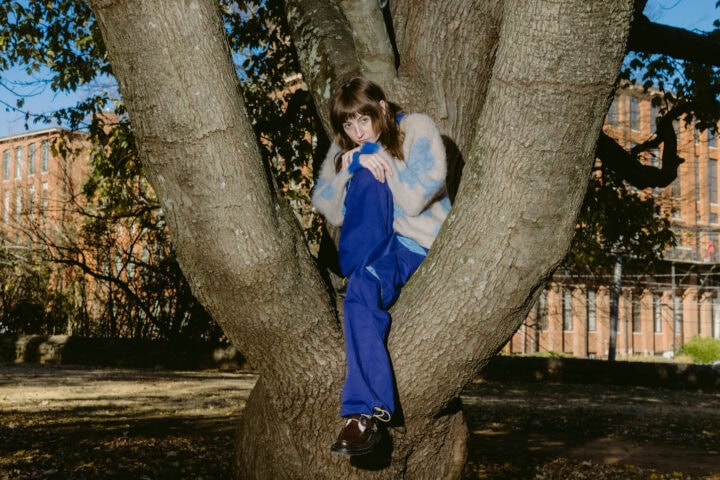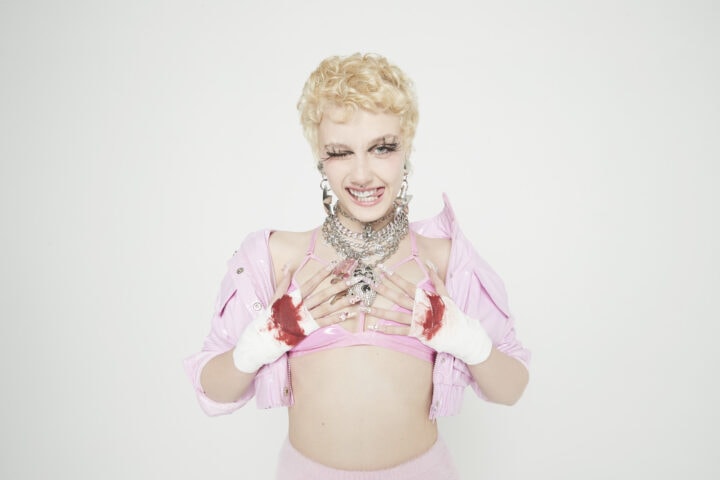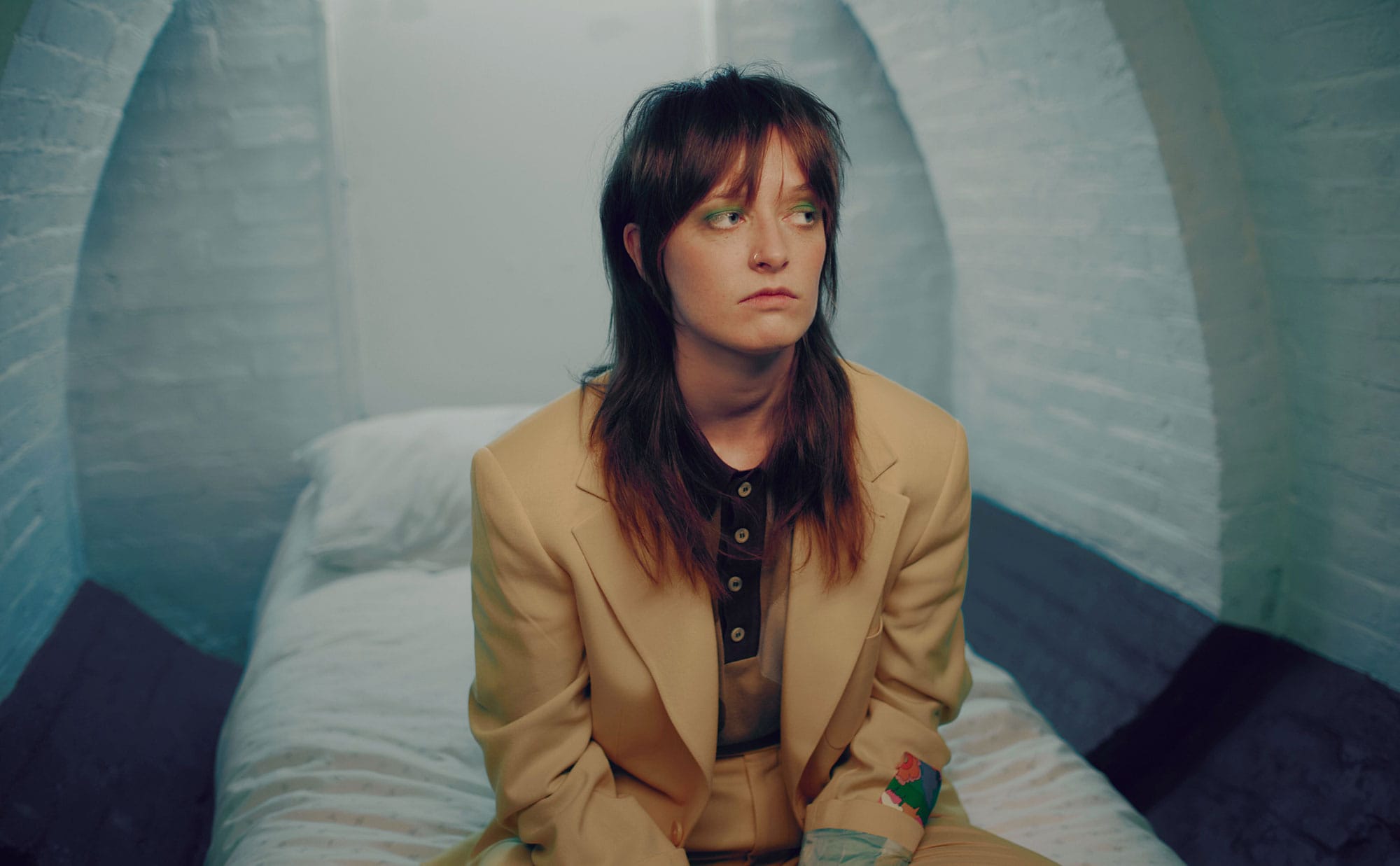
Today’s music cyberspace is built for the type of music that Orla Gartland makes: confessional and quotable pop that veers between self-deprecation and self-love, with an eye toward vulnerability and femininity. While the Irish singer-songwriter’s debut album, Woman on the Internet, has been marketed as a conceptual, politically minded indie-pop record in the vein of St. Vincent and HAIM, in reality it’s closer in structure and style to the diaristic teen-pop of Olivia Rodrigo’s Sour and Conan Gray’s Kid Krow. Throughout, Gartland expresses interest in challenging social norms and exploring art-pop eccentricities, but she doesn’t fully commit to either, resulting in a relatable but largely predictable album.
In a TikTok from last June of her standing in the rain, Gartland wrote using voice to text: “I got caught in the rain and do you know what I thought? I thought what a great opportunity for…CONTENT for my new bloody song.” To a generation raised on the internet, this impulse to scan real-life experiences for “content” is all too familiar. “[W]hat has this godforsaken app done to me[?]” she asked, her single “Do You Mind?” playing in the background.
While that TikTok captures the type of “niche feelings” that Gartland purports to document in her bio on the platform, “Do You Mind?,” much like the rest of Woman on the Internet, stops short of such revelations. “If you’re trying to be honest/Then why’d you break your promise?” she sings, tracing the outline of a breakup that we learn little about. The plaintive ballad, dotted with clicks and handclaps, lives in the sonic world of acts like the Japanese House, but its lyrics aim for universality at the expense of uncovering any “niche feelings.”
Of the moments on the album that invoke the titular themes and deliver on Gartland’s stylistic ambitions, most are mired in lyrical clichés and abstractions. The opening track, “Things That I’ve Learned,” employs clanging percussion and a chant-like hook that evoke Fiona Apple’s work, but unlike that artist, Gartland eschews elaborate visual metaphors in favor of Tweetable feminist maxims like “Take up all the space, even when you think you don’t deserve it.”
Similarly, the soft-rock “More Like You” undermines its best thoughts simply by being too straightforward. Lines such as “Please don’t be so perfect right in front of me” and “I got all these insecurities/They’re all mine/There’s nothing you can do” warrant the type of intimate detail that Gartland offers on TikTok, not clunky placeholders and generalities.
Even the catchy “Zombie!,” which aims to tackle toxic masculinity, is marred by unsubtle and clumsy handling of its subject matter. When Gartland describes men as mindless monsters “jacked up on your testosterone,” hiding “all your drama and your trauma,” it’s hard not to think of an infuriating comments section flooded with simplistic “not all men” rejoinders. Gartland knows better than most that the internet is a hellscape for women, but the title of the album teases a degree of insight that it seldom delivers.
If you can look past the awkwardness of some of Gartland’s lyrics, her emotionally charged vocal delivery and attention to sonic detail are admittedly enchanting. “You’re Not Special, Babe” bridges Regina Spektor’s wit with Taylor Swift’s sincerity, turning an insult that Gartland has, in all likelihood, received into a “you are not alone”-style affirmation of solidarity. The subsequent track, “Over Your Head,” evokes the most dramatic of early-aughts alt-rock. “Walk away, far away/It’s better this way,” she cries over a crashing wave of electric guitars, interrogating the relationship between fame and power.
Possibly best of all is closing track “Bloodline/Difficult Things,” a stark exploration of generational trauma. After vividly describing how she sees herself in her mother, Gartland ends Woman on the Internet and her most thematically explicit song by repeating, “We never talk about difficult things.” Ironically, “Bloodline” proves that Gartland is at her best when she’s specific about these “difficult things,” allowing the generous frankness of her online presence to translate into music that’s just as culturally and emotionally perceptive.
Since 2001, we've brought you uncompromising, candid takes on the world of film, music, television, video games, theater, and more. Independently owned and operated publications like Slant have been hit hard in recent years, but we’re committed to keeping our content free and accessible—meaning no paywalls or fees.
If you like what we do, please consider subscribing to our Patreon or making a donation.