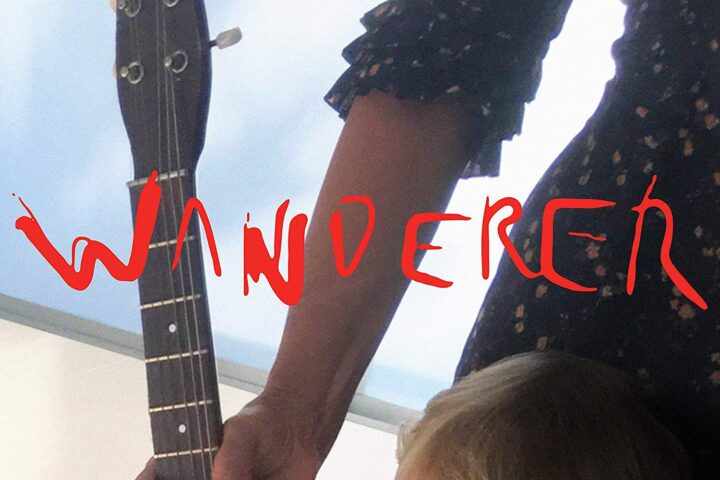
Cat Power’s 1998 album Moon Pix often feels like it exists in a world entirely separate to our own, though the emotions it evokes are unmistakably human. Largely written in a single sitting after a terrifying hallucinatory episode, the album moves at an almost glacial pace, grounded by little more than reverb-heavy guitar licks, slowcore-style drum brushes, repeating piano lines, and Chan Marshall’s hazy, whispered croon.
Across 11 tracks, Marshall sings of being haunted by spirits, hell, and other people, but mostly by her past and the uncertainty of her future. It’s a disconcerting but deeply powerful album, and listening to it feels a lot like being transported to the world of Salvador Dali’s The Persistence of Memory, where time collapses in on itself and the familiar is rendered strange and unsettling.
“He Turns Down” represents Moon Pix at its darkest and most unnerving. Written about Marshall’s sense that her house was being surrounded by spirits, the song is notable for its repeated bursts of flute, which have a hypnotic, Pied Piper-esque quality. “Have you ever been to that place?/You know I’m not supposed to say,” Marshall whispers in one of the album’s many illusions to hell. Flirting with surrendering to dark forces, she wearily admits that she’s been “holding on for too long” and, in the song’s final moments, that she’s been rejected by God.
If there’s a singular theme that unites both Moon Pix’s most grounded and otherworldly songs, it’s that sense of rejection. On “No Sense,” Marshall excavates the significance of her memories and tries to work out why a relationship ultimately unraveled. As the title suggests, she ultimately fails to find clarity: “The moon is so hollow/What’s the use?”

Though there’s so much longing and uncertainty at the heart of Moon Pix, its most definitive lyrics have come to resemble something of a manifesto. “Metal Heart,” the album’s crowning achievement, delivers a dispatch from the brink—“You’re losing the calling that you’ve been faking”—and returns with an uncompromising commitment to “be true” and cast off the confinement of the titular heart. On “You May Know Him,” Marshall flips the narrative of “He Turns Down”: “Oh, Lord,” she cries, “You came through.”
The album’s most staggering statement remains the six-and-a-half-minute “Color and the Kids,” which finds Marshall cycling through some of her fondest memories and most idealistic visions: building “a shack with an old friend,” paddling on a sandy beach with rolled-up jeans, and being held by someone who really knows you. Multiple real-life characters, who populate these warm recollections and aspirations, are rolled into the singular character of a yellow-haired “funny bear.” This vague and inscrutably described character invites projection, calling on us to remember who populates our memories and hopes.
Marshall contrasts these colorful, wondrous images with stark reminders of present-day reality. Toward the end of “Color and the Kids,” she declares, “When we were teenagers, we wanted to be the sky/Now all we wanna do is go to red places/And stay out of hell.” It’s one of many harrowingly minimalist moments scattered across Moon Pix, with Marshall’s voice reaching into its upper register and cracking in the process. It’s a reminder of both how much she can do with so little and how so much of adult life is spent on the defense, rather than offense.
On the album’s cover art, Marshall pushes a cluster of flowers away from her face to allow an unobstructed view at whatever is in front of her. It’s an apt accompaniment to Moon Pix’s songs, which often detail the process of losing one’s naïvete, as well as the terrors of facing the darkest realities of the world for the first time. It’s admirable that the album never collapses under the weight of such heavy subject matter.
On the skeletal final track, “Peking Saint,” Marshall hints at closure, ultimately ending the album with the declaration: “In Peking there is someone who/Is who they should exactly be.” She has described Moon Pix as a source of “salvation,” and listening to these tales of darkness, redemption, and hope against the odds 25 years later, it’s not hard to imagine them holding similar revelatory power to anyone discovering them anew.
Since 2001, we've brought you uncompromising, candid takes on the world of film, music, television, video games, theater, and more. Independently owned and operated publications like Slant have been hit hard in recent years, but we’re committed to keeping our content free and accessible—meaning no paywalls or fees.
If you like what we do, please consider subscribing to our Patreon or making a donation.