The same week that Nirvana’s Nevermind dethroned Michael Jackson’s Dangerous from the top of the Billboard charts, Tori Amos quietly released her solo debut, Little Earthquakes, in the U.K. One of the album’s singles, “Winter,” featured as its B-side a stripped-down cover of Nirvana’s unlikely crossover hit “Smell Like Teen Spirit,” the Gen-X anthem that propelled the Seattle band into the mainstream. Artists like Janet Jackson and Paula Abdul had defined female pop in the early 1990s, and while Amos’s confessional, sometimes confrontational piano pop seemed more suited to college radio than Top 40, a once-in-a-generation seismic shift was starting to ripple through the industry.
Amos signed to Atlantic Records in the ’80s as the frontwoman of the synth-pop group Y Kant Tori Read, whose eponymous debut came and went to little fanfare. The singer-songwriter’s transformation from former Aqua Net queen to introspective chanteuse just a few years later mirrored the broader stylistic shifts that were happening in mainstream pop at the time. So-called “alternative” artists were sneaking their way onto corporate radio alongside established rock staples like U2 and R&B newcomer Mariah Carey. And Amos was gaining national exposure on MTV, where she was nominated for five Video Music Awards, including Best New Artist.
Most of the songs on Little Earthquakes were, thrillingly, unfit for primetime, and the execs at Atlantic were allegedly nonplussed by the album’s piano-driven arrangements and frank sexuality. Former CEO Doug Morris even suggested removing the piano altogether. The singer’s defiance is palpable when, in the first few seconds of the album, preceded only by a single guitar chord, she proudly declares, “Every finger in the room is pointing at me.”
There’s a sense throughout Little Earthquakes that Amos is being chased—by her past, by her fears, and perhaps even by something malevolent and unearthly. “So I run faster, but it caught me here,” she sings on the ferocious “Precious Things,” backed by a chorus of quick, breathless gasps and, of course, Amos’s piano. The visceral and frighteningly candid “Me and a Gun,” an a cappella recounting of a sexual assault, was audaciously released as the album’s first single in late 1991—a testament to either the record company’s commitment to the project or their total abandonment of its commercial prospects.

In a way, Little Earthquakes is like an estranged stepsister to Madonna’s Like a Prayer: Both albums find their creators grappling with the oppressive religions with which they were raised and thorny father-daughter relationships. But whereas Madonna’s “Oh Father” is unforgiving in its depiction of abuse and neglect, Amos’s equally empowering but exceedingly delicate “Winter” extends a more empathetic, if reluctant, hand to the well-intentioned patriarch at its center.
It’s no surprise that as the Queen of Pop’s popularity briefly waned in the mid ’90s, many of her gay fans found a kindred spirit in Amos, whose music similarly mixed sexual and religious politics. Amos’s father was a Methodist minister, who instilled the scripture in his daughter at an early age but also chaperoned her to gigs at gay piano bars in and around Baltimore when she was just 13. She enrolled at the Peabody Conservatory of Music but thumbed her nose at the school’s rigid methods and was reportedly asked to leave. Amos sings from the perspective of a child on both “Winter” and “Mother,” her incessantly hushed whimpers that “the car is here” on the latter capturing the unknown of leaving the nest, as well as the knowledge of what’s in store that can only come with experience and hindsight.
But there’s also humor and whimsy in Amos’s assessment of her wounded psyche and, especially, the dynamics of archetypical male-female relationships: “So, you found a girl who thinks really deep thoughts/What’s so amazing about really deep thoughts?/Boy, you best pray that I bleed real soon/How’s that thought for you?” she quips on “Silent All These Years.” It’s hard not to see direct links back to Little Earthquakes in the unsparing, often self-deprecating songwriting of Taylor Swift and the haunting, conceptual baroque pop of Bat for Lashes.

That Amos’s talents would have been squandered mimicking Chopin and Debussy in concert halls along the Eastern Seaboard is evident on Little Earthquakes and her 1994 follow-up, Under the Pink. She displays a keen ear for pop structures and melodies on “Crucify” and “Tear in Your Hand,” and while Kate Bush has been an easy, frequent point of reference for rock critics since the start of Amos’s career, she has more often cited dyed-in-the-wool rock gods like Led Zeppelin as inspiration. You can hear the band’s influence on “Precious Things”—not just in Amos’s blood-curdling wails, which evoke Robert Plant’s in “Immigrant Song,” but in her frenzied piano playing, which emulates the track’s accompanying electric guitars (or is it the other way around?).
Amos has acknowledged and rejected the limitations of her primary musical instrument. “Well, I guess you go too far when pianos try to be guitars,” she admitted with a shrug on 1998’s “Northern Lad.” At the time of Little Earthquakes’s release, there were few women sitting at the bench in the pop-rock realm; piano was the province of male singer-songwriters like Elton John and Billy Joel. When, a decade ago, she was asked about her influence—or lack thereof—she responded: “All I know is that there are a lot more piano players than there were in 1992!”
In addition to making piano lessons cool again, Little Earthquakes helped usher in a new era of female artists, like Fiona Apple and Alanis Morissette, who weren’t afraid to channel their angst in their songs. And Amos’s musical influence can still be heard in Joanna Newsom’s freeform chamber-pop and St. Vincent’s pairing of traditionally masculine rock elements with more refined vocals.
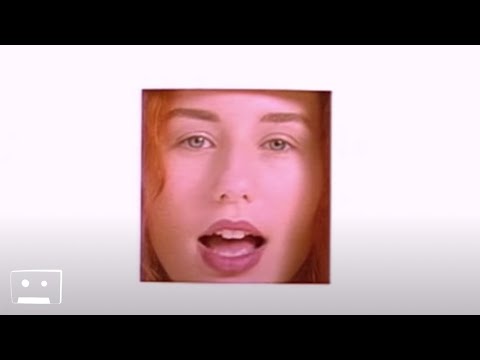
Early on, Amos fostered a cult-worthy fanbase long before anyone knew the terms “little monsters” or “swifties.” But she didn’t cultivate such a loyal following by pandering, nor did she have tools like social media at her disposal; instead, Amos developed relationships with her fans by making herself accessible in more analog ways, and earned their devotion by making them feel like they shared a secret.
That secret was, obviously, Amos’s music, which was fearlessly feminine—and queer, and occasionally campy—at a time when the lipstick was being wiped off of male rock stars and female pop singers were being publicly shamed (mostly by men) for doing what Prince and Mick Jagger did. Amos recognized misogyny and homophobia as products of the same form of patriarchy and—decades before the term even existed—toxic masculinity. Songs like “Leather” and “Me and a Gun” helped young women and LGBTQ people exorcise the shame they felt, while “Silent All These Years” and “Little Earthquakes” gave voice to their silence.
Halsey and professional wrestler Mick Foley count themselves among a lengthy, diverse list of fans who say Amos changed their lives. Fostering such an inextricable bond with her audience, and so early in her career, resulted in a rare mutual trust that allowed the artist to take her music into strange and commercially perilous places, like the sojourn to hell and back that is her 1996 breakup album Boys for Pele and 2011’s classical-inspired song cycle Night of Hunters.
Even if Amos hadn’t continually pushed the limits of her signature instrument and mainstream music itself over the course of the following decade, Little Earthquakes would still stand alongside Nevermind as an album that reshaped the pop-rock landscape. Thirty years later, the reverberations are still being felt.
Since 2001, we've brought you uncompromising, candid takes on the world of film, music, television, video games, theater, and more. Independently owned and operated publications like Slant have been hit hard in recent years, but we’re committed to keeping our content free and accessible—meaning no paywalls or fees.
If you like what we do, please consider subscribing to our Patreon or making a donation.