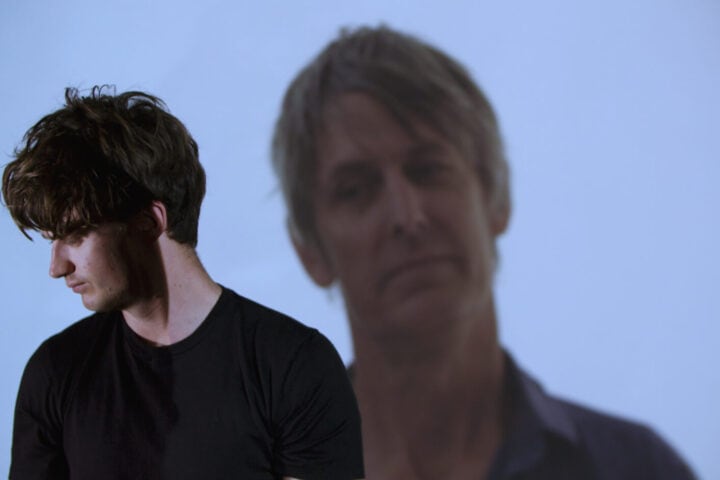
Whether they’re symbols of purity, sarcastic sidekicks, or straight-up murder targets, unicorns have pranced their way into some of cinema’s most memorable moments. Sometimes they’re majestic and wise, sometimes they’re total divas, and sometimes they’re just there to be hunted by some evil king with serious control issues. From animated classics to bizarre indie flicks, unicorns have proven that they can be more than just Lisa Frank stickers brought to life. On the occasion of the release of Death of a Unicorn, we’re diving into the most famous unicorns ever to grace the big screen—whether they’re noble and heroic, tragically misunderstood, or just straight-up weird. Alexa Camp

Fantasia (1940)
Fantasia only seems about as great as the particular segment you happen to be watching in the moment, but it’s is also one of the few Disney movies whose outsized aims marinate tastefully in memory instead of festering. And if it continues to introduce children to Stravinsky’s 3/16 by 5/16 time signatures, the original music Allan Sherman sang along to in “Hello Muddah, Hello Faddah,” and the glory of split-second breast shots from Bald Mountain’s hellish spectral harpies, then it’s unquestionably among Disney’s masterpieces. Eric Henderson

The Abominable Dr. Phibes (1971)
The Abominable Dr. Phibes, like Dr. Phibes Rises Again, is stylishly directed by Robert Fuest. It’s a luxuriant, mordant horror-comedy with a ghoulish splendor marvelously keyed up to Vincent Price’s persona. Practically impossible to tell apart, the movies vie for which has the most ingenious murders: The original wins out with bats, locusts, and impalement by brass unicorn head, though the sequel doesn’t lag far behind, with scorpions, mechanical snakes, and Price singing “Somewhere Over the Rainbow.” Henderson

Black Moon (1975)
Louis Malle’s Black Moon can’t be accused of suppressing its phallic potential. Early on, Lily (Cathryn Harrison), on the run from troops in some not-too-distantly future boys-versus-girls war, spots a pot-bellied horse with a headspike and trails it to a rural manor. En route, she also encounters serpents that halfheartedly wrap themselves around her ankles before disappearing. The unicorn—a bumblingly chivalrous symbol with a stiff, attractive male attribute perched on its head—is desire, and the limp, devious snakes are bewilderment. The former Lily chases, and the latter she is casually confronted and intimidated by. Joseph Jon Lanthier
Blade Runner (1982)
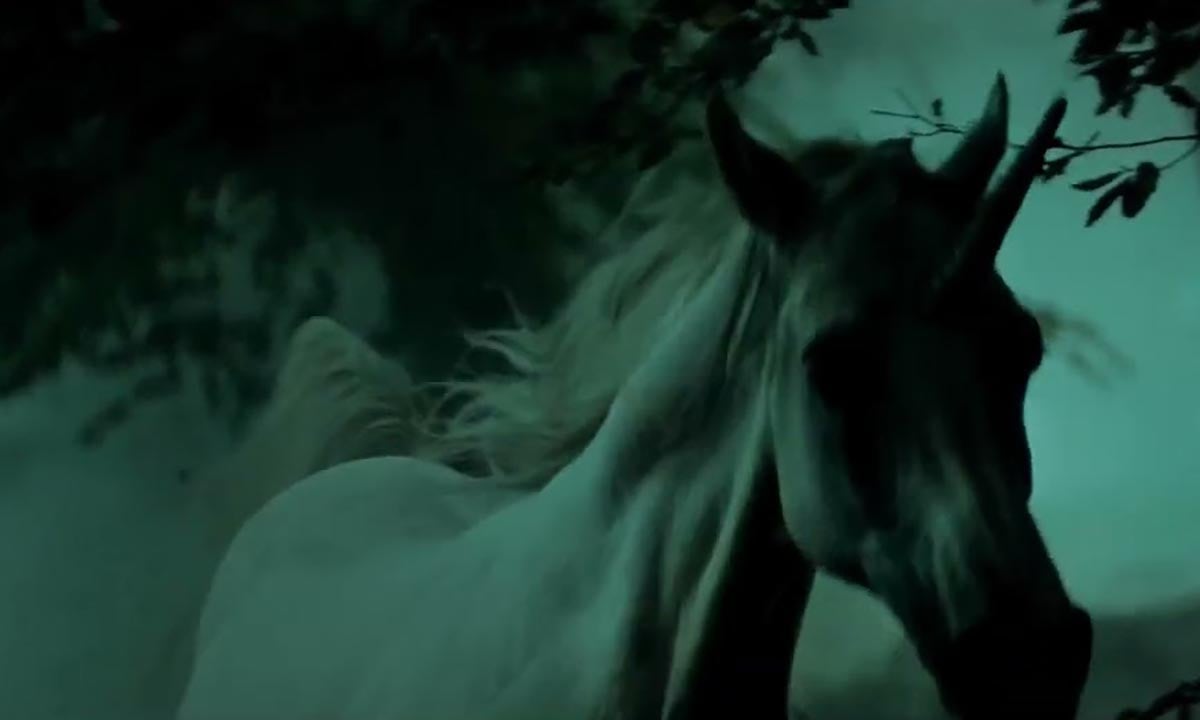
Given its exhaustively pored-over legacy, sifting through Blade Runner’s past-present-future hybridization is at this point somewhat redundant. Yet revisiting the film does yield revelations about its depth. By and large a spiffed-up edition of 1992’s director’s cut, the Final Cut maintains Ridley Scott’s most crucial post-theatrical release subtraction (Harrison Ford’s tacked-on narration) and addition (the unicorn daydream sequence that suggests Deckard is himself a replicant). The latter brought more cohesion to the story’s rumination on the existence of free will and the status of memory as mankind’s defining characteristic. Nick Schager

The Last Unicorn (1982)
In the 1982 animated film The Last Unicorn, a unicorn (Mia Farrow) discovers she might be the last of her kind—because, of course, no one tells unicorns anything. She teams up with Schmendrick (Alan Arkin), a wannabe wizard with all the magical skill of a broken wand, and Molly Grue (Tammy Grimes), who’s rightfully bitter about life. Their quest leads to King Haggard (Christopher Lee), a miserable old creep hoarding unicorns with his fiery pet bull. Things get complicated when our unicorn turns human and catches feelings. Will she save her kind or stay in a dramatic love triangle? It’s a heartbreakingly beautiful fantasy wrapped in pure-’80s weirdness and scored by America, the band, not the country. Camp
Alice in Wonderland (1985)
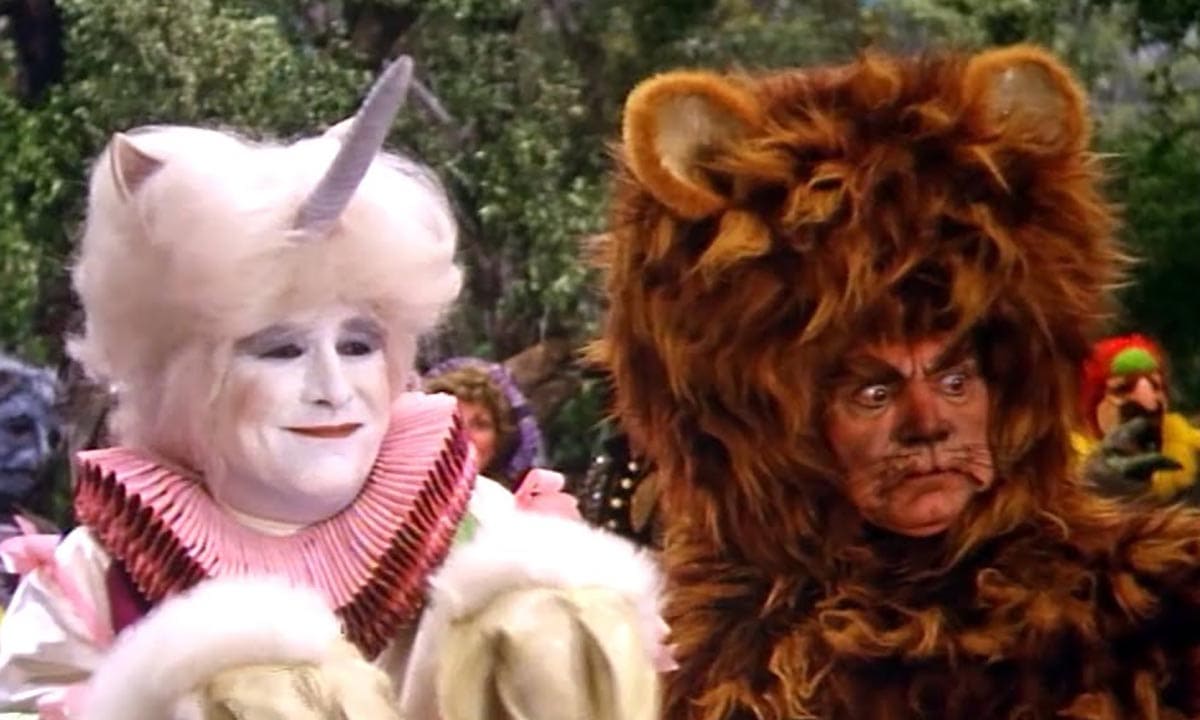
In the mid 1980s, producer Irwin Allen mounted a two-part miniseries based on Lewis Carroll’s satirical Alice novels. In Allen’s hands, Wonderland was tackily transformed into a plush extended episode of Fantasy Island, featuring such oddities as Ann Jillian running at the speed of light, John Stamos flipping his pageboy back and forth at a unicorn, Carol Channing turning into a goat after promising a little girl jam tomorrow or yesterday but never today, and Patrick Duffy in furrie-kabuki makeup eating a tin can. Henderson

Legend (1985)
When Ridley Scott’s Legend landed on home video after a troubled production and poor performance at the box office, it found a legion of impressionable young fans who were captivated by its intoxicating world of poster-perfect unicorns and muscle-bound princes of evil, as well as its heavy use of synths. The film is overwhelmed by its style, and at the expense of character development. For so many, however, its sensuous visual textures are enough to carry it, and the Tangerine Dream score adds to the sensation that Legend has more in common with the era’s music videos than its fantasy epics. Rocco T. Thompson
Harry Potter and the Sorcerer’s Stone (2001)
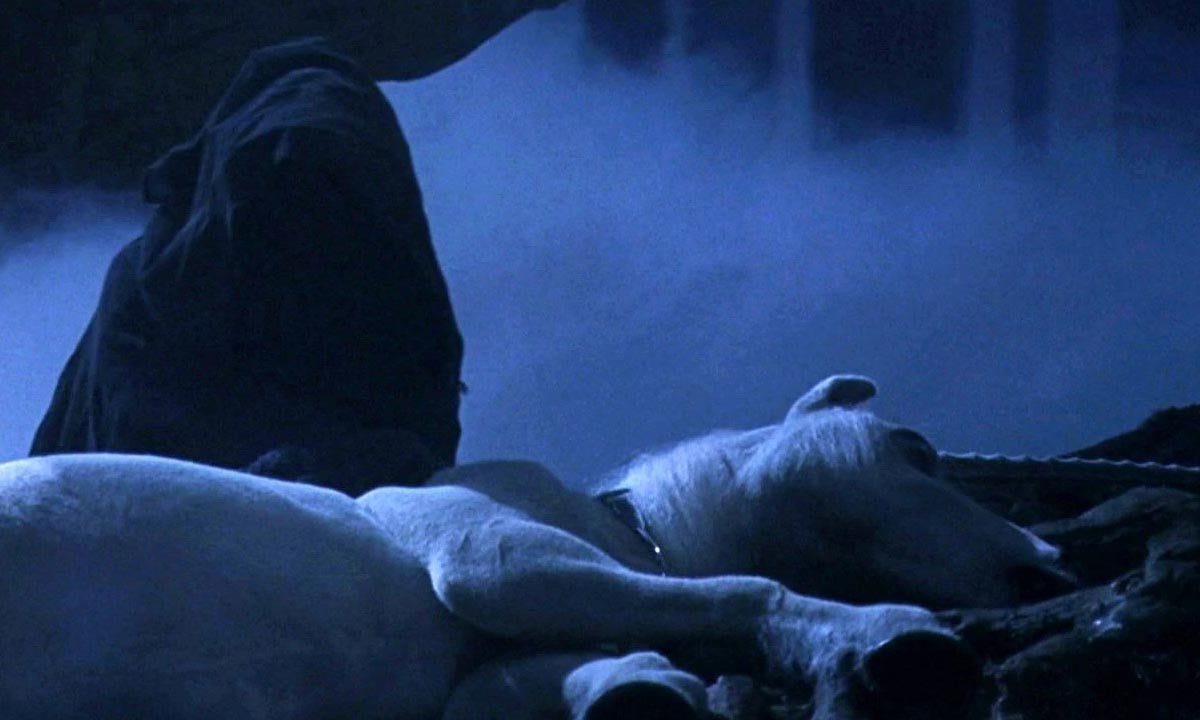
Chris Columbus may not know what to do with a camera, yet some of his compositions manage to jolt. At one point, as Harry (Daniel Radcliffe) stares into the Erised mirror, his familial loss is emphasized by the way a pillar bisects the frame, separating the downtrodden wizard from Richard Harris’s fatherly Dumbledore. Even more effective is the Forbidden Forest sequence: Bathed in startling blue tones, this creepy number does wonders with silver unicorn blood as Harry comes face to face with the creature responsible for his parents’ death. Ed Gonzalez

Dodgeball: A True Underdog Story (2004)
In Dodgeball: A True Underdog Story, Kate (Christine Taylor) seems like a polished, no-nonsense lawyer—until her inner 12-year-old is exposed by her unhealthy obsession with unicorns. Seriously, her house looks like Lisa Frank threw up on it. When Vince Vaughn’s Peter discovers this, she gets super defensive, because nothing screams “professionalism” like stuffed unicorns and rainbow décor. But hey, it’s quirky, so naturally, it makes her more lovable. By the end, she fully embraces her unicorn-loving self and kisses Peter—because nothing says romance like mystical horse creatures and dodgeball-induced sexual tension. Camp
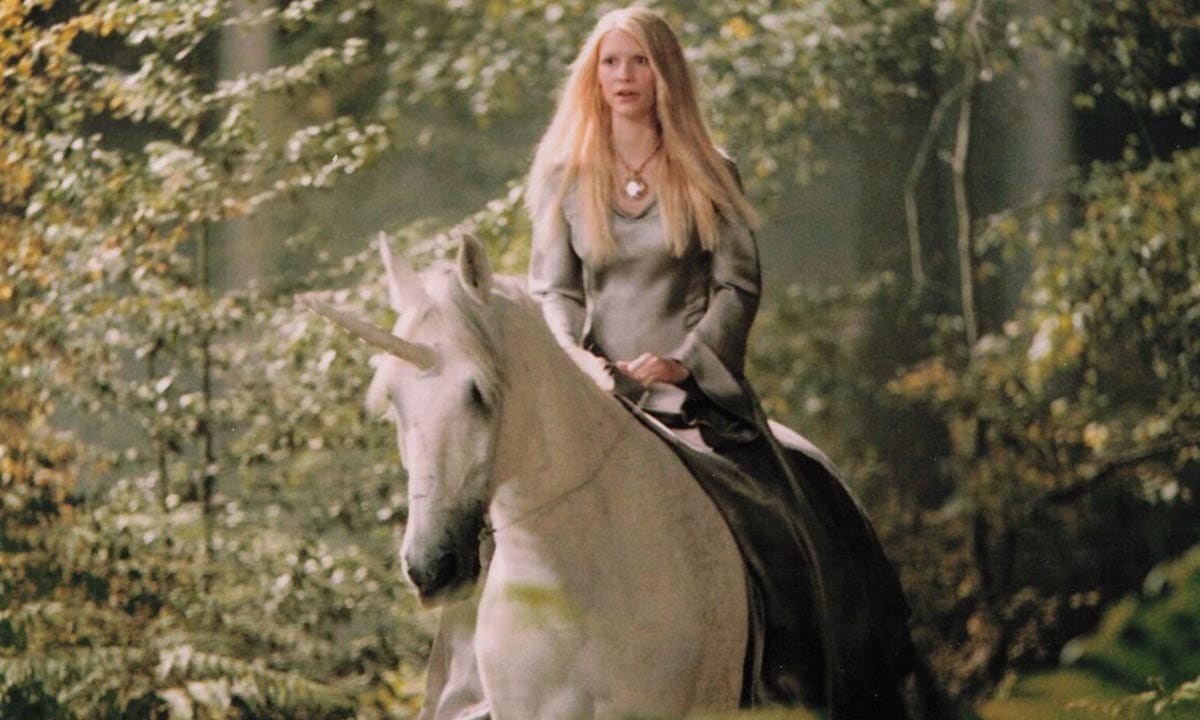
Stardust (2007)
A compendium of genre inflections seemingly intended for friends of Tori, Stardust dully storms through episodes in the adventures of Tristan Thorne (Charlie Cox) after he crosses the wall just outside his English village and into the very unkingdom-y kingdom of Stormhold. A feeling of friction between the film’s human and fantasy realms might have given Tristan’s adventures as he pursues the unicorn-riding Yvaine (Claire Danes) a sense of gravitas and justified the ceremonial last scene, but Michelle Pfeiffer is memorable in her upstaginess, her couture evincing a fiercer sense of scale than the widescreen compositions. Gonzalez
Since 2001, we've brought you uncompromising, candid takes on the world of film, music, television, video games, theater, and more. Independently owned and operated publications like Slant have been hit hard in recent years, but we’re committed to keeping our content free and accessible—meaning no paywalls or fees.
If you like what we do, please consider subscribing to our Patreon or making a donation.