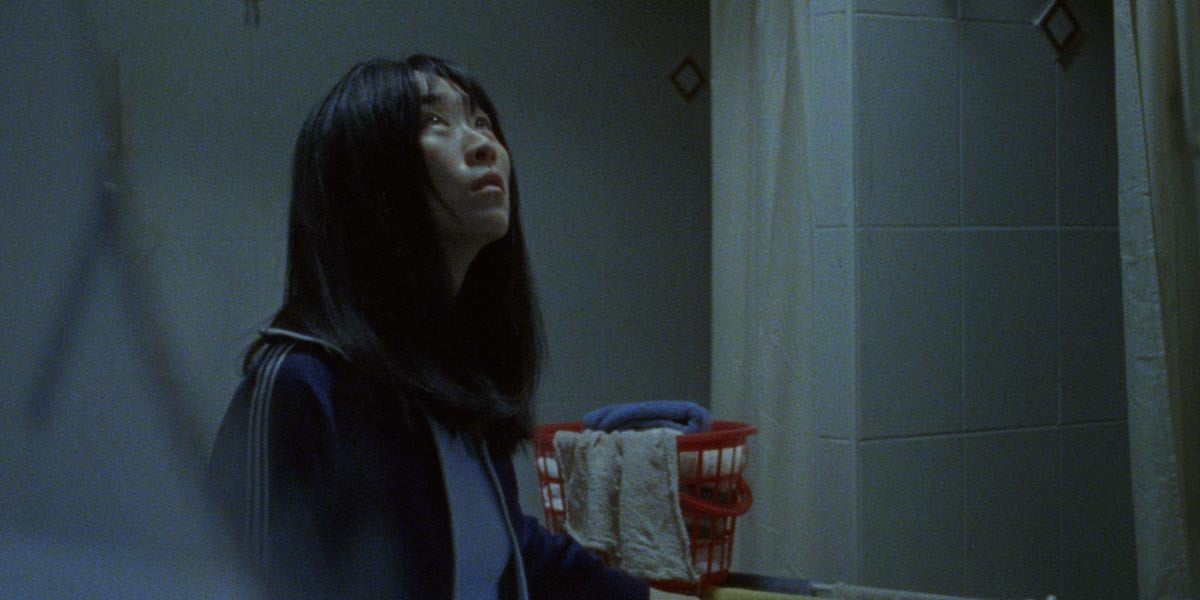
In Constance Tsang’s feature-length directorial debut, Blue Sun Palace, silence speaks volumes. The film traces the bonds forged by a trio of Chinese immigrants who work and live in Flushing, Queens. When tragedy strikes, those bonds are reconfigured and become even more important. Blue Sun Palace’s tale is filled with quiet spaces, and the way the texture of this quiet changes over the course of the film is a testament to its power.
Tsang’s feature debut begins with Didi (Xu Haipeng) and Cheung (Lee Kang-sheng) having dinner together at a small Chinese restaurant. Cinematographer Norm Li’s camera bobs lazily between them as their conversation flows from trivial matters, like their feelings about fried chicken, to more significant ones, like their feelings about each other. The way Cheung reaches out to dab sauce off Didi’s cheek, the way they let the silence hang between them when they find that they have nothing to say—everything about their date evinces an easy intimacy.
After their date, Didi returns to the massage parlor that she runs along with a few other Chinese women, all of whom live in the small rooms above the establishment. On the door is a cheaply printed “No sexual services” sign that raises a lot of questions already answered by the sign. Didi is close with all the women there, but she has a particularly sisterly relationship with Amy (Wu Ke-xi). Lounging on the stairs together, enjoying a bowl of Amy’s excellent cooking, the two of them dream about one day opening a restaurant together in Baltimore, where Didi’s young daughter lives with her aunt. As the locus of their imagined future, Baltimore has taken on an almost mythical status for them, and Didi even keeps a picture of the city on her bedroom wall.
The shot of Amy and Didi on the staircase together is one of many moments where Blue Sun Palace crams its characters into a tight space, often relegating them to the very side of the frame during long, static shots. These people don’t have a lot of space to call their own and we can always feel the boundaries of their world pressing in, but there’s also so much life in the places they’ve carved out for themselves. The massage parlor is far from a palace, but the women living there keep it filled up with good food, family meals, and laughter.
These neatly composed images give us a real, tactile sense of the world that Blue Sun Palace’s characters occupy, and the way the film uses language has a similar effect. All of the dialogue here is in Mandarin, save for a couple of mumbled English lines from the seedy white men who frequent the massage parlor. The members of the community at the center of the film have crafted a linguistic enclave inside New York City, and we’re drawn right into it.
About a third of the way into Tsang’s film, Didi is killed. This tragedy takes place as quietly as everything that has come before, with no musical stings or visual flourishes to emphasize it. It simply happens and then, for Amy and Cheung, life goes on. The two of them are drawn together in grief, and if we keenly feel their loss, it’s in large part thanks to Xu’s performance: She brings a profound vivacity to Didi, effortlessly conveying how she seemed to bring those around her to life and, in effect, leaving the film feeling all the quieter once the woman is gone.
Amy and Cheung were more reserved before Didi’s death, but without her to draw them out, they seem almost petrified, like statues of their former selves. Wu and Lee’s performances are also impressive, and perhaps their roles are even more challenging because they’re tasked with conveying all their characters’ grief, the growing affection between them, and the guilt this causes in almost intangible ways. There’s a weariness to their expressions and a heaviness to their movements that wasn’t there at the film’s start—or, at least, it wasn’t so pronounced.
Once Didi is gone, the film’s silences no longer feel comfortable or tranquil. Now they sound like an aching absence, a gap where something used to be. It’s like the eerie silence that lingers in the home of someone who’s recently passed, and it flows through the rest of Blue Sun Palace. After being given such a rich sense of the lives these characters lead, we’re left with a haunting sense of how easily their dreams, loves, and their very lives can be snuffed out and silenced.
Since 2001, we've brought you uncompromising, candid takes on the world of film, music, television, video games, theater, and more. Independently owned and operated publications like Slant have been hit hard in recent years, but we’re committed to keeping our content free and accessible—meaning no paywalls or fees.
If you like what we do, please consider subscribing to our Patreon or making a donation.