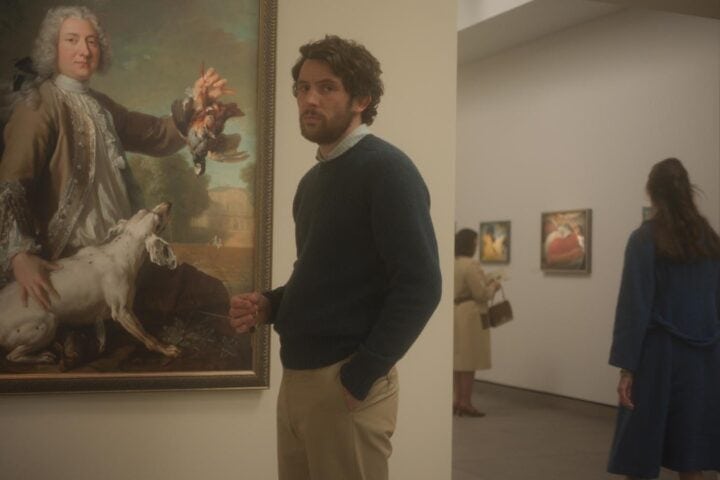
The earliest seeds of Kelly Reichardt’s Showing Up lie in an exploration of the life of early-20th-century Canadian artist Emily Carr. A decade late in the painter’s career when she took on the responsibilities of being a landlord piqued the curiosity of Reichardt and her frequent co-writer Jonathan Raymond. But instead of giving her time and resources to paint, her newfound respoonsibilities ended up leading to a period of frustration and unproductivity.
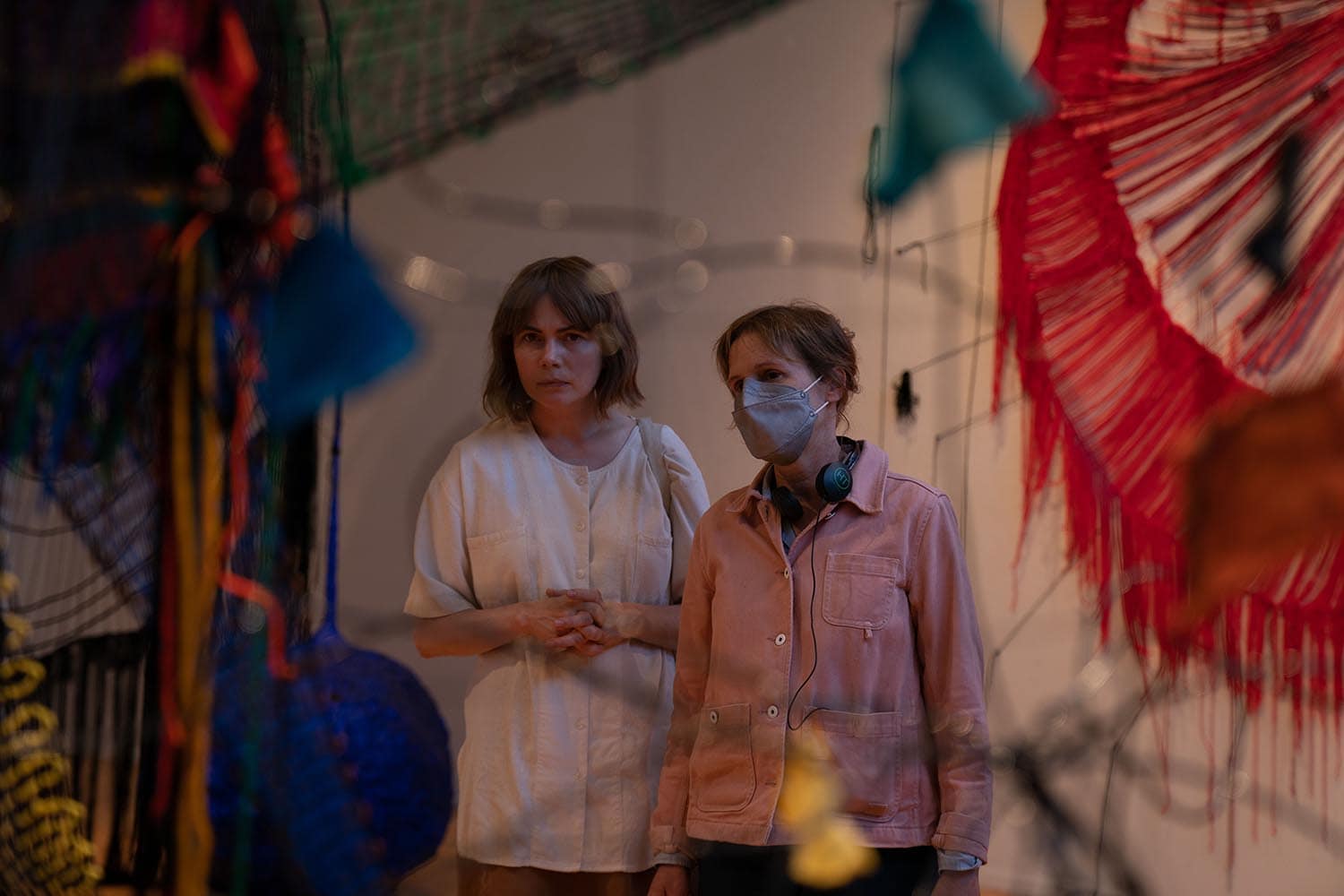
The film’s idea quickly shifted away from depicting Carr herself, but traces of her creative process and struggles remain in this story set among a collegiate community of artists in Portland. But that internal tension between a dedication to one’s craft and an obligation to one’s familial and professional obligations lives on in Lizzy, a sculptor played by frequent Reichardt collaborator Michelle Williams. Carr’s vocation as a landlord also survives through Lizzy’s slightly more successful colleague and fellow creator Jo, played by Hong Chau.
Through her patient observations of processes and people, Reichardt finds where these points of friction between competing priorities results both in moments of seriousness and silliness. This is a film in keeping with her incisive tales of doomed strivers in the Pacific Northwest, as well as something entirely different for the filmmaker. While Showing Up might depict characters struggling to find the balance between commitment to art and openness to life, Reichardt’s wise work dwells confidently in the ambiguity and uncertainty of its central dialectic.
I spoke to Reichardt over Zoom from Los Angeles where she was appearing as part of a retrospective of her work at the American Cinematheque. Our spirited conversation covered what makes for a good job, why she feels no compulsion to leave academia, and how she conceives of the scale needed to make and enjoy meaningful art.
I’d love to start with the title. There are obviously so many different ways that “showing up” can be read. Do you have a preference for what it means? Does the connotation change based on how you feel at a given time?
Well, since it can, let’s not nail it down! Let’s leave it for people. But it’s different throughout the film too. Showing up to work. Showing up for your friends, your family. It’s all the ways.
So how did the title come about?
[Co-writer] Jon Raymond came up with it. He was like, “Well, you can’t keep that title, but we’ll just live with it for a while!” And then, of course, that’s the title.
The film speaks for itself in terms of the way that you’re thinking about how art and work coexist and bleed into each other. From a personal perspective, how do you conceive of that separation—or lack thereof—between the two?
Probably differently at stages of your life. I mean, I’ve had so many crap jobs in my life that I felt were keeping me away from work. And then I worked in the Kino [Lorber] mailroom for a long time. That was working around a lot of people that love film, and some that loved music, and that ended up being a great job. Who knows! You think a great job is teaching at NYU, but that job ripped my soul apart. It all depends. For me, at this point in my life, teaching at Bard really has been well married with making film. It wasn’t a happy accident. I work too hard. I tracked down people. I was on a jury with Peggy Ahwesh and Ed Halter decades ago now, and I spent a weekend with them. I’m like, “I want to be where these people are.” I did what I could to get that gig. And I work with lovely people, and it’s a good environment.
But the working in Lizzy’s case, she’s not feeling it so much. But she’s also in a loop: very tied in with her family, feeling the weight of her family, and jumping back in with them. So it depends on the job, right? But you’ve got to balance these things. Most people need to balance what they love to do and what they need to have health insurance or pay the rent or whatever it is.
Is part of the appeal in telling Lizzy’s story, then, to show the flipside of your experience through a character struggling with the bureaucracy of academia? She seems to have the idealized notion that she’ll have all this space to work and create her art, and the film shows how the opposite happens.
I imagined Lizzy as just falling into that job and not changing because it’s easy to stay there. Even though it frustrates her, maybe every day. But what are the options for jobs now? You’re in an art school, you live in a city where the rents are outrageous, what are the job options that allow you to sustain yourself and give you time to hang out—which is what you need to do if you’re going to make art. Lizzy, maybe, should stay where she is because she doesn’t have that flexible of a personality to [leave]. Maybe she’s right to stay where she is.
This project started with the research that you did on the Canadian painter Emily Carr, and you abandoned the project whenever you realized how famous she was in the country. Was the idea of careerism and success orientation antithetical to what you wanted to explore in Showing Up?
Did you know Emily Carr?
Not before the film. I’m sure I’d probably seen some of her work, but I didn’t know her as an artist.
You’d have to look really look for it! I’ve yet to meet anybody in the States that knows Emily Carr unless they’re in the Pacific Northwest. But take a short ferry ride to Vancouver, and you will quickly see statues and monuments to Emily Carr. Look, everyone who makes something wants to have someone see it. You’re lucky if people look at your stuff. Come on, that’s a great thing. But we wanted to focus on what if there’s not a built-in audience for what you make, but you still have the compulsion. It’s not a financially driven thing at all. I have the impulse to want to work every day and make something. That’s what balances my life. That’s what we’re focused on: people that want to have that impulse and want to make things. Maybe they have small audiences where they can show. Maybe the people that you’re showing to all the time are the same people. Maybe it’s regional, but most people that make stuff long for that to expand and go beyond where your reach is. But even if that doesn’t happen, you still need to fill that void of time. It doesn’t get rid of the compulsion to want to make things. How do you balance making stuff with your life and all the things that can distract you from doing [art]? Even when there’s not a pending show, what’s the reason to get to the table every day when it’s hard?
Whenever we see artistry dramatized on film, it is so often toward some goal of fame or recognition. And I get the sense that’s not the point of Lizzy’s show. What she does is makes art and exhibit it. Was that decoupling of art from some kind of culmination or competition something that drew you to this particular story? Maybe it’s not necessarily art for art’s sake…
Art for art’s sake, that’s what we were drawn to write about. Maybe that’s even a stage in someone’s life. I’ve been making films and teaching for…[mutters] a really long time now. Most interviews I do—maybe by now, it’s settling down—the implication is “When are you going to go do what you’re supposed to do, which is stop teaching and go do this other thing that obviously you must be wanting to do?” Which I don’t feel compelled to do! There’s a much bigger world out there. The other night, we went into a dive bar on 14th Street and Avenue B and this jazz swing band was playing country music from the ’30s. The musicians were great. I’m sure that band plays for that crowd of people every week, and they probably know everyone in that audience. They all have day jobs, they enjoy playing together, they’re making good music, that’s their scene, and that’s what they do. That’s happening in a million different ways, in different cities, in different holes in the wall, all over the country. That’s what’s going on!

There’s all this gearing up for the premiere or Cannes, and these are wonderful, lucky things. They bring a lot of anxiety, like what you’re going to wear and all that stuff. But last night, my old film played at the American Cinematheque, and we ate tacos in the back while the film was playing, then came out and talked to the audience. It was such a lovely night, and it can’t really get any better than that. Maybe that night wouldn’t happen if those other nights didn’t happen. But there’s another scale of enjoyment. America, we’re a capitalist society, but there’s another scale of looking at and making art that happens all the time and makes people’s lives better.
In Showing Up, there’s less overt movement from the characters than in your previous films…
Well, it’s not a road movie, isn’t that good!
Was that part of the appeal? Not to focus on characters getting between places but to show people who are more planted and what that means for them?
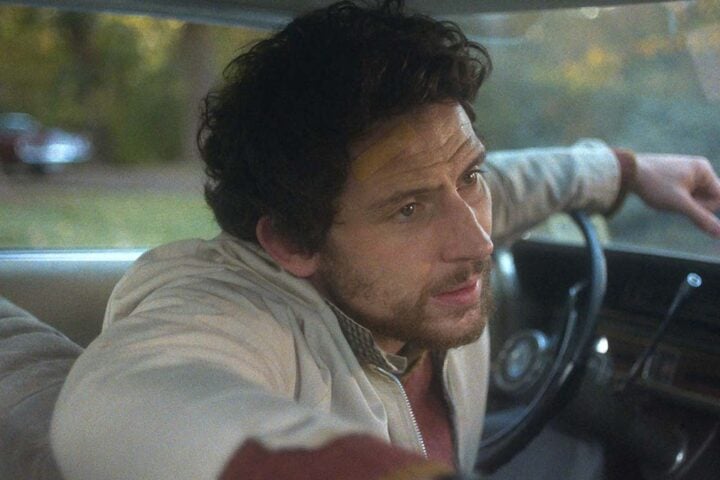
There are not as many car scenes, thank god. Yeah, I’m happy about that! We really wanted to shoot at that school before it changes, and that was a great appeal. We wanted to focus on process as opposed to the end result of something. For me, the best thing about any big night I’ve ever had in my life or whatever I’m striving for, is afterward when I’m walking and hanging out with John Raymond and we’re having the rehash of whatever the night was. Or with [cinematographer] Chris Blauvelt or someone who I worked with on the film. It’s after when the pressure is off and you can just be with your people. Like when someone dies, [people] always go, “They’ll never be able to go to another graduation or wedding.” I’m just like, “Who wants to go to those things?” Those are the things you’ll miss out on? This tragedy happened…I’ll never see her graduate? Oh well, my poor parents, they never got to see me graduate either, and I’m still living. A normal day is great. Who doesn’t like a regular day?
Does the nature of filming process change when it’s art? Or does it still follow the same principles as shooting characters going about their duties in Night Moves or First Cow?
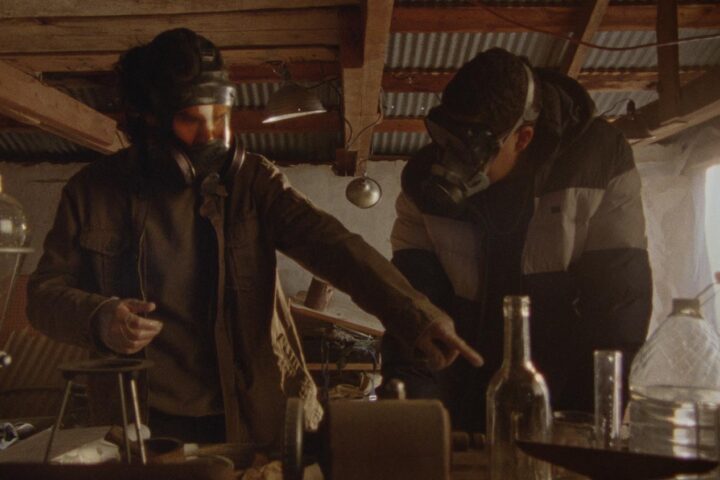
Making a bomb or baking things on the ground, it’s all process, right? It’s all how to do stuff. It’s getting down into the nitty gritty of things that’s fun. You could either show someone pulling the big fish out of the ocean, or you could show them running down and getting the worm on the hook. And perhaps you catch a fish, or maybe you don’t. I think process—that word becomes funny if you say it enough, doesn’t it?—runs through all the films. When you do Q&As, people always say, “How did you come up with this and that?” Life is not an endless amount of eureka moments! Most things are labored over. You’re lucky to get a couple of eurekas, or you come to those after trying a bunch of other things that don’t work.
I had written “zooms” big in my notes from NYFF…
There’s one!
It must have just been very prominent to me, then…
No, sorry, sorry! Actually, there is one big messy zoom that I really love up to Jo’s studio. And there are little ones that are searching for pieces of art on a desk or something like that. But there is a standout shot that’s fun.
The reason I brought it up is because I always think of zooms as such a mechanical intervention that makes you so aware of camera operators…
Well, the first take Chris Blauvelt did it smooth, and I was like, “What are you doing?!” So he used the mechanical thing, and he’s like, “Well, my hand’s gonna get stuck.” And I’m like, “Okay, just do it that [first] way.” So he’s hand zooming, and that’s why it has a roughness to it.
Beyond just the technical aspect, I always find zooms fascinating because it makes the creator of the image so visible and palpable in the creation.
Well, you don’t want that! This was supposed to be [a scene where] you’re hearing this traffic go by, there’s a DJ coming out of a window of a car, and so it wasn’t supposed to be like this glide up to her window. It’s supposed to be like there are pigeons flying around, it’s a chaotic corner, and then you get inside her studio. So that was the idea with it.
Since 2001, we've brought you uncompromising, candid takes on the world of film, music, television, video games, theater, and more. Independently owned and operated publications like Slant have been hit hard in recent years, but we’re committed to keeping our content free and accessible—meaning no paywalls or fees.
If you like what we do, please consider subscribing to our Patreon or making a donation.