A dozen years separate Agathe Riedinger’s feature-length directorial debut, Wild Diamond, and Matteo Garrone’s Reality, another continental European story of a working-class aspirant hoping to star on a reality television program. Yet the difference in what each film’s protagonist expects to receive from their selection proves illustrative of how the influencer economy has fundamentally rewired the nature of adolescent aspiration.
For Wild Diamond’s striving 19-year-old main character, Liane Pougy (Malou Khebizi), the program Miracle Island means more than a mere refuge from reality, like Grande Fratello (Italy’s Big Brother) represented to Garrone’s fishmonger Luciano. In Liane’s eyes, the show provides a rare opportunity to fully remake her lot in life and reorient herself as the star of her surroundings. But to become the person she so desperately wishes to be, she must first get the show’s producers to reconstitute her essence as a character in their simulated universe.
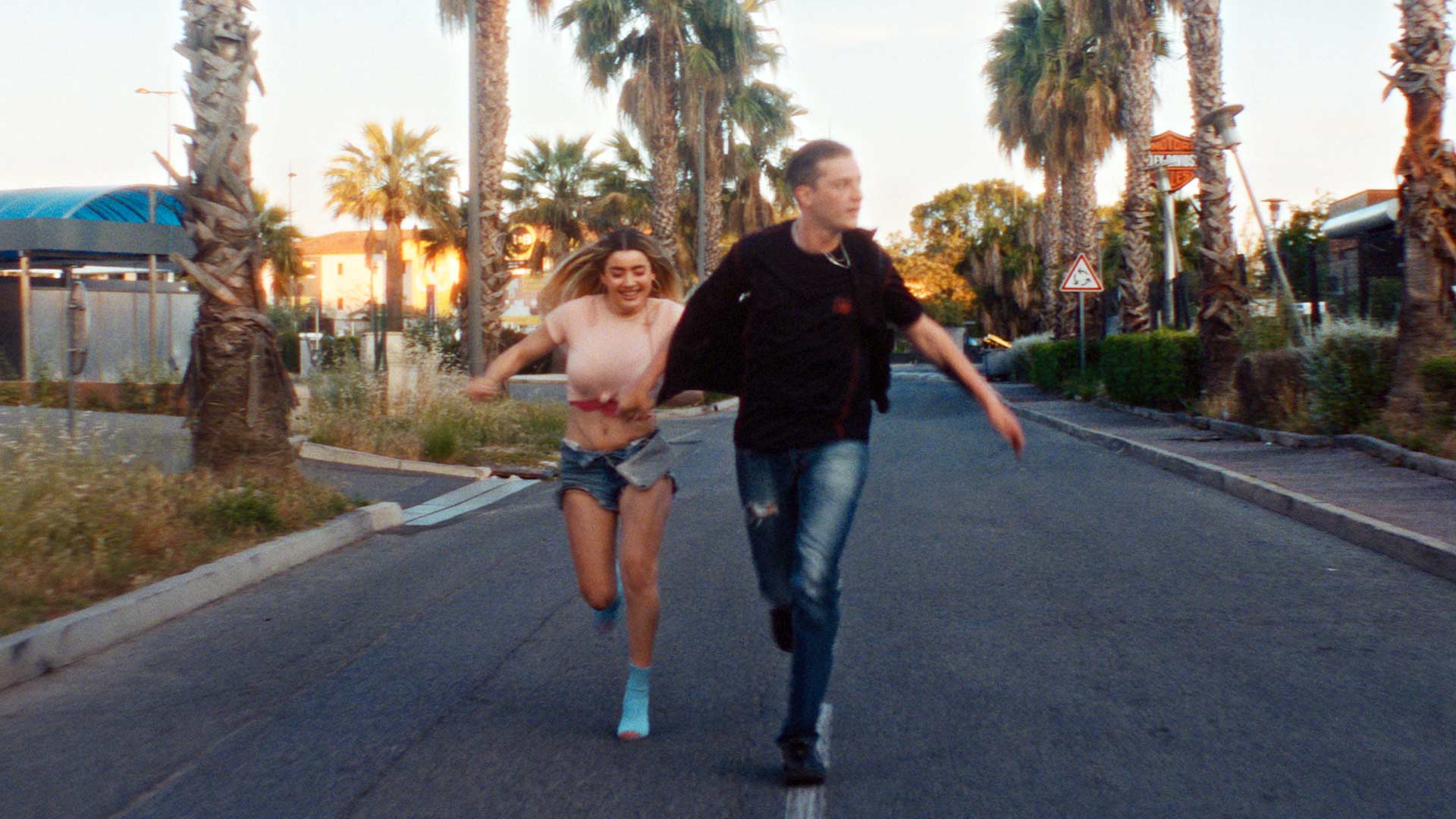
Khebizi portrays Liane with all the ferocity of a caged animal as she single-mindedly chases down her dream. Especially at the film’s outset, as the staccato editing captures the velocity of her perpetual hustle, Liane’s desperation to transcend her station is painfully present in every split-second of screen time. The jolting cadences of the cuts recall the whiplash of aimlessly scrolling social media, bouncing between Liane dolling up her face for the cameras and hustling stolen goods in a parking lot to pay for the necessary makeup.
Wild Diamond is at its best when it’s keyed to Liane’s breakneck energy. Though she pursues a relatively newer professional calling, her quest for recognition and financial security situates her within a familiar framework of young adult stories. She plots her rise with pugnacious determination, changing her appearance or demeanor where necessary to make herself more appealing for a mass audience. And after an audition yields promising feedback from a Miracle Island producer, all signs point to the acceleration of her current trajectory toward fame.
Liane sees her full-bodied commitment to artifice as a way “to show the real me,” and with unflinching honesty, Riedinger captures how the young woman’s attempt to make such a contradiction come true results in a physical and spiritual contortion of the self. Whether lingering on Liane’s feet bleeding after she shoves them into bejeweled heels or showing her praying for providential treatment by the producers, nothing about her quest is natural.
The film sputters out somewhat toward its conclusion—a change of pace in keeping with Liane’s spiral in the absence of casting confirmation from the Miracle Island team. It’s here that Liane can no longer cocoon herself in future fantasizing and must face the painful conditions of her present. Riedinger channels the hardscrabble social realism of Andrea Arnold in her renderings of proletariat France, but she never locates the same pulsating energy for Liane among the wider community as she does inside her visions of virtual grandeur.
As Liane’s prospects fade, Wild Diamond becomes a cautionary tale. Reidinger never falls prey to lazy sanctimony as her protagonist experiences the dark flipside of women’s social media-fueled hyper-sexualization: predation and exploitation by lusty male eyes. The filmmaker withholds judgment as Liane begins her anxious descent into catastrophizing over her dashed dreams. Instead, she outsources it to a wall of text overlaying the frame that represents comments from Liane’s social media posts when she craves external validation. These strangers, something of a Greek chorus, offer a gamut of reactions to her latest curated update.
As Wild Diamond barrels to its close, these outside opinions butt in more frequently—and with increasing vitriol. But Riedinger ultimately reveals that these replies aren’t indicative of any objective morality. In a perverse twist, they prove just as reactive to external validations of worth as Liane in her darkest moments. All her haters become her waiters when she sits down at the table of success, though there’s no guarantee that what they serve will fill her up.
Since 2001, we've brought you uncompromising, candid takes on the world of film, music, television, video games, theater, and more. Independently owned and operated publications like Slant have been hit hard in recent years, but we’re committed to keeping our content free and accessible—meaning no paywalls or fees.
If you like what we do, please consider subscribing to our Patreon or making a donation.