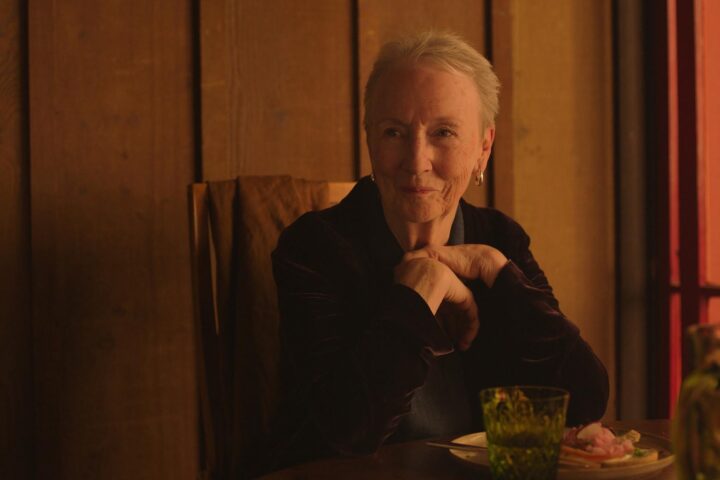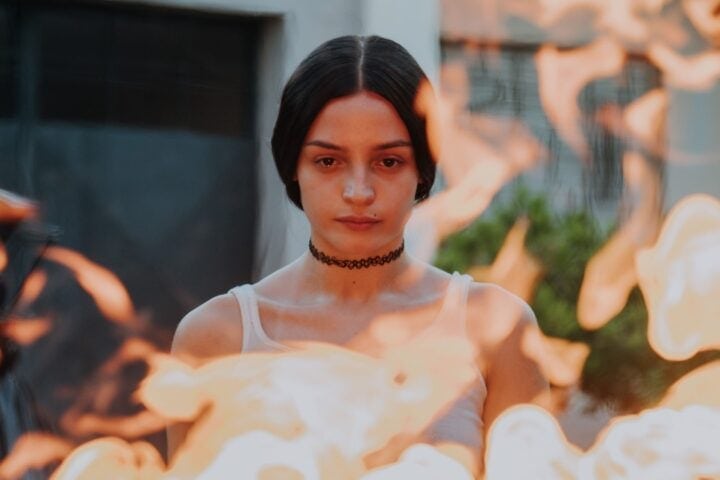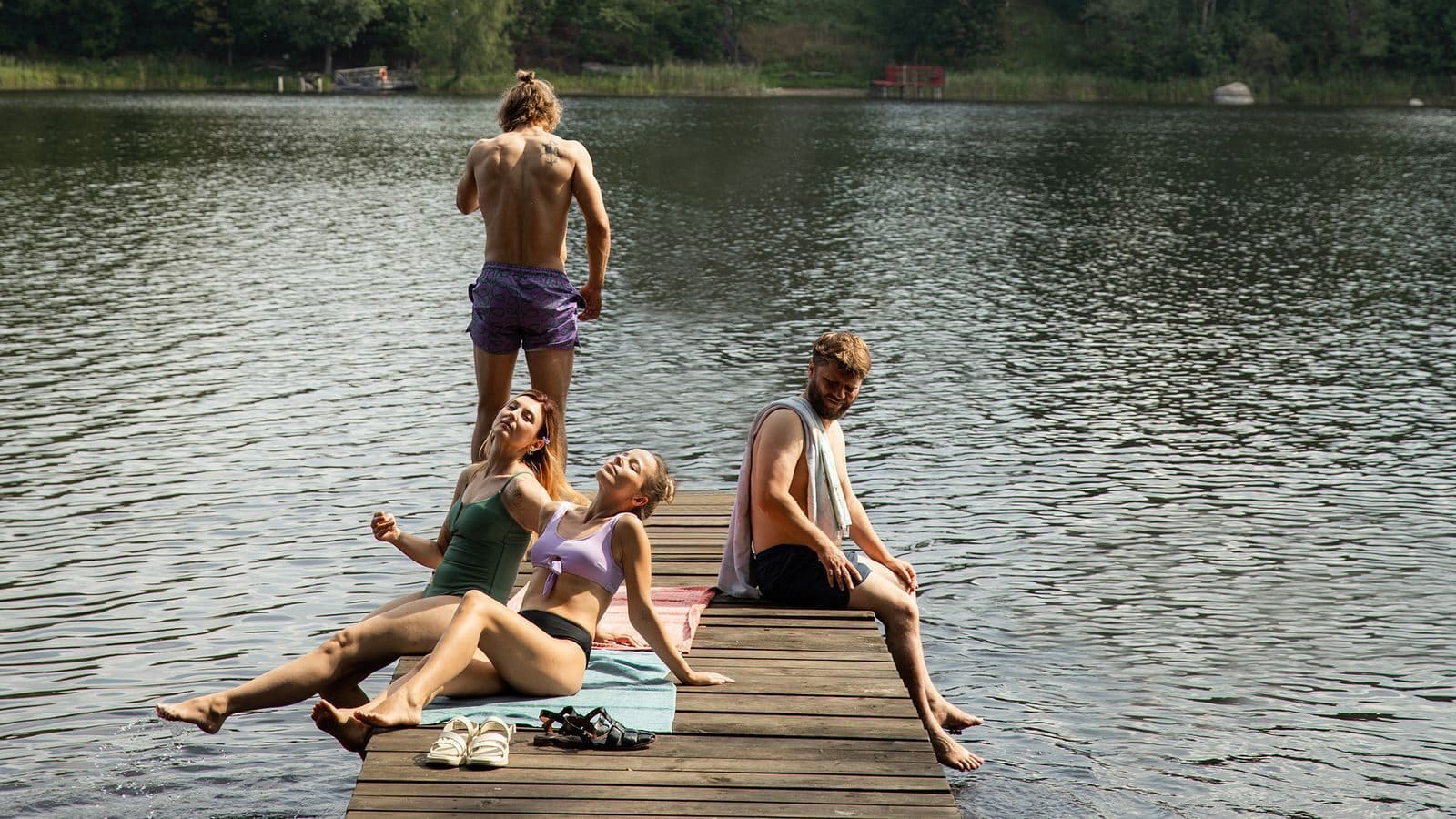
Writer-director Laurynas Bareiša opens his sophomore feature, Drowning Dry, with a bang. Well, technically, it’s a kick. The Lithuanian filmmaker wastes no time jumping into the ring with Lukas (Paulius Markevičius) as the martial arts fighter lands a maneuver against his opponent in a match. Bareiša’s camera only catches Lukas dealing the bodily blows, and audiences will feel as if they’ve received one as the film exits the arena and heads to a Lithuanian lakeside home with the scrapper and his family.
Drowning Dry offers something akin to a cinematic concussion as it begins warping the experience of time. Bareiša creates a modest and unassuming multiversal storytelling device from the start of a rural retreat involving two couples and their children. With patiently building intensity, he begins introducing doubt about what each scene represents to the narrative. As the story reverses and flashes forward at will, what seems like a straightforward actuality could just as easily be seen as a suggested possibility or a faded memory.
Within mutations of already glimpsed moments, the film proposes alternate ways that an incident could play out. Be it the song to which sisters Ernesta (Gelminė Glemžaitė) and Juste (Agnė Kaktaitė) dance on a porch or the outcome to young Urte (Olivija Eva Viliūnė) swimming off a dock, each successive development communicates an increasing disorientation. As these reversals and repetitions accumulate and grow in their grisliness, the film all but seeks to fulfill Don DeLillo’s observation in White Noise that all plots seem to move deathward.
Tragedy is unavoidable for the two vacationing families, but its configuration remains thrillingly uncertain. What begins as a modest and measured observation of the interactions between siblings, in-laws, and cousins segues seamlessly into an ontological investigation of fate and free will. Each tantalizing glimpse at an alternate trajectory in the lives of the characters requires an active process of inductive reasoning to determine what instigated this particular setup—and what limited role each person had in choosing their destiny.
Yet Drowning Dry amounts to more than just a slow cinema-inflected riff on the Final Destination series. “Don’t blame yourself,” Juste tells her husband, Tomas (Giedrius Kiela), after one of death’s interventions wreaks havoc. “These things just happen.” These words of reassurance ring hauntingly hollow as the film’s seemingly disparate timelines begin to converge and collapse into each other, and as the characters become aware that they’re trapped, the spirit of vacation evaporates and they’re left hyper-aware of their own mortality.
Without descending into outright gimmickry, Bareiša’s camera assumes the position of this universe’s immovable mover, gently guiding our gaze toward the characters’ exploits, and finding a happy balance between intimacy and reserve in the process. But as Drowning Dry continues to jump forward in time, its calibrated remoteness counteracts its attempt to pay tribute to humanity’s capacity for resilience in the wake of unexpected setbacks.
Bareiša’s shows of empathy are sincere but shallow, given that he largely defines the people on screen by their predicaments. The film loses the visceral connection to the characters’ livelihoods teased by the opening scene, which displays conflict in its most primal form of expression. But even when Drowning Dry begins to settle into sterility, Bareiša’s storytelling schema still ensures investment in the resolution. Decoding each variation is as invigorating as it is enveloping. When scenes double back and branch off in different directions, their multiplicity of meanings resounds across the film. It’s as rattling as a direct encounter with mortality should be. Like a fella once said, ain’t that a kick in the head?
Since 2001, we've brought you uncompromising, candid takes on the world of film, music, television, video games, theater, and more. Independently owned and operated publications like Slant have been hit hard in recent years, but we’re committed to keeping our content free and accessible—meaning no paywalls or fees.
If you like what we do, please consider subscribing to our Patreon or making a donation.