Amy Berg’s It’s Never Over, Jeff Buckley relates Jeff Buckley’s meteoric rise and early death in the 1990s through the adoring and wounded voices of his family, friends, and bandmates. Berg leavens their wistful memories with personal and concert footage, along with Buckley’s notebook jottings, ramblingly funny and emotional voicemails, and jagged animations that are meant to simulate his manic and at times self-destructive mindset.
The latter sections featuring Buckley’s words hint at the suggestive alliterativeness used by Brett Morgen in his own documentaries but are shoehorned into an impactful but at times generic portrait of another gone-too-soon artistic genius. Skillfully woven into the narrative for heightened impact, songs like “Last Goodbye” and Buckley’s famous cover of Leonard Cohen’s “Hallelujah” say more about the singer’s vocal abilities than most of the film’s talking heads.
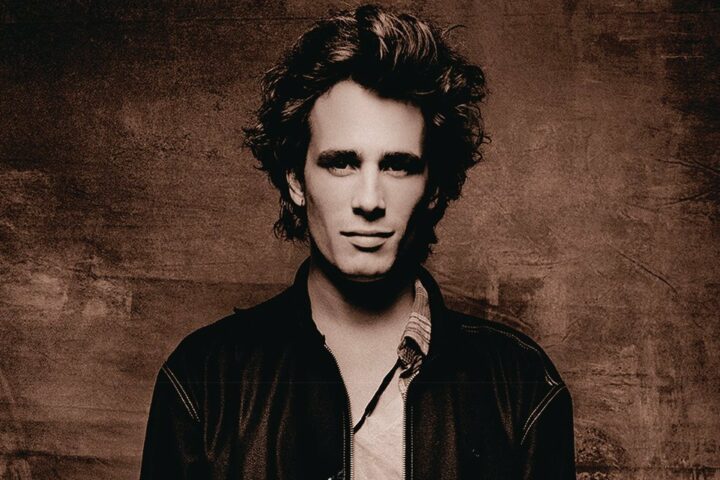
Born in 1966 and raised by his mother, Mary Guibert, Buckley only met his acclaimed folk-musician father Tim Buckley one time before Tim’s death in 1975. Buckley was a precociously musical kid who seemed fated to be a star. He was a gifted mimic, deft musician, and sly audience charmer with the wide dark eyes and chiseled features of a matinee idol, but the film makes the curious decision to almost entirely ignore Buckley’s looks as a factor in his success.
Berg wisely skips over much of Buckley’s 20s, when he played around but struggled to find a niche. She cuts to the chase by zeroing in on the impossibly dramatic night in 1991 when Buckley debuted as a singer at a Brooklyn tribute concert for his father. The approval of attending cognoscenti (Patti Smith and Lou Reed were in attendance) marked a talent to watch. The night’s impact is underscored by its still-awed description from Rebecca Moore, the artist he met that night and started a relationship with that seems to still entrance and haunt her.
The stretch of the documentary that details Buckley’s life in downtown New York— before his 1994 debut album, Grace, was released to rave reviews but initially modest sales—shows him forging a creative identity. This part of his story is presented as a romantic, whirlwind journey, of love, art-making, and experimentation colliding. “He drank up the world like a sponge,” Moore says. Not long after, his gigs at Sin-é turned Buckley into a hot prospect for the enraptured A&R types who haunted the East Village club.
The pressures of touring and being indebted to his record label seemed to push Buckley toward mania and depression. Trying to get off the treadmill, he moved to Memphis and had started working on a new album before his accidental death by drowning in 1997. Suggestions that Buckley committed suicide are dismissed by Berg’s interviewees.
A different documentary might have gone deeper into Buckley’s profile as a musical shapeshifter who volleyed from nightclub-style “chanteuse” (as he described himself only partially tongue-in-cheek) to pop-rocker and Dylan-esque troubadour. But while its keening, emotional sensibility presents a somewhat two-dimensional view of Buckley both as person and artist, It’s Never Over, Jeff Buckley is still a resonant depiction of the gaping holes left by his untimely death.
Since 2001, we've brought you uncompromising, candid takes on the world of film, music, television, video games, theater, and more. Independently owned and operated publications like Slant have been hit hard in recent years, but we’re committed to keeping our content free and accessible—meaning no paywalls or fees.
If you like what we do, please consider subscribing to our Patreon or making a donation.