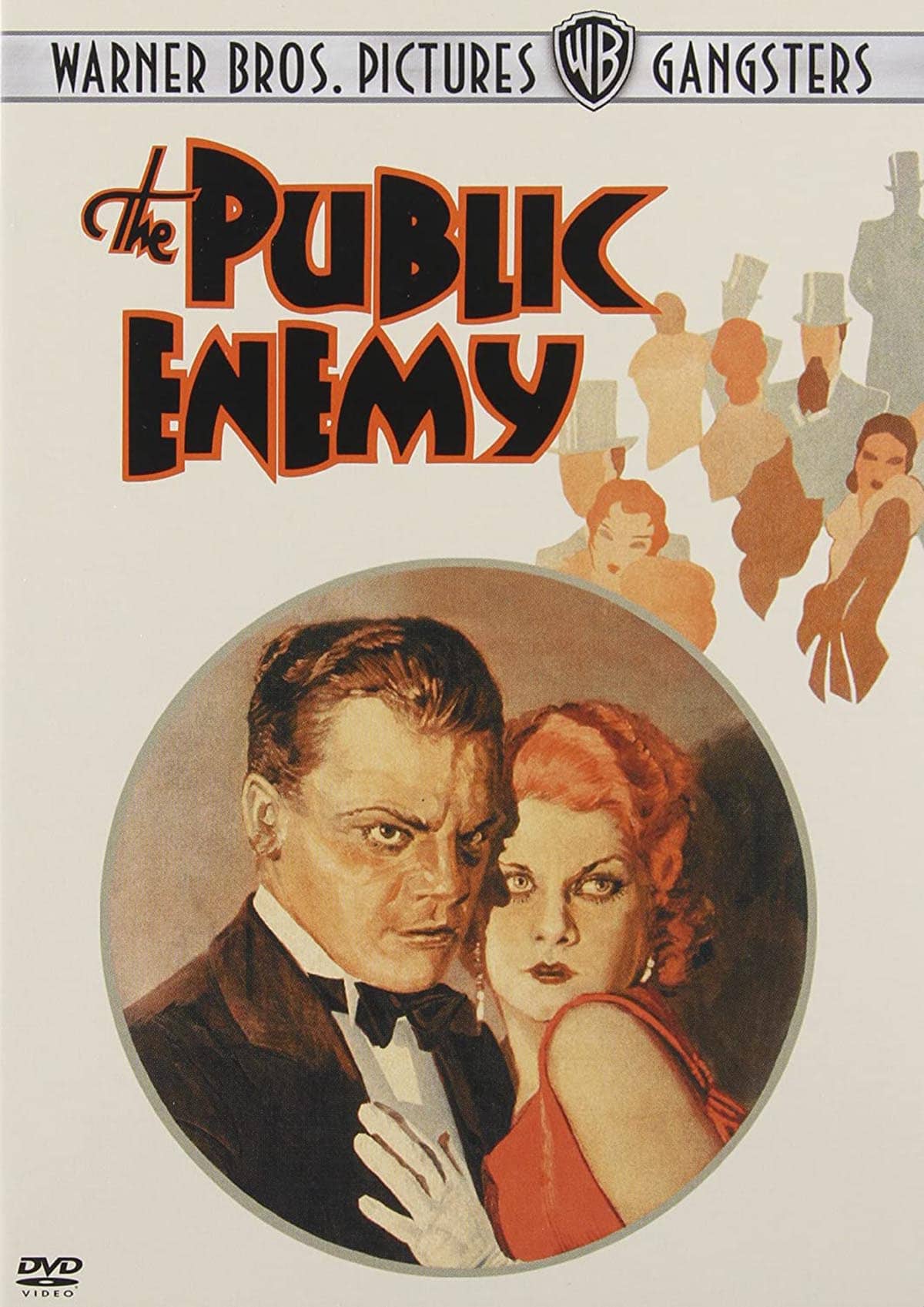
 Contrary to popular opinion, the best moment in The Public Enemy isn’t when Jimmy Cagney shoves a grapefruit in his girlfriend’s face. Rather, it’s the moment when Chicago gangsters Tom Powers (Cagney, in a career-making performance) and his buddy, Matt Doyle (Edward Woods), hear that one of their own is dead, not by a rival gangster, but from being thrown off his horse. Even when Powers and Doyle march into the stable in a welter of cold fury, you don’t quite believe they’re actually going to execute the horse, and yet they do. In a film that begins and ends with high-toned messages about the evil hoodlums do to society, this was likely originally intended to illustrate the rapacious inhumanity of these gangsters (a horse?), but there’s no denying its intrinsic black comedy. Studio-imposed moralizing aside, this is a film with a wicked sense of humor—witness the scene in which a swishy haberdasher feels up Cagney’s bicep while measuring him for a suit—that makes up for an occasionally stale plot.
Powers and Doyle are childhood best buddies, growing up petty crooks in the teeming Chicago tenements of the early 20th century and graduating to big-time crimes once the local mob is handed the sweet gift of Prohibition. Director William A. Wellman brings a sociological bent to his depiction of their milieu, using old newsreel footage of the city, carefully marking the passing of the years and paying close attention to the particulars of the characters’ working-class Irish surroundings. There’s a clean arc to the story as we follow Powers and Doyle from the “social club” where the neighborhood kids do odd crimes for the resident Fagin character, Putty Nose, to their first involvement with burgeoning bootlegger Paddy Ryan, to them living the high life as smart-dressed hoods and the final showdown where Powers stalks into enemy headquarters (a justifiably famous shot where he practically walks into the camera), a revolver in each hand and a killer’s stare on his face. The nature of the film’s rise-and-fall plot, however, can seem overly premeditated at times, and borders on the simplistic.
The Public Enemy starts by telling its audience that it does not mean to glorify the criminals that it portrays, and unlike some other gangster flicks of the 1930s, it actually doesn’t. Although the crook that Cagney plays here has a definite thuggish cool, he’s repeatedly shown to be such a thickheaded animal that he doesn’t register as much of an antihero (the only thing helping him is that none of the other characters register much in the way of personality, either). He’s the kind of overzealous idiot gunman who Bogart would have mocked relentlessly in The Big Sleep. Even so, there’s little denying the power of Cagney’s presence, from the first moment he’s on screen, he radiates such a brash Fenian cockiness you can imagine kids at the time flocking out of the theater and cocking their caps just like him. It’s a performance so perfect in its intensity that any other quibbles about the film ultimately recede into insignificance.
Image/Sound
Rather poor overall, with only mediocre picture quality (plenty of scratches) and a very muddy sound design that doesn’t fit at all well with Cagney’s machine-gun cadence-you can see why actors at the time were taught to enunciate so slowly and carefully, so that the microphone could actually pick up what they were saying.
Extras
A solid package that provides a better understanding of the film without overpraising it. “Beer and Blood” is a better than average making-of documentary, which is not surprising given how much material they have to work with. Film historian Robert Sklar, Martin Scorsese, and additional talking-head professorial types discuss the film’s birth out of the screenwriters’ novel, which drew from the rich seam of Prohibition-era crime in Chicago, through its place in the evolution of the gangster picture and the many different stories told about Cagney’s casting. Sklar also provides the erudite commentary, showing a true loving knowledge of the film that transcends the academic. The “Warner Night at the Movies 1931” package has a hilarious newsreel about women Olympic athletes (many long takes of nothing but their bare legs), the comedy short The Eyes Have It and the surreal Merrie Melodies cartoon, Smile, Darn Ya, Smile.
Overall
James Cagney shoots a horse, and gets himself a career.
Since 2001, we've brought you uncompromising, candid takes on the world of film, music, television, video games, theater, and more. Independently owned and operated publications like Slant have been hit hard in recent years, but we’re committed to keeping our content free and accessible—meaning no paywalls or fees.
If you like what we do, please consider subscribing to our Patreon or making a donation.