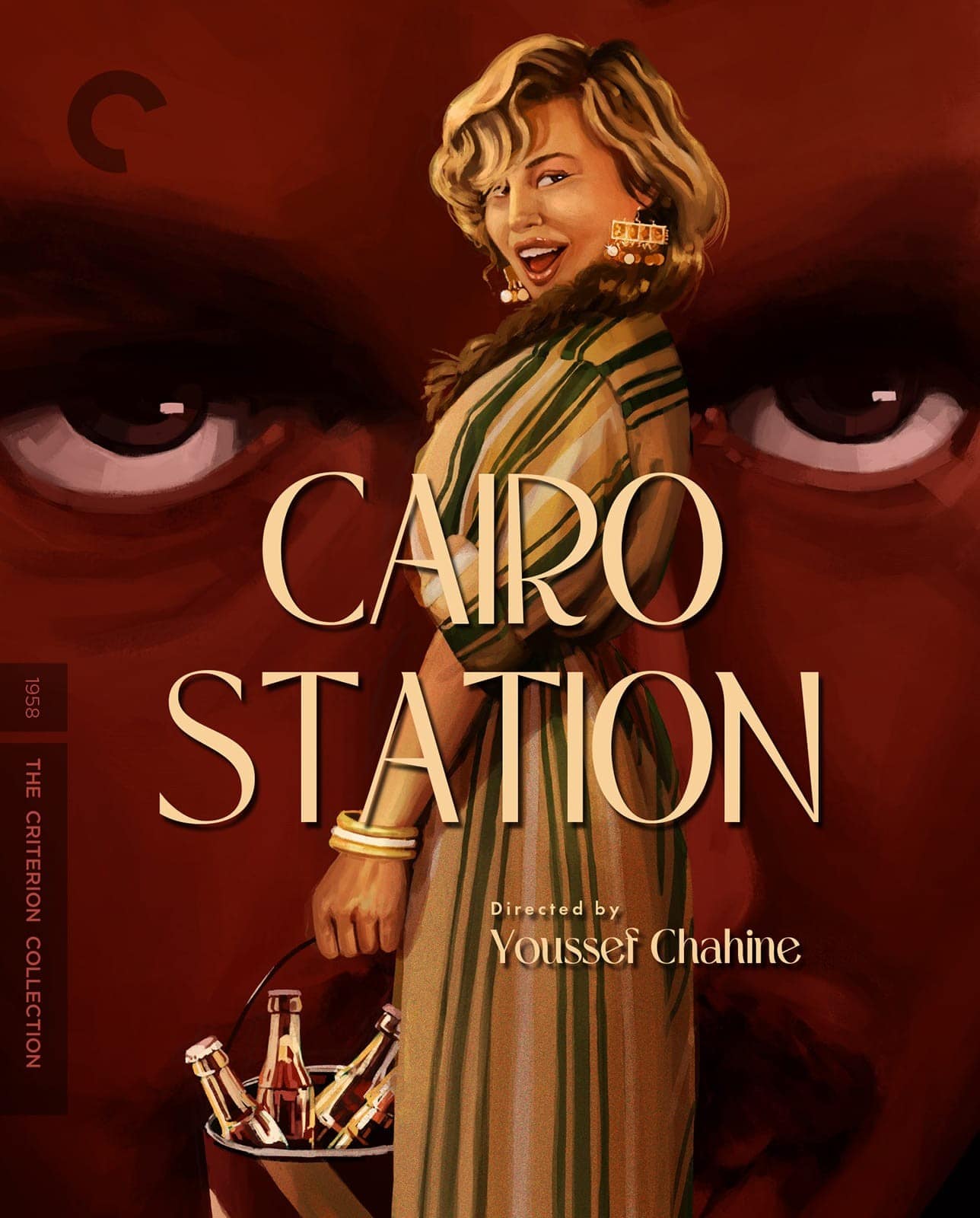
 Set in and around the bustling central train station that gives it its title, Youssef Chahine’s 1958 film Cairo Station restricts its focus almost exclusively to the workers on the fringes of its central locale. Six years after the fall of the Egyptian monarchy, several of these characters, each members of the working poor whose lives were supposedly set to change for the better, are caught up in their own fantasies of social empowerment and economic improvement. They were led to believe that the rungs of the ladder between social classes were now closer together and more secure, yet every step up proves to be illusory, only further intensifying their feelings of helplessness and emotional vulnerability.
Kenawi (Chahine), a disabled newsstand vendor who moved from the country to Cairo in search of social acceptance, grows obsessed with the beautiful Hanuma (Hind Rostam), one of several women who surreptitiously sells sodas, undercutting the profits of official snack stands. Kenawi’s infatuation seems innocent enough at first, and Hanuma returns his affection in a mostly playful manner, while continuing to state her love for her muscular fiancé, Abu Serih (Farid Shawki), who’s trying to unionize the porters so they can earn a living wage.
The film begins as a fairly straightforward piece of socialist realism, seemingly picking up where Italian neorealism left off earlier in the 1950s. But as Cairo Station progresses, its psychological portraiture grows darker and thornier, and the morally ambiguous manner in which it presents its central trio—particularly Kenawi as his impulses grow more violent—is deeply unsettling, forcing us to question our initial sympathies for the film’s struggling characters.
While Kenawi exhibits more outwardly sexually perverse behavior, Hanuma reveals a cruel streak of her own, not only in her teasing of Kenawi but in her ferocity to do whatever it takes to escape the life she finds herself trapped in. If Abu Serih may seem like the natural hero among the three of them, given his bravery in pushing for unionization amid the threats from the men currently making their mint from the porter’s hard labor, that certainly can’t be said once it’s revealed that he is controlling in his ways and abusive toward Hanuma.
This tale of emotional deprivation and sexual repression builds to explosions of violence that are tied to the characters’ economic hardships and alienation. Throughout, expressionistic flourishes of noir-like shadows and chiaroscuro lighting reflect the emotional contortions of individuals watching dreams that once seemed attainable slip away from them. And as pressures rise due to social constriction and diminishing opportunities, Cairo Station elegantly conveys the inevitability of tragedy arising from conditions that are both dehumanizing and exploitative.
Image/Sound
Transferred from a new 4K restoration, Criterion’s Blu-ray looks fantastic, with tight, even grain and impressive clarity to the image, which is rich in detail, particularly in the occasional extreme close-ups of the main characters. Chahine and DP Alevise Orfanelli use a lot of high-contrast lighting in the film and the deep blacks and strong delineations between the grays really make the film’s more noir-like shots pop nicely. On the audio front, the uncompressed mono track perfectly balances the near-constant background sounds of the busy train station without ever drowning out the dialogue, which is perfectly crisp and clear.
Extras
In a new interview, film scholar Joseph Fahim provides a comprehensive overview of Youssef Chahine’s career and his affinity for working in various genres. He also explains a bit about the Egyptian Revolution of 1952, offering key context for the release of Cairo Station and the frankness of its depictions of sexuality, class, and masculinity. Fahim also gives a short introduction to “Cairo as Seen by Chahine,” a 1991 short documentary shows snippets of daily life in Cairo broken up by comical discussions between Chahine and his crew about what type of Egyptian clichés the film’s French producers would want to see on screen.
Another short documentary, “Chahine…Why?,” from 2009, delves more into the pre-production and production processes of Cairo Station, covering how Chahine ended up acting in the lead role and how Rostom’s impulsive performance initially created tension between her and the director. Rounding out the package is an excerpt from a 1998 Q&A with Chahine and a foldout booklet with an essay by Fahim, who expands on his discussion of Cairo Station’s confrontation of the promises that failed to come to fruition following the Egyptian Revolution.
Overall
Youssef Chahine’s classic of Egyptian cinema gets a sparkling new transfer and a solid slate of extras courtesy of the Criterion Collection.
Since 2001, we've brought you uncompromising, candid takes on the world of film, music, television, video games, theater, and more. Independently owned and operated publications like Slant have been hit hard in recent years, but we’re committed to keeping our content free and accessible—meaning no paywalls or fees.
If you like what we do, please consider subscribing to our Patreon or making a donation.